Mednosis LogoMednosis
May 29, 2026

Clinical Innovation: Week of May 29, 2026

8 research items

Clinical Innovation: Week of May 29, 2026
Safety Alert
Pathogenic germline variants identify elevated cancer risk in pediatric patients referred for genetic testing
Nature Medicine - AI SectionPromising2 min read

Pathogenic germline variants identify elevated cancer risk in pediatric patients referred for genetic testing

Key Takeaway:

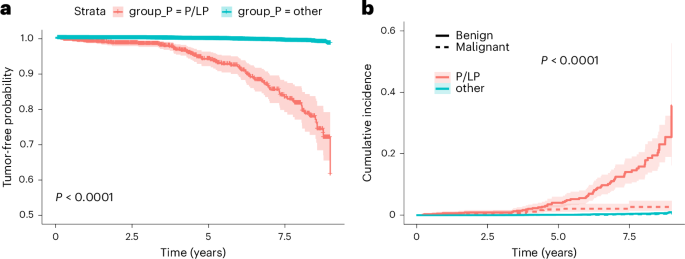
Identifying inherited genetic risk variants in children helps doctors predict future tumor risks, enabling personalized counseling and early cancer surveillance starting today.

This peer-reviewed research published in Nature Medicine investigates the clinical significance of pathogenic germline variants in pediatric cancer-predisposition genes. Utilizing large-scale genomic analysis, the study establishes a clear association between these specific genetic variants and an elevated risk of subsequent tumor development in pediatric patients who were referred for genetic testing. The background of this work rests on the critical need to identify high-risk pediatric cohorts early to optimize clinical outcomes. In terms of methodology, the researchers leveraged extensive genomic datasets to track the presence of pathogenic germline mutations and correlate them with longitudinal patient outcomes. The key results demonstrate that identifying these variants provides robust predictive value for subsequent tumor risk, offering a solid scientific foundation for personalized patient counseling and targeted surveillance protocols. As an innovation, this study highlights how systematic genomic screening can be integrated into pediatric oncology to shift the paradigm from reactive treatment to proactive surveillance. However, because the study relies on a cohort of patients already referred for genetic testing, a potential selection bias exists, which represents a key limitation. Future directions will require validating these findings in broader, unselected pediatric populations and establishing standardized, risk-stratified surveillance guidelines to determine exactly how frequently and with what modalities these high-risk children should be screened.

For Clinicians:

This large-scale genomic study associates pathogenic germline variants with subsequent pediatric tumor risk. While promising for targeted surveillance, note the potential selection bias of the referred cohort before altering standard screening protocols.

For Everyone Else:

This study shows that genetic testing can identify children at higher risk for future tumors. If your child had genetic testing, discuss these findings with your doctor before changing any medical plans.

Citation:

Nature Medicine - AI Section, 2026. DOI: s41591-026-04451-1 Read article →

Drug Watch
Fibroblast growth factor receptor inhibition for succinate dehydrogenase-deficient gastrointestinal stromal tumors: a phase 2 trial
Nature Medicine - AI SectionPromising2 min read

Fibroblast growth factor receptor inhibition for succinate dehydrogenase-deficient gastrointestinal stromal tumors: a phase 2 trial

Key Takeaway:

A phase 2 trial shows the drug rogaratinib targets a specific genetic pathway to successfully treat a rare, drug-resistant form of gastrointestinal stomach cancer.

This peer-reviewed publication in Nature Medicine reports on the outcomes of a multicenter phase 2 clinical trial evaluating the therapeutic efficacy of rogaratinib, a fibroblast growth factor receptor (FGFR) inhibitor, specifically for patients diagnosed with succinate dehydrogenase (SDH)-deficient gastrointestinal stromal tumors (GIST). SDH-deficient GIST represents a distinct molecular subtype of gastrointestinal stromal tumors that is notoriously resistant to standard tyrosine kinase inhibitors typically used in KIT-mutant GIST, thereby presenting a significant unmet clinical need. The methodology of this study focused on targeting an epigenetic mechanism of oncogene activation using a tyrosine kinase inhibitor. The key results of the trial demonstrated encouraging clinical efficacy in this specific patient population, suggesting that rogaratinib could serve as a potential new treatment option. The primary innovation of this research lies in its successful demonstration that an epigenetic mechanism driving oncogenic activation can be effectively targeted and disrupted using a small-molecule tyrosine kinase inhibitor like rogaratinib. However, as a phase 2 trial, limitations include the need for larger, randomized controlled trials to firmly establish long-term survival benefits and safety profiles. Future directions will likely involve larger phase 3 confirmatory trials and further investigation into combining FGFR inhibition with other targeted therapies to overcome potential resistance mechanisms in SDH-deficient GIST.

For Clinicians:

This multicenter phase 2 trial demonstrates encouraging efficacy of the FGFR inhibitor rogaratinib in SDH-deficient GIST. While promising, clinicians should await phase 3 data before altering current standard treatment protocols.

For Everyone Else:

This early-stage study shows a new drug, rogaratinib, may help treat a rare stomach cancer. It is not yet widely available, and patients should not change their current treatment plans.

Citation:

Nature Medicine - AI Section, 2026. DOI: s41591-026-04376-9 Read article →

Google News - AI in HealthcarePromising2 min read

Coalition for Health AI unveils governance playbooks for responsible AI adoption - Fierce Healthcare

Key Takeaway:

The Coalition for Health AI has released new governance playbooks to help healthcare organizations safely and responsibly adopt artificial intelligence technologies starting now.

Background: The rapid integration of artificial intelligence (AI) in clinical and administrative healthcare settings has created an urgent need for standardized framework structures to ensure safety, efficacy, and equity. To address this, the Coalition for Health AI (CHAI) has introduced new governance playbooks designed to guide healthcare organizations in the responsible adoption and deployment of AI technologies. Methodology: While the brief source text does not detail the specific consensus methodology, stakeholder sample sizes, or quantitative metrics used to draft these guidelines, the playbooks represent a collaborative effort to establish industry-wide standards. Key Results: The primary outcome of this initiative is the publication of actionable governance playbooks that outline best practices for AI implementation, risk mitigation, and continuous monitoring in healthcare environments. Innovation: This initiative is innovative because it provides a structured, coalition-backed framework aimed at harmonizing AI governance across diverse health systems, shifting the industry from fragmented, institution-specific protocols to unified, responsible AI standards. Limitations: A key limitation of the current reporting is the lack of specific data regarding the implementation success rates, clinical validation metrics, or the exact organizational structures required to adopt these playbooks. Future Direction: Future efforts will likely focus on evaluating the real-world adoption rates of the CHAI playbooks across various clinical settings, measuring their impact on patient outcomes, and refining the guidelines as AI technologies evolve.

For Clinicians:

CHAI has launched governance playbooks for responsible AI adoption. While specific clinical validation metrics are not detailed, clinicians should note these emerging standards for institutional AI deployment and risk mitigation.

For Everyone Else:

A health coalition has released new guidelines to help hospitals use artificial intelligence safely. These guidelines are available now to help ensure AI tools protect patient safety and privacy.

Citation:

Google News - AI in Healthcare, 2026. Read article →

Safety Alert
MAGE-A4/MAGE-A8-targeted TCR-based bispecific T cell engager in recurrent and/or refractory solid tumors: a phase 1 trial
Nature Medicine - AI SectionExploratory2 min read

MAGE-A4/MAGE-A8-targeted TCR-based bispecific T cell engager in recurrent and/or refractory solid tumors: a phase 1 trial

Key Takeaway:

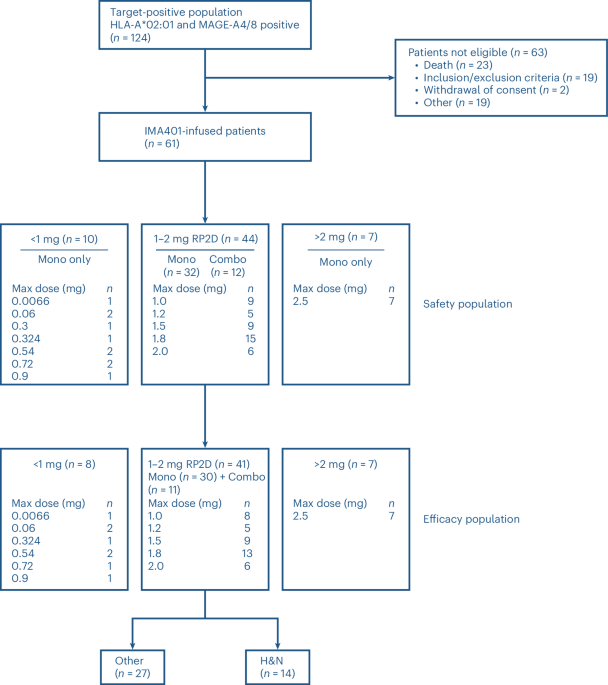
This early-stage trial shows that a novel T-cell-engaging immunotherapy, IMA401, is safe and shows early promise for treating advanced head and neck cancers and melanoma.

This peer-reviewed research, presented at the 2026 ASCO Annual Meeting, details a prespecified interim analysis of an ongoing phase 1a clinical trial evaluating IMA401. IMA401 represents a novel class of immunotherapy, specifically a bispecific T cell receptor (TCR)-based T cell engager. The therapeutic mechanism of IMA401 is designed to target a specific MAGE-A4/MAGE-A8 peptide presented by the human leukocyte antigen HLA-A*02:01. The study investigated the safety profile and early therapeutic efficacy of this agent in patients presenting with recurrent and/or refractory solid tumors. The interim analysis specifically demonstrated encouraging safety outcomes and a preliminary signal of clinical efficacy in patient cohorts diagnosed with head and neck cancers as well as melanoma. Notably, these positive signals were observed both in patients receiving IMA401 as a monotherapy and in those treated with a combination regimen consisting of the bispecific engager alongside an anti-PD-1 checkpoint inhibitor. While the initial data are promising, the study's limitations include its early phase 1a nature, which inherently restricts the sample size and limits the ability to draw definitive conclusions regarding long-term survival or comparative efficacy. Future directions for this research will involve further dose-escalation and expansion cohorts to better define the optimal therapeutic dose, fully characterize the safety profile, and confirm the preliminary efficacy signals observed in these solid tumor populations.

For Clinicians:

Phase 1a trial of IMA401 (MAGE-A4/MAGE-A8 TCR-bispecific) shows early safety and efficacy in HLA-A*02:01-positive head and neck cancers and melanoma. Note early-stage limitations; further validation is required before clinical implementation.

For Everyone Else:

This early-stage study shows a new immune-boosting drug, IMA401, is safe and showing early promise against advanced melanoma and head and neck cancers. It is not yet widely available.

Citation:

Nature Medicine - AI Section, 2026. Read article →

Healthcare IT NewsPromising2 min read

Joint Commission intros new voluntary AI responsibility certification

Key Takeaway:

The Joint Commission's new voluntary certification helps healthcare organizations safely and ethically deploy artificial intelligence, focusing on institutional governance rather than certifying individual software tools.

The Joint Commission has introduced a new voluntary certification program titled the 'Responsible Use of AI in Healthcare.' This initiative is designed to establish a framework that promotes the safe, reliable, transparent, and ethical deployment of artificial intelligence technologies within healthcare organizations. Rather than serving as a regulatory validation or technical certification for individual AI tools, algorithms, or software products, this program focuses on the organizational governance and systemic integration of these technologies. By shifting the evaluative focus from the software itself to the operational infrastructure of the healthcare systems utilizing them, the Joint Commission aims to guide institutions in establishing robust oversight mechanisms. The primary limitation of this program is its voluntary nature, meaning participation is not mandated for accreditation, and it does not guarantee the clinical efficacy of specific third-party AI tools. Future directions for this initiative will likely involve observing how participating healthcare organizations adapt their internal policies to meet these new ethical standards and assessing the long-term impact of such governance frameworks on patient safety and the overall quality of care.

For Clinicians:

This voluntary Joint Commission certification focuses on organizational AI governance rather than individual tool validation. Clinicians should remain cautious, as certification does not guarantee the clinical efficacy of specific diagnostic or therapeutic algorithms.

For Everyone Else:

A new voluntary certification program encourages hospitals to use artificial intelligence safely and ethically. This program is available now, but patients should know it rates hospital management, not individual medical tools.

Citation:

Healthcare IT News, 2026. Read article →

Safety Alert
ArXiv - AI in Healthcare (cs.AI + q-bio)Promising3 min read

Emergent Collaborative Deliberation in Multi-Model AI Systems: A BFT-Derived Protocol for Epistemic Synthesis

Key Takeaway:

This new protocol helps multiple AI models debate medical and scientific topics to uncover hidden biases and training blind spots, potentially lowering reasoning costs.

This preprint introduces the Consilium Protocol, a novel Byzantine Fault Tolerance (BFT)-derived architecture designed for structured multi-model AI deliberation. Rather than treating inter-model disagreement as an error, the protocol leverages it as an epistemic signal. The methodology assigns engineered cognitive personas to language models to separate a model's identity from its reasoning process. It also implements an In-Sample/Out-of-Sample validation framework adapted from quantitative finance to differentiate training-data consensus from empirically grounded conclusions. Across 1,478 deliberation sessions spanning 32 topics in 10 domain categories, the researchers demonstrated several key findings. First, the cognitive persona, rather than the underlying model, determines epistemic behavior; free edge-inference models costing $0.0002 USD per batch produced comparable analytical output to frontier models costing $10.69 USD. Second, RLHF alignment training creates measurable, domain-specific epistemic blind spots. Contested policy topics exhibited 12.3 percentage points less adversarial challenge than settled science topics, and AI safety topics showed an asymmetric bias where models challenged claims that AI is dangerous far more vigorously than claims that AI risk is overstated (a difference of 11.6%). Third, the protocol itself exhibited no directional bias (immigration difference of 2.3%, renewables difference of 1.2%). Finally, out-of-sample evidence retrieval validated 239 claims with 100% retrieval and surfaced 167 blind-spot discoveries invisible to training-data deliberation. Run-to-run reproducibility across randomized model-persona assignments averaged a standard deviation of plus or minus 2.2%, with a total battery cost of 217 USD. While promising, limitations include the need for broader validation across clinical decision-making domains before deployment.

For Clinicians:

This early-stage study of 1,478 deliberation sessions shows that structured AI debate can expose training biases. However, it is not yet validated for clinical decision-making; exercise caution.

For Everyone Else:

Researchers are using a new debate method to make AI systems more reliable and less biased. This technology is in early development and should not be used for medical advice.

Citation:

ArXiv, 2026. arXiv: 2606.00005 Read article →

Guideline Update
ArXiv - Quantitative BiologyExploratory2 min read

Cognitive Field Theory of Learning, Inference, and Emergence

Key Takeaway:

This new mathematical framework explains how brain-like systems organize memory and reasoning, which could eventually help design more adaptive, human-like medical artificial intelligence.

This theoretical study introduces a novel 'cognitive field theory' to unify the disparate frameworks currently used to describe learning, inference, memory, and emergence in both biological and artificial systems. The methodology establishes a stochastic cognitive-field equation incorporating homeostatic stabilization and adaptive manifold geometry, demonstrating that cognitive dynamics are organized by slowly relaxing infrared modes embedded within a high-dimensional cognitive manifold. By integrating out latent sectors, the model generates retarded self-energy feedback and nonlocal memory kernels that soften the infrared response of the cognitive field. A key innovation of this research is the introduction of the time-scale density of states (TDOS) as a fundamental descriptor of the relaxation spectrum underlying inference, memory, and adaptive reasoning. The results show that learning continuously reorganizes the infrared TDOS, selectively stabilizing weakly damped sectors to support contextual organization and recursive memory feedback. Near criticality, the TDOS develops a broad, nearly flat infrared structure that suppresses the effective forgetting gap, enhances collective susceptibility, and generates scale-free temporal organization over extended time scales. Consequently, memory formation, adaptive reasoning, and emergent intelligence are mathematically framed as hierarchical stages of infrared collective dynamical organization. Because this is a purely theoretical framework, limitations include a lack of empirical validation in clinical or biological neural networks, and future directions must focus on testing these mathematical predictions against real-world neurophysiological data.

For Clinicians:

This is an early-stage theoretical physics model of cognition with no clinical sample size or immediate patient application. It offers a mathematical framework for future AI architectures.

For Everyone Else:

This early research proposes a new mathematical theory on how the brain and AI learn. It does not affect current medical treatments or patient care.

Citation:

ArXiv, 2026. arXiv: 2601.10221 Read article →

Guideline Update
Rehumanizing global health care with agentic AI
MIT Technology Review - AIExploratory2 min read

Rehumanizing global health care with agentic AI

Key Takeaway:

Agentic AI aims to reduce clinician burnout and improve global care access by automating administrative tasks, though widespread clinical implementation timelines remain undefined.

Background: The global health care sector is currently facing unprecedented strain due to decades of chronic underinvestment and severe constraints in staff recruitment. This systemic vulnerability has coincided with a rapid surge in demand for services, driven primarily by aging populations worldwide. Methodology: This tech journalism analysis examines the current state of global healthcare infrastructure, identifying critical gaps in service provision, fragmented access to care, and high rates of stress and burnout among healthcare staff. It explores the potential of agentic AI as a technological intervention to address these systemic failures. Key Results: The analysis highlights that the combination of rising patient demand and a shrinking, highly stressed workforce has created a critical bottleneck in global care delivery. Innovation: The proposed innovation centers on 'agentic AI' systems designed to automate administrative burdens and streamline clinical workflows, aiming to 'rehumanize' medicine by allowing clinicians to focus more on direct patient care. Limitations: Because this is a high-level journalistic overview rather than a clinical trial, specific quantitative data, sample sizes, and empirical limitations of AI deployment are not detailed in the source text. Future Direction: Future efforts must focus on integrating agentic AI tools into existing clinical workflows to mitigate staff burnout and bridge the growing gaps in global healthcare access.

For Clinicians:

This journalistic analysis highlights systemic healthcare strain and burnout. As an exploratory concept, agentic AI lacks clinical trial data or defined sample sizes; exercise caution regarding immediate workflow integration.

For Everyone Else:

Global healthcare faces shortages, and researchers hope AI can help free up doctors' time. This technology is still in early development, so your current care remains unchanged.

Citation:

MIT Technology Review - AI, 2026. Read article →

New to reading medical AI research? Learn how to interpret these studies →