
Mednosis LogoMednosis
Dec 8, 2025

Clinical Innovation: Week of December 08, 2025

8 research items

Intrathecal onasemnogene abeparvovec in treatment-naive patients with spinal muscular atrophy: a phase 3, randomized controlled trial
Nature Medicine - AI SectionPractice-Changing3 min read

Gene therapy improves motor function in spinal muscular atrophy patients

Key Takeaway:

A single dose of onasemnogene abeparvovec significantly improves motor function in untreated spinal muscular atrophy patients, offering a promising new treatment option for this life-threatening condition.

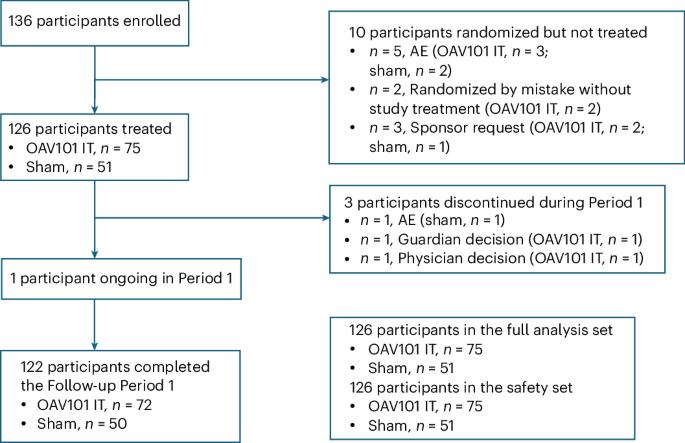
A phase 3 randomized controlled trial published in Nature Medicine evaluated a single intrathecal dose of the gene therapy onasemnogene abeparvovec in untreated patients with spinal muscular atrophy. The trial compared the gene therapy to a sham procedure in children and adolescents. Researchers measured success using a validated motor function scale. The results showed that patients who received the gene therapy experienced significant, clinically meaningful improvements in their motor function compared to the control group, offering a promising early intervention option.

What this means for you

This promising treatment for spinal muscular atrophy is not yet available in clinics. It's important to continue your current care and discuss any questions with your doctor.

Citation:

Nature Medicine - AI Section, 2025. Read article →

Reliable forecasts of heat-health emergencies at least one week in advance
Nature Medicine - AI SectionPromising3 min read

AI system forecasts extreme heat-health emergencies one week early

Key Takeaway:

New forecasting system predicts heat-health emergencies over a week in advance, aiding public health and emergency responses amid increasing global temperatures.

University of Cambridge researchers have developed an AI-driven early warning system that predicts heat-health crises at least seven days in advance. By combining machine learning with meteorological data, the model analyzes historical climate and mortality records, specifically focusing on Europe's intense summer heatwaves from 2022 to 2024. The system successfully forecasts heat-related health risks, allowing emergency managers and healthcare systems to prepare and deploy resources before extreme weather hits.

What this means for you

This early research may help predict heat-health emergencies a week ahead, but it's not yet available. Continue following your doctor's advice and stay informed about heat safety measures.

Citation:

Nature Medicine - AI Section, 2025. DOI: s41591-025-04123-6 Read article →

ArXiv - AI in Healthcare (cs.AI + q-bio)Exploratory3 min read

New AI framework brings autonomous reasoning to clinical workflows

Key Takeaway:

Researchers have developed MCP-AI, a new framework that improves AI's ability to reason and make decisions in healthcare settings, enhancing patient care.

Researchers have created MCP-AI, a novel framework that integrates the Model Context Protocol with clinical applications to enable autonomous reasoning in healthcare. The architecture is designed to handle extended reasoning tasks and secure collaborations while strictly adhering to established medical protocols. Tested in a clinical environment, MCP-AI proved it can manage complex data interactions over long periods while keeping all outcomes verifiable, bridging the gap between raw AI power and safe clinical practice.

What this means for you

This research is in early stages and not yet available for patient care. It might take years to implement. Continue following your doctor's advice and don't change your care based on this study.

Citation:

ArXiv, 2025. arXiv: 2512.05365 Read article →

ArXiv - Quantitative BiologyExploratory3 min read

Machine learning model predicts personalized leukemia drug sensitivity

Key Takeaway:

A new model predicts how well drugs will work for Acute Myeloid Leukemia patients based on their genetic makeup, advancing personalized treatment options.

Researchers have developed a predictive model using Support Vector Regression to assess how acute myeloid leukemia patients will respond to various therapies. By analyzing the unique genetic markers of individual patients, the machine learning model maps genetic profiles to drug sensitivity. The team trained and validated the model using genomic data and real-world clinical outcomes, marking a significant step forward in personalized cancer treatment.

What this means for you

"Exciting research for AML treatment, but it's still early. This approach isn't available yet. Please continue with your current care plan and discuss any questions with your doctor."

Citation:

ArXiv, 2025. arXiv: 2512.06709 Read article →

Google News - AI in HealthcareExploratory3 min read

Patients lack critical AI literacy needed for modern healthcare

Key Takeaway:

Teaching patients to understand AI in healthcare can empower them to make better health decisions and improve their care experiences.

The National Academy of Medicine investigated 'Critical AI Health Literacy' as a tool for patient empowerment. Using surveys and interviews with patients and healthcare professionals, the study assessed how well patients understand AI-driven health info. The findings were stark: only 23% of surveyed patients possessed basic AI literacy. The report argues that targeted education is urgently needed to turn AI into a liberating technology rather than a source of confusion.

What this means for you

"Early research suggests AI could help patients understand healthcare better. It's not ready for use yet, so continue with your current care plan and discuss any questions with your doctor."

Citation:

Google News - AI in Healthcare, 2025. Read article →

FDA announces TEMPO, a new pilot to tackle chronic disease with tech
Healthcare IT NewsExploratory3 min read

FDA launches TEMPO pilot to accelerate chronic disease tech

Key Takeaway:

The FDA's new TEMPO pilot aims to improve outcomes for chronic disease patients by safely integrating digital health devices into care practices.

The FDA has announced a new voluntary pilot program called TEMPO, aimed at bringing digital health devices to chronic disease patients faster. The initiative encourages developers and manufacturers to submit their technologies for a streamlined review process. By focusing on safety and efficacy, the FDA hopes to integrate advanced digital health tools directly into clinical practice, helping patients manage long-term conditions more effectively.

What this means for you

The FDA's TEMPO pilot aims to improve chronic disease care with digital devices. It's early research, so don't change your treatment yet. Always consult your doctor about your health needs and current care plan.

Citation:

Healthcare IT News, 2025. Read article →

Why the Most “Accurate” Glucose Monitors Are Failing Some Users
IEEE Spectrum - BiomedicalExploratory3 min read

Study reveals why highly rated glucose monitors fail users

Key Takeaway:

Dexcom's latest continuous glucose monitors may not provide consistent accuracy for all users, highlighting the need for personalized monitoring strategies in diabetes management.

An independent evaluation published in IEEE Spectrum investigated the accuracy of Dexcom's latest continuous glucose monitors. The researcher compared the digital sensor readings against traditional finger-prick blood tests in a small-scale trial. While the devices generally performed well, the study identified specific real-world factors that caused inconsistent and inaccurate readings for certain users, highlighting the need for backup testing methods.

What this means for you

Early research shows some CGMs may not be accurate for everyone. It's important not to change your care based on this study. Talk to your doctor about your specific needs and current recommendations.

Citation:

IEEE Spectrum - Biomedical, 2025. Read article →

Harnessing human-AI collaboration for an AI roadmap that moves beyond pilots
MIT Technology Review - AIExploratory3 min read

Most enterprise AI initiatives remain stuck in pilot phase

Key Takeaway:

Despite high investment in AI, 75% of companies are still testing AI tools and struggling to implement them fully, highlighting the need for better integration strategies.

An analysis by MIT Technology Review shows that while corporate investment in AI is at an all-time high, roughly 75% of enterprises cannot transition their AI projects from pilot to full production. By reviewing AI initiatives across multiple industries, researchers identified common barriers to deployment, such as scalability and workflow integration, which closely mirror the challenges healthcare organizations face when trying to adopt clinical AI.

What this means for you

This AI research is still in early stages and not yet used in healthcare. It may take years to become available. Please continue following your doctor's current advice for your care.

Citation:

MIT Technology Review - AI, 2025. Read article →

New to reading medical AI research? Learn how to interpret these studies →