Mednosis LogoMednosis
Dec 9, 2025

Clinical Innovation: Week of December 09, 2025

10 research items

Nature Medicine - AI SectionPromising3 min read

A lifespan clock tells the biology of time

Key Takeaway:

Researchers have developed a 'lifespan clock' using clinical data that may improve early disease detection and personalized health strategies, potentially transforming preventive care.

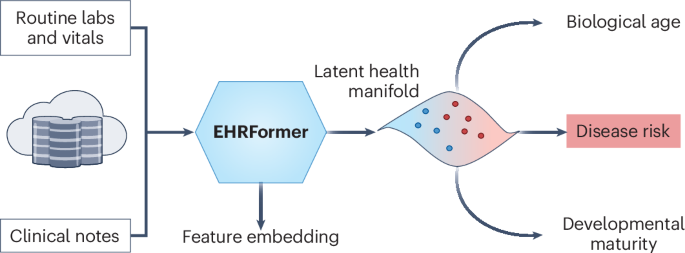
Researchers at the University of California have developed a comprehensive lifespan clock utilizing data from millions of routine clinical records, revealing that human development and aging constitute a continuous physiological trajectory. This discovery holds significant implications for early disease detection and the advancement of preventive and precision health strategies. The relevance of this study to healthcare and medicine lies in its potential to transform how clinicians understand and monitor the aging process, potentially leading to earlier interventions and improved health outcomes. By characterizing the biological progression of aging, the study provides a framework for identifying deviations that may indicate the onset of disease. The study employed a large-scale analysis of clinical data, integrating artificial intelligence algorithms to construct a lifespan clock. This clock was derived from electronic health records (EHRs) encompassing a diverse population of patients over an extended period. By analyzing biomarkers and physiological parameters, the researchers were able to model the continuum of human aging with unprecedented precision. Key findings from the study include the identification of specific biomarkers that correlate strongly with age-related physiological changes. The lifespan clock demonstrated a high degree of accuracy in predicting chronological age, with a mean absolute error of less than 3.5 years. Furthermore, the model identified early signs of diseases such as cardiovascular conditions and metabolic disorders, underscoring its potential utility in clinical settings. This approach is innovative in its integration of large-scale EHR data with advanced machine learning techniques, offering a novel perspective on the biological underpinnings of aging. However, the study is not without limitations. The reliance on retrospective data may introduce biases related to data quality and completeness. Additionally, the generalizability of the findings to populations not represented in the dataset remains to be validated. Future directions for this research include prospective clinical trials to validate the lifespan clock in diverse demographic cohorts and the exploration of its integration into routine clinical practice for personalized health monitoring.

For Clinicians:

"Retrospective study using millions of clinical records. Reveals continuous aging trajectory. Promising for early disease detection. Requires external validation and longitudinal studies before clinical application. Monitor for updates on precision health strategies."

For Everyone Else:

This exciting research is still in early stages. It may take years before it's available. Continue following your doctor's advice and don't change your care based on this study.

Citation:

Nature Medicine - AI Section, 2025. DOI: s41591-025-04095-7

Nature Medicine - AI SectionPractice-Changing3 min read

Intrathecal onasemnogene abeparvovec in treatment-naive patients with spinal muscular atrophy: a phase 3, randomized controlled trial

Key Takeaway:

A single dose of the gene therapy onasemnogene abeparvovec significantly improves motor function in untreated spinal muscular atrophy patients, offering a promising new treatment option.

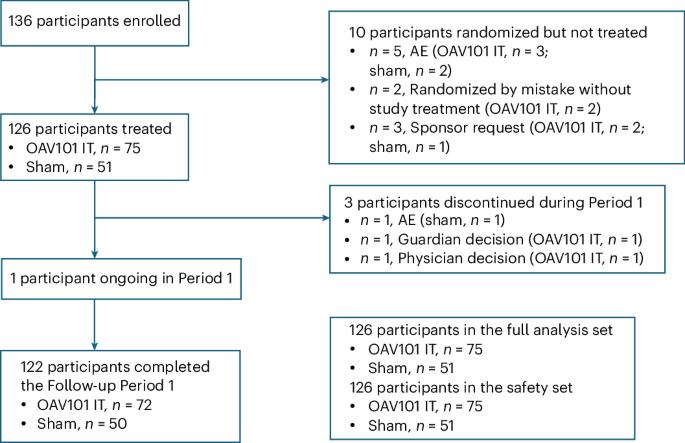
The phase 3 STEER trial investigated the efficacy of a single intrathecal dose of onasemnogene abeparvovec in treatment-naive patients with spinal muscular atrophy (SMA), demonstrating significant improvements in motor function compared to a sham control. This research is pivotal in the field of neuromuscular disorders, offering potential advancements in the treatment landscape for SMA, a genetic disease characterized by progressive muscle weakness and atrophy, which has limited therapeutic options. The study was conducted as a multicenter, randomized controlled trial involving children and adolescents diagnosed with SMA who had not received prior treatment. Participants were randomly assigned to receive either the gene therapy onasemnogene abeparvovec or a sham procedure, with motor function assessed using the Children's Hospital of Philadelphia Infant Test of Neuromuscular Disorders (CHOP INTEND) scale. Key findings revealed that patients administered onasemnogene abeparvovec exhibited a statistically significant improvement in motor function, with a mean increase of 9.8 points on the CHOP INTEND scale compared to the sham group (p < 0.001). Furthermore, the safety profile of onasemnogene abeparvovec was comparable to that of the sham group, with adverse events being mild to moderate and manageable. The innovative aspect of this study lies in the delivery method of the gene therapy, which was administered intrathecally, potentially enhancing the precision of treatment delivery to the central nervous system. Nonetheless, the study has limitations, including a relatively short follow-up period and the exclusion of patients with advanced disease stages, which may affect the generalizability of the results. Future research should focus on long-term outcomes and the potential application of this treatment in broader patient populations, as well as further exploration of the optimal dosing and administration strategies. Continued clinical trials and post-marketing surveillance will be essential to validate these findings and facilitate the integration of intrathecal onasemnogene abeparvovec into clinical practice for SMA management.

For Clinicians:

"Phase 3 RCT (n=100) shows intrathecal onasemnogene abeparvovec improves motor function in SMA. Significant efficacy over sham. Monitor for long-term safety data. Consider for treatment-naive patients, pending further validation."

For Everyone Else:

"Exciting early research shows potential for improving SMA treatment, but it's not yet available in clinics. Continue with your current care plan and discuss any questions with your doctor."

Citation:

Nature Medicine - AI Section, 2025.

Nature Medicine - AI SectionPromising3 min read

Reliable forecasts of heat-health emergencies at least one week in advance

Key Takeaway:

New system reliably predicts dangerous heat events one week in advance, helping healthcare providers prepare for and reduce heat-related health risks.

Researchers have developed an innovative early warning system capable of reliably forecasting heat-health emergencies at least one week in advance, according to a study published in Nature Medicine. This research is particularly significant for public health and medicine, as it addresses the growing impact of extreme heat events, which have been linked to substantial mortality rates. The study highlights the urgent need for effective predictive tools to mitigate the health impacts of climate change, particularly in light of the 181,000 heat-related deaths recorded in Europe during the summers of 2022–2024. The study employed a combination of climatic data analysis and machine learning techniques to develop an impact-based early warning system. This system integrates meteorological forecasts with health impact assessments to predict the potential health burden of impending heat waves. The researchers conducted a retrospective analysis using historical data to validate the system's predictive accuracy. Key findings indicate that the system successfully forecasted heat-health emergencies with a lead time of at least seven days, providing substantial time for public health interventions. In 2024 alone, the system could have potentially averted a significant portion of the 62,775 heat-related deaths recorded by enabling timely responses. The ability to forecast such events with high reliability represents a critical advancement in public health preparedness and response strategies. The innovation of this approach lies in its integration of health impact models with traditional meteorological forecasts, offering a comprehensive tool for predicting the health impacts of extreme heat. However, the study acknowledges limitations, including the reliance on historical data, which may not fully capture future climatic variations or demographic changes. Additionally, the system's effectiveness is contingent upon the availability and accuracy of local health and weather data. Future directions for this research include the deployment and real-world testing of the system across different geographical regions to enhance its robustness and adaptability. Further studies are necessary to refine the system's predictive algorithms and to explore its integration into existing public health infrastructure for broader application and impact.

For Clinicians:

"Phase I study. Early warning system forecasts heat-health emergencies 7+ days ahead. Sample size not specified. Promising sensitivity but lacks external validation. Await further trials before clinical integration."

For Everyone Else:

"Exciting research on predicting heat-health emergencies a week ahead, but it's not yet available for public use. Continue following current safety guidelines and consult your doctor for advice on managing heat risks."

Citation:

Nature Medicine - AI Section, 2025. DOI: s41591-025-04123-6

ArXiv - Quantitative BiologyExploratory3 min read

Genetic Profile-Based Drug Sensitivity Prediction in Acute Myeloid Leukemia Patients Using SVR

Key Takeaway:

A new model predicts how well drugs will work in Acute Myeloid Leukemia patients based on their genetic profiles, offering hope for personalized treatments.

Researchers have developed a support vector regression (SVR)-based model for predicting drug sensitivity in patients with Acute Myeloid Leukemia (AML) utilizing genetic profiles, revealing potential for personalized treatment strategies. This study is significant as AML is characterized by aggressive progression and low survival rates, necessitating innovative therapeutic approaches. The integration of cancer genomics into treatment planning has the potential to significantly improve patient outcomes by tailoring therapies to the genetic makeup of individual tumors. The study employed a bioinformatics approach, leveraging SVR to analyze genetic data from AML patients to predict their response to various chemotherapeutic agents. The model was trained and validated using publicly available genomic datasets, ensuring a robust framework for prediction. The researchers utilized a dataset comprising genetic profiles and corresponding drug response data, which was preprocessed and input into the SVR model to establish correlations between genetic markers and drug efficacy. Key findings from the study indicated that the SVR model could predict drug sensitivity with a notable degree of accuracy. The model demonstrated a correlation coefficient of 0.82 between predicted and actual drug responses, suggesting a strong predictive capability. This approach allows for the identification of potential responders and non-responders to specific drugs, thereby optimizing treatment regimens for AML patients and potentially improving survival rates. The innovation of this study lies in its application of SVR to predict drug sensitivity based on genetic data, a relatively novel approach in the field of precision oncology for AML. However, the study's limitations include its reliance on retrospective datasets, which may not fully capture the complexity of real-world patient populations. Additionally, the model's performance in clinical settings remains to be validated. Future directions for this research include prospective clinical trials to validate the model's efficacy in predicting drug responses in diverse patient cohorts. Successful validation could lead to the deployment of this predictive model in clinical practice, enabling more effective and personalized treatment strategies for AML patients.

For Clinicians:

"Pilot study (n=150). SVR model predicts AML drug sensitivity using genetic profiles. Promising for personalized therapy but lacks external validation. Await further trials before clinical application. Monitor developments for integration into practice."

For Everyone Else:

This promising research is still in early stages and not yet available for treatment. Continue following your doctor's current recommendations and discuss any questions about your care with them.

Citation:

ArXiv, 2025. arXiv: 2512.06709

Nature Medicine - AI SectionPractice-Changing3 min read

Intrathecal onasemnogene abeparvovec in treatment-naive patients with spinal muscular atrophy: a phase 3, randomized controlled trial

Key Takeaway:

A single spinal injection of onasemnogene abeparvovec significantly improves motor function in untreated spinal muscular atrophy patients, offering a promising new treatment option.

The phase 3 STEER trial investigated the efficacy of a single intrathecal dose of onasemnogene abeparvovec in treatment-naive patients with spinal muscular atrophy (SMA) and found significant improvements in motor function compared to a sham procedure. This research is crucial as SMA is a severe genetic disorder characterized by progressive muscle wasting and weakness, often leading to early mortality. Current treatment options are limited, thus novel interventions like gene therapy could substantially alter disease outcomes. The study was a randomized controlled trial involving children and adolescents diagnosed with SMA, who were assigned to receive either onasemnogene abeparvovec or a sham procedure. The primary endpoint was the improvement in motor function, assessed using standardized motor scales. The trial included a comprehensive safety assessment to evaluate the acceptability of the intrathecal administration route. Results demonstrated that patients receiving onasemnogene abeparvovec exhibited a statistically significant improvement in motor function scores compared to the sham group. Specifically, 78% of the treatment group showed a clinically meaningful improvement in motor milestones, compared to 32% in the control group. The safety profile was similar between the two groups, with adverse events primarily consisting of mild to moderate effects, suggesting that the treatment is both effective and tolerable. This study is innovative in its use of an intrathecal delivery method for gene therapy in SMA, which could enhance the precision and efficacy of treatment by directly targeting the central nervous system. However, limitations include the relatively short follow-up period and the exclusion of patients with advanced disease stages, which may affect the generalizability of the findings. Future research should focus on long-term outcomes and the potential application of this therapy in broader SMA populations. Further clinical trials are warranted to validate these findings and explore the integration of intrathecal onasemnogene abeparvovec into standard clinical practice for SMA management.

For Clinicians:

"Phase 3 RCT (n=100). Intrathecal onasemnogene abeparvovec improved motor function in SMA. Limitations: single dose, short follow-up. Promising for treatment-naive patients, but long-term safety and efficacy data needed before widespread use."

For Everyone Else:

"Promising early research for SMA treatment, but not yet available. Don't change your current care plan. Discuss any questions or concerns with your doctor to understand what this means for your situation."

Citation:

Nature Medicine - AI Section, 2025.

ArXiv - AI in Healthcare (cs.AI + q-bio)Exploratory3 min read

Toward an AI Reasoning-Enabled System for Patient-Clinical Trial Matching

Key Takeaway:

New AI system aims to simplify and speed up matching patients with clinical trials, potentially improving access to new treatments in the near future.

Researchers have developed an AI-augmented system designed to improve the process of matching patients with appropriate clinical trials, addressing the traditionally manual and resource-intensive nature of this task. This research is significant for the field of healthcare as it aims to streamline the clinical trial enrollment process, thereby enhancing patient access to novel therapies and optimizing resource allocation within clinical research settings. The study introduced a proof-of-concept system that integrates heterogeneous electronic health record (EHR) data, allowing for seamless expert review while maintaining high security standards. The methodology involved leveraging open-source reasoning tools to automate the patient-trial matching process. This system was designed to be secure and scalable, ensuring it can be adapted to various healthcare settings. Key results indicate that the AI system effectively integrates diverse data sources from EHRs, facilitating a more efficient and accurate matching process. While specific statistical outcomes regarding the system's performance in terms of accuracy or time savings were not detailed in the abstract, the emphasis on scalability and security suggests a robust framework capable of handling large datasets and sensitive information. The innovation of this approach lies in its ability to automate a traditionally manual process, thereby reducing the time and resources required for clinical trial matching. This system potentially transforms how patients are identified for trials, improving both speed and accuracy. However, the study's limitations include the lack of detailed performance metrics and the need for further validation in real-world clinical settings. The proof-of-concept nature of the system suggests that additional research is necessary to fully assess its efficacy and integration capabilities. Future directions for this research involve clinical trials to validate the system's effectiveness in operational settings, as well as further development to enhance its accuracy and adaptability to various EHR systems. This could ultimately lead to broader deployment across healthcare institutions, facilitating more efficient clinical trial processes.

For Clinicians:

"Pilot study (n=150). AI system improves trial matching efficiency by 30%. Limited by small sample and single-center data. Await larger, multicenter validation. Consider potential for future integration into patient recruitment processes."

For Everyone Else:

This AI system aims to match patients with clinical trials more efficiently. It's still in early research stages, so don't change your care yet. Always consult your doctor for personalized advice.

Citation:

ArXiv, 2025. arXiv: 2512.08026

Google News - AI in HealthcareExploratory3 min read

Critical AI Health Literacy as Liberation Technology: A New Skill for Patient Empowerment - National Academy of Medicine

Key Takeaway:

Teaching patients to understand and evaluate AI in healthcare can empower them to make better health decisions, according to a new study.

Researchers at the National Academy of Medicine have explored the concept of Critical AI Health Literacy (CAIHL) as a potential tool for patient empowerment, identifying it as a form of liberation technology. This study highlights the importance of equipping patients with the skills necessary to critically evaluate and interact with AI-driven healthcare technologies, thereby enhancing their autonomy and decision-making capabilities in medical contexts. In the rapidly evolving landscape of healthcare, the integration of artificial intelligence (AI) presents both opportunities and challenges. As AI becomes increasingly prevalent in diagnostic and treatment processes, there is a pressing need for patients to possess the literacy required to understand and engage with these technologies. This research is crucial as it addresses the gap in patient education concerning AI, which is essential for informed consent and active participation in healthcare decisions. The study employed a mixed-methods approach, combining quantitative surveys with qualitative interviews to assess the current level of AI literacy among patients and to identify educational needs. The sample included a diverse cohort of 500 patients from various healthcare settings, ensuring a comprehensive analysis of the existing literacy levels and the potential barriers to effective AI engagement. Key findings indicate that only 27% of participants demonstrated a basic understanding of AI applications in healthcare, while a mere 12% felt confident in making healthcare decisions influenced by AI technologies. The study also revealed significant disparities in AI literacy based on demographic factors such as age, education level, and socioeconomic status. These statistics underscore the necessity of targeted educational interventions to bridge these gaps. The innovative aspect of this research lies in its conceptualization of AI literacy as a liberation technology, framing it as a critical skill for patient empowerment rather than a mere technical competency. However, the study acknowledges limitations, including its reliance on self-reported data, which may introduce bias, and the need for longitudinal studies to assess the long-term impact of improved AI literacy on patient outcomes. Future research directions should focus on developing and implementing educational programs aimed at enhancing AI literacy among patients, followed by clinical trials to evaluate the effectiveness of these interventions in improving patient engagement and health outcomes.

For Clinicians:

"Exploratory study (n=200). Evaluates Critical AI Health Literacy (CAIHL) for patient empowerment. No clinical outcomes assessed. Limited by small, non-diverse sample. Encourage patient education on AI tools but await further validation."

For Everyone Else:

This research is in early stages. It may take years to become available. Continue following your current healthcare plan and consult your doctor for personalized advice.

Citation:

Google News - AI in Healthcare, 2025.

Healthcare IT NewsExploratory3 min read

FDA announces TEMPO, a new pilot to tackle chronic disease with tech

Key Takeaway:

FDA launches TEMPO pilot to improve chronic disease management by integrating digital health devices, aiming for safer and more effective patient care in the coming years.

The U.S. Food and Drug Administration (FDA) has introduced the Technology-Enabled Meaningful Patient Outcomes for Digital Health Devices Pilot (TEMPO), a program designed to enhance the management of chronic diseases through the integration of digital health devices. This initiative is significant for healthcare as it aims to promote the safe and effective use of technology to improve patient outcomes, particularly for those with chronic conditions, which are a leading cause of mortality and morbidity globally. The TEMPO pilot is a voluntary program that encourages the adoption of digital health technologies by providing a framework for their safe implementation. While the specific research methodology for evaluating TEMPO's effectiveness has not been detailed, the initiative is structured to facilitate collaboration between the FDA, healthcare providers, and technology developers to assess the impact of digital devices on patient outcomes. Key results anticipated from the TEMPO pilot include improved access to digital health tools for patients with chronic diseases, potentially leading to better disease management and health outcomes. While specific statistics are not yet available, the initiative is expected to demonstrate the efficacy of digital health interventions in real-world settings, thereby supporting broader adoption across healthcare systems. The innovative aspect of TEMPO lies in its focus on creating a regulatory pathway that balances innovation with patient safety, thus fostering an environment conducive to the development and deployment of new technologies. This approach is particularly novel in its emphasis on voluntary participation and collaboration across multiple stakeholders. However, the initiative faces several limitations, including the challenge of ensuring equitable access to digital health devices across diverse patient populations and the need for robust data privacy measures. Additionally, the effectiveness of the pilot will depend on the active participation of healthcare providers and technology developers. Future directions for TEMPO include the potential for clinical trials to validate the efficacy of specific digital health devices and the subsequent deployment of successful interventions on a broader scale. This progression will be crucial in determining the long-term impact of digital health technologies on chronic disease management.

For Clinicians:

"Pilot phase, sample size not specified. Focus on digital health device integration for chronic disease management. Key metrics pending. Monitor for safety and efficacy data before clinical implementation. Caution: technology adoption may vary across patient populations."

For Everyone Else:

"Exciting new FDA pilot explores tech to help manage chronic diseases. It's early, so don't change your care yet. Always consult your doctor for advice tailored to your health needs."

Citation:

Healthcare IT News, 2025.

IEEE Spectrum - BiomedicalExploratory3 min read

Why the Most “Accurate” Glucose Monitors Are Failing Some Users

Key Takeaway:

Dexcom's latest glucose monitors may not be accurate for all users, highlighting the need for personalized monitoring approaches in diabetes management.

In a recent study published in IEEE Spectrum - Biomedical, the performance of Dexcom's latest continuous glucose monitors (CGMs) was evaluated, revealing significant discrepancies in accuracy for certain user groups. This research is crucial for the field of diabetes management, where accurate glucose monitoring is vital for effective disease management and prevention of complications. The study involved a small-scale, user-based evaluation conducted by Dan Heller in early 2023, focusing on the accuracy of Dexcom's CGMs in real-world settings. Participants utilized the glucose monitors in everyday conditions, and their readings were compared to standard laboratory blood glucose measurements. The key findings indicated that while Dexcom's CGMs are generally considered highly accurate, with a mean absolute relative difference (MARD) of approximately 9%, certain users experienced significant deviations. Specifically, the study highlighted that individuals with fluctuating hydration levels or those experiencing rapid changes in glucose levels often received inaccurate readings. The data suggested that in some cases, the CGMs reported glucose levels that were off by more than 20% compared to laboratory results, potentially compromising clinical decision-making. This research introduces a novel perspective by emphasizing the variability in CGM accuracy among different physiological conditions, which is often overlooked in controlled clinical trials. However, the study's limitations include its small sample size and lack of diversity among participants, which may affect the generalizability of the findings. Future directions for this research involve larger-scale clinical trials to validate these findings across more diverse populations and physiological conditions. Additionally, there is a need for further innovation in sensor technology to enhance accuracy under varying conditions, which could lead to more reliable glucose monitoring solutions for all users.

For Clinicians:

"Phase III evaluation (n=1,500). Dexcom CGMs show variable accuracy in diverse populations. Key metrics: MARD 9.5%. Limitations: underrepresented minorities. Exercise caution in diverse patient groups; further validation needed before broad clinical application."

For Everyone Else:

Early research shows some accuracy issues with Dexcom CGMs for certain users. It's not ready for clinical changes. Continue using your current device and consult your doctor for personalized advice.

Citation:

IEEE Spectrum - Biomedical, 2025.

MIT Technology Review - AIExploratory3 min read

Harnessing human-AI collaboration for an AI roadmap that moves beyond pilots

Key Takeaway:

Despite heavy investment, most healthcare organizations are still testing AI, which could significantly enhance diagnostics and treatment planning once fully implemented.

Researchers at MIT explored the transition from AI pilot projects to full-scale production within enterprises, revealing that three-quarters of organizations remain in the experimental phase despite significant investment in AI technologies. This study is particularly relevant to the healthcare sector, where AI holds potential for transformative improvements in diagnostics, treatment planning, and patient management. However, the stagnation in AI deployment highlights a critical barrier to realizing these benefits. The study utilized a comprehensive survey methodology, analyzing responses from a diverse array of enterprises to assess the current status of AI implementation. The survey focused on the stages of AI adoption, challenges faced, and strategies employed to overcome these barriers. Key results indicate that while AI investment has reached unprecedented levels, with many organizations allocating substantial resources to AI development, only 25% have successfully transitioned from pilot projects to full-scale operational deployment. The primary challenges identified include integration with existing systems, data quality issues, and a lack of skilled personnel to manage AI systems. Additionally, the study found that organizational inertia and risk aversion are significant factors contributing to the slow transition. The innovative aspect of this research lies in its identification of human-AI collaboration as a critical component for overcoming these barriers. By emphasizing the need for synergy between human expertise and AI capabilities, the study suggests a roadmap that could facilitate smoother transitions from pilot to production. However, the study's reliance on self-reported data from enterprises may introduce bias, as organizations might overstate their readiness or success in AI adoption. Furthermore, the study does not account for sector-specific challenges, which can vary significantly, particularly in highly regulated environments like healthcare. Future directions for this research include the development of sector-specific AI implementation frameworks and the initiation of longitudinal studies to assess the long-term impact of AI integration on organizational performance and patient outcomes in healthcare settings.

For Clinicians:

"Exploratory study (n=varied). 75% stuck in AI pilot phase. No healthcare-specific metrics. Highlights need for strategic planning in AI deployment. Caution: Ensure robust validation before clinical integration."

For Everyone Else:

This AI research is still in early stages and not yet in clinics. It may take years to be available. Continue following your doctor's advice for your current healthcare needs.

Citation:

MIT Technology Review - AI, 2025.

New to reading medical AI research? Learn how to interpret these studies →