Mednosis LogoMednosis
May 28, 2026

Clinical Innovation: Week of May 28, 2026

9 research items

Clinical Innovation: Week of May 28, 2026
Safety Alert
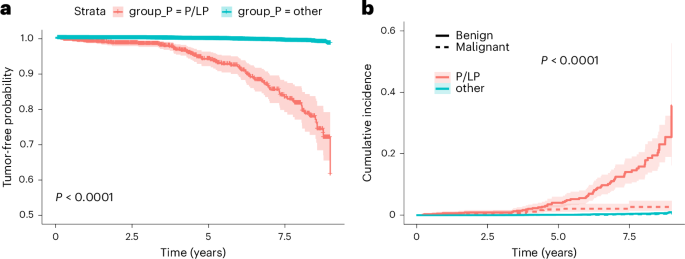
Pathogenic germline variants identify elevated cancer risk in pediatric patients referred for genetic testing
Nature Medicine - AI SectionPromising2 min read

Pathogenic germline variants identify elevated cancer risk in pediatric patients referred for genetic testing

Key Takeaway:

Identifying inherited cancer-risk genes in pediatric patients helps doctors predict future tumor risks, allowing for personalized long-term monitoring and counseling starting today.

This peer-reviewed study published in Nature Medicine investigates the clinical significance of pathogenic germline variants in pediatric cancer-predisposition genes. Utilizing large-scale genomic analysis, the researchers sought to establish a definitive link between these inherited genetic markers and the subsequent risk of tumor development in pediatric patients who had been referred for genetic testing. The background of this work rests on the critical clinical need to identify high-risk pediatric cohorts early to optimize preventative care. In terms of methodology, the study leveraged extensive genomic datasets to track the occurrence of subsequent oncological events in patients carrying these specific pathogenic variants. The key results demonstrate a statistically significant association between the presence of these germline variants and an elevated risk of future tumor development, thereby validating their clinical utility. This research represents a notable innovation by providing robust, large-scale evidence that connects specific pediatric predisposition genes directly to longitudinal patient outcomes. However, as a retrospective genomic analysis, the study has inherent limitations, such as potential referral biases in the cohort and the need for prospective validation across more diverse demographic populations. Future directions for this research will likely focus on integrating these genomic findings into standardized clinical surveillance protocols and exploring how these risk profiles can guide personalized, preemptive therapeutic interventions for pediatric patients.

For Clinicians:

This large-scale genomic study associates pathogenic germline variants with elevated pediatric tumor risk. While promising for surveillance design, note the retrospective referral cohort limitations before altering current risk-assessment protocols.

For Everyone Else:

This study shows that genetic testing can identify children with a higher risk of developing future tumors. Talk to your doctor about genetic counseling, but do not alter current medical care.

Citation:

Nature Medicine - AI Section, 2026. DOI: s41591-026-04451-1 Read article →

Nature Medicine - AI SectionExploratory2 min read

What Utah’s clinical AI sandbox reveals about independent oversight

Key Takeaway:

Utah's clinical AI sandbox demonstrates how independent regulatory oversight can safely accelerate the validation of healthcare algorithms before widespread clinical adoption.

This analysis, published in Nature Medicine, examines the implications of Utah's clinical artificial intelligence (AI) sandbox, a regulatory initiative designed to evaluate the deployment and independent oversight of AI technologies in real-world healthcare settings. The background of this study lies in the growing tension between rapid clinical AI innovation and the lack of standardized, independent validation frameworks. By analyzing the structure and outcomes of the Utah sandbox, the researchers explore a methodology of collaborative governance that allows developers to test AI tools under regulatory supervision with real patient data, while maintaining strict oversight protocols. The key results highlight how structured regulatory sandboxes can successfully bridge the gap between developer-led validation and independent clinical assessment, revealing critical insights into data privacy, algorithm drift, and safety monitoring. The primary innovation of this model is its dual-benefit approach: it provides developers with a safe environment to refine their algorithms while offering regulatory bodies a transparent mechanism to assess clinical safety and efficacy before widespread market authorization. However, a notable limitation discussed is the geographic and demographic specificity of the Utah cohort, which may limit the direct generalizability of the oversight framework to more diverse national or international healthcare systems. Future directions point toward the harmonization of these regional sandboxes into a unified, multi-state or federal oversight network to standardize clinical AI evaluation metrics.

For Clinicians:

This regulatory analysis evaluates Utah's AI sandbox framework. While promising for future governance, clinicians should note that specific clinical algorithms tested within remain exploratory and require broader multi-center validation.

For Everyone Else:

This study looks at a new government program in Utah designed to safely test medical AI. These tools are still being evaluated and are not yet widely available.

Citation:

Nature Medicine - AI Section, 2026. DOI: s41591-026-04418-2 Read article →

Drug Watch
Fibroblast growth factor receptor inhibition for succinate dehydrogenase-deficient gastrointestinal stromal tumors: a phase 2 trial
Nature Medicine - AI SectionPromising2 min read

Fibroblast growth factor receptor inhibition for succinate dehydrogenase-deficient gastrointestinal stromal tumors: a phase 2 trial

Key Takeaway:

A new phase 2 trial shows that the drug rogaratinib successfully targets a genetic switch to treat rare, drug-resistant gastrointestinal tumors.

This peer-reviewed research, published in Nature Medicine, details the outcomes of a multicenter phase 2 clinical trial evaluating the efficacy of the fibroblast growth factor receptor (FGFR) inhibitor rogaratinib. The study specifically targeted patients diagnosed with succinate dehydrogenase (SDH)-deficient gastrointestinal stromal tumors (GIST), a distinct molecular subtype of GIST that is notoriously resistant to standard tyrosine kinase inhibitors. By focusing on the unique pathophysiology of SDH-deficient tumors, the investigators sought to evaluate whether targeting FGFR could bypass traditional resistance pathways. The methodology involved administering the tyrosine kinase inhibitor rogaratinib to this specific patient cohort to assess its therapeutic impact. The key results demonstrated encouraging clinical efficacy in patients with SDH-deficient gastrointestinal stromal tumors, marking a significant therapeutic signal for this underserved patient population. The primary innovation of this trial lies in its successful demonstration that an epigenetic mechanism of oncogene activation can be therapeutically targeted using a tyrosine kinase inhibitor, opening new avenues for precision oncology. However, as a phase 2 trial, the study is inherently limited by its design, which lacks the large-scale comparative data of a phase 3 trial. Future directions will necessitate larger, randomized controlled trials to confirm these efficacy signals, establish long-term safety profiles, and determine the optimal positioning of rogaratinib within the treatment paradigm for SDH-deficient gastrointestinal stromal tumors.

For Clinicians:

This phase 2 trial demonstrates encouraging efficacy of the FGFR inhibitor rogaratinib in SDH-deficient GIST. While promising, clinicians should await phase 3 data before altering current standard treatment protocols.

For Everyone Else:

This early-stage study shows a new drug, rogaratinib, may help treat a rare type of stomach tumor. It is not yet widely available, and patients should not change their current treatments.

Citation:

Nature Medicine - AI Section, 2026. DOI: s41591-026-04376-9 Read article →

Google News - AI in HealthcarePromising2 min read

Coalition for Health AI unveils governance playbooks for responsible AI adoption - Fierce Healthcare

Key Takeaway:

The Coalition for Health AI has released new governance playbooks to help healthcare organizations safely and responsibly adopt artificial intelligence technologies.

Background: The rapid integration of artificial intelligence (AI) in clinical settings has created an urgent need for standardized frameworks to ensure safety, efficacy, and equity. To address this gap, the Coalition for Health AI (CHAI) has introduced governance playbooks designed to guide healthcare organizations in the responsible adoption and deployment of AI technologies. Methodology: While the brief source text does not detail the specific consensus methodology or the exact number of participating institutions involved in drafting these playbooks, the initiative represents a collaborative effort across healthcare, technology, and academic sectors to establish structured organizational guidelines. Key Results: The primary output of this initiative is the release of actionable governance playbooks that outline best practices for evaluating, implementing, and monitoring AI tools in clinical workflows. Innovation: This release is innovative because it shifts the focus from theoretical AI ethics to practical, operationalized governance structures that health systems can actively implement. Limitations: Based on the provided text, specific limitations include a lack of empirical data regarding the real-world adoption rates of these playbooks, their direct impact on clinical outcomes, and the specific metrics used to evaluate compliance. Future Direction: Future efforts will likely focus on widespread dissemination, pilot testing these playbooks across diverse clinical settings, and refining the guidelines based on feedback from early-adopting healthcare organizations.

For Clinicians:

CHAI has launched governance playbooks for AI adoption. While promising, clinicians should note that these are organizational guidelines rather than clinical trials, and local institutional validation remains necessary.

Citation:

Google News - AI in Healthcare, 2026. Read article →

Safety Alert
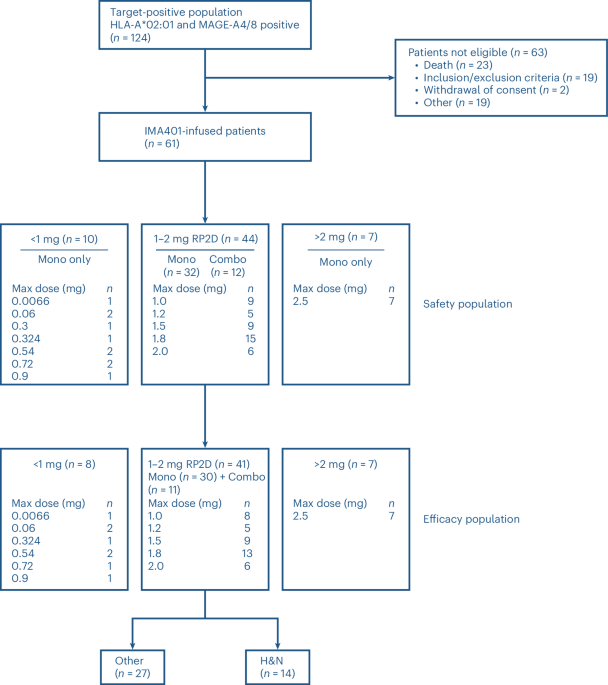
MAGE-A4/MAGE-A8-targeted TCR-based bispecific T cell engager in recurrent and/or refractory solid tumors: a phase 1 trial
Nature Medicine - AI SectionExploratory2 min read

MAGE-A4/MAGE-A8-targeted TCR-based bispecific T cell engager in recurrent and/or refractory solid tumors: a phase 1 trial

Key Takeaway:

An early-stage trial shows a new immune-boosting drug, IMA401, is safe and shows early promise against recurrent head, neck, and skin cancers.

This peer-reviewed research, presented at the 2026 ASCO Annual Meeting, reports on a prespecified interim analysis of an ongoing phase 1a clinical trial evaluating IMA401. IMA401 is a novel, bispecific T cell receptor (TCR)-based T cell engager designed to target a MAGE-A4/MAGE-A8 peptide presented by the HLA-A*02:01 complex. The study's methodology focuses on evaluating the safety profile, tolerability, and preliminary therapeutic efficacy of this immunotherapy in patients presenting with recurrent and/or refractory solid tumors. The interim results demonstrate an encouraging safety profile alongside a preliminary efficacy signal, particularly in patient cohorts diagnosed with head and neck cancers and melanoma. Notably, these positive signals were observed both in patients receiving IMA401 as a monotherapy and in those treated with a combination regimen of the TCR-based engager and an anti-PD-1 checkpoint inhibitor. While these early-phase results are highly encouraging, the study is limited by its early phase 1a nature, which inherently features a small, select patient population and lacks long-term survival data. Future directions for this research will involve further dose-escalation and expansion cohorts to better define the optimal therapeutic dose, characterize the long-term safety profile, and confirm the efficacy of IMA401 both as a single agent and in combination with other immunotherapies for patients with HLA-A*02:01-positive solid tumors.

For Clinicians:

This phase 1a trial of IMA401 shows early safety and efficacy in HLA-A*02:01-positive head, neck, and melanoma patients. Note the small sample size; await phase 2 data before clinical application.

For Everyone Else:

This early-stage study shows a new immunotherapy is safe and showing early promise for advanced cancers. It is not yet widely available, and standard treatments should not be changed.

Citation:

Nature Medicine - AI Section, 2026. Read article →

Healthcare IT NewsPromising2 min read

Joint Commission intros new voluntary AI responsibility certification

Key Takeaway:

The Joint Commission's new voluntary certification helps hospitals safely and ethically manage healthcare artificial intelligence, rather than certifying individual medical software tools.

The Joint Commission has introduced a new voluntary certification program titled the 'Responsible Use of AI in Healthcare.' This initiative is designed to address the rapid integration of artificial intelligence within clinical workflows and administrative systems. Unlike traditional regulatory approvals that evaluate the efficacy of specific software, the methodology of this certification focuses on the organizational level. It establishes a framework to assess how healthcare institutions deploy, monitor, and manage these technologies. The key result of this program is the promotion of 'safe, reliable, transparent, and ethical' AI deployment across participating healthcare organizations. The core innovation lies in shifting the evaluative focus away from validating individual AI tools or algorithms, and instead certifying the overarching governance and ethical frameworks of the hospitals themselves. While the source text does not detail specific quantitative metrics or sample sizes, a primary limitation of this voluntary certification is that it does not guarantee the clinical accuracy of any single AI tool used within a certified facility. The future direction of this initiative points toward a standardized, industry-wide benchmark for institutional AI governance, encouraging more healthcare systems to adopt structured ethical guidelines as artificial intelligence becomes deeply embedded in patient care.

For Clinicians:

This voluntary Joint Commission certification focuses on institutional AI governance and ethical deployment frameworks rather than validating individual clinical tools. Exercise standard clinical judgment when utilizing uncertified software.

For Everyone Else:

A new voluntary hospital certification aims to ensure your healthcare provider uses artificial intelligence safely and ethically, though it does not directly test individual medical tools.

Citation:

Healthcare IT News, 2026. Read article →

Guideline Update
ArXiv - AI in Healthcare (cs.AI + q-bio)Exploratory2 min read

Capability Self-Assessment: Teaching LLMs to Know Their Limits

Key Takeaway:

Teaching artificial intelligence to recognize its own limits and delegate difficult tasks prevents errors, making clinical AI tools safer and more reliable for future medical decision-making.

This preprint addresses a critical vulnerability in modern large language models (LLMs): the systematic lack of Capability Self-Assessment (CSA), which is the ability of an intelligent system to recognize its own limitations and decide whether to solve a problem or delegate it. The authors demonstrate that across diverse model families and scales, LLMs consistently overestimate their competence and attempt to answer queries they cannot solve. To resolve this, the researchers formulate CSA as a policy-learning problem designed to improve self-assessment without degrading the model's original capabilities. The methodology compares reinforcement learning (RL) against supervised fine-tuning (SFT) for teaching CSA. The key results show that reinforcement learning teaches CSA effectively and significantly outperforms supervised fine-tuning. Crucially, while RL preserves the model's original capabilities, SFT severely degrades the very capabilities the model is meant to assess. Furthermore, the study finds that learned self-assessment behavior generalizes well to out-of-distribution scenarios, indicating that CSA is a transferable model trait. In terms of practical utility, CSA improves local-cloud decision-making at inference time and provides a valuable signal for targeted data selection during training. Limitations of the study include its focus on general LLM architectures without specific clinical safety testing. Future directions will likely involve testing these self-assessment policies in high-stakes domains like medicine, where accurate delegation is vital for patient safety.

For Clinicians:

This early-stage computer science study demonstrates that reinforcement learning can teach LLMs to delegate unsolvable queries. However, because this technology has not been clinically validated, physicians should not rely on current AI self-assessments.

For Everyone Else:

Researchers are teaching medical AI to recognize when it does not know an answer and needs to ask a human. This technology is in early development and not ready for clinical use.

Citation:

ArXiv, 2026. arXiv: 2606.00251 Read article →

Guideline Update
ArXiv - Quantitative BiologyExploratory2 min read

The Neuromorphic Supremacy

Key Takeaway:

By mimicking brain cells, novel hybrid AI models can learn from very few examples and resist errors caused by visual noise or obstructions.

This study addresses a fundamental limitation in modern artificial neural networks: their inability to match the rapid, few-shot learning capabilities and robust noise tolerance of biological neural systems. While conventional deep learning models suffer from performance collapse when subjected to sensory noise or data scarcity, the authors propose a novel hybrid architecture to bridge this gap. The methodology involves embedding genuine neuromorphic circuits directly into conventional artificial neural network frameworks. These specialized circuits are designed to mimic biological structures by incorporating both spiking dynamics and astrocytic modulation. The researchers evaluated these hybrid models across standard benchmarks of varying complexity to test their performance under challenging conditions. The key results demonstrate that the hybrid models achieve high accuracy using only a few training examples per class. Furthermore, the models sustained high performance when subjected to occlusion and impulse noise, conditions that typically cause standard deep learning models to fail. The authors term this decisive performance advantage 'neuromorphic supremacy.' This innovation suggests that grounding AI architectures in neurobiology provides a principled foundation for perception. However, as an early-stage theoretical framework, the study is limited by its reliance on simulated benchmarks rather than real-world clinical deployments. Future research must focus on translating these hybrid architectures into embodied AI systems operating in noisy, data-scarce physical environments.

For Clinicians:

This early-stage, computer-simulation study introduces a hybrid AI architecture mimicking biological brain cells. It lacks clinical patient data, but demonstrates improved diagnostic potential under noisy, data-scarce conditions.

For Everyone Else:

Researchers have designed a new AI inspired by real brain cells that learns quickly and handles messy data. This technology is in early development and not yet ready for medical use.

Citation:

ArXiv, 2026. arXiv: 2606.01841 Read article →

Guideline Update
Rehumanizing global health care with agentic AI
MIT Technology Review - AIExploratory2 min read

Rehumanizing global health care with agentic AI

Key Takeaway:

Integrating agentic AI into strained global health systems could reduce clinician burnout and improve patient access to care within the next few years.

Background: The global health care sector is currently facing unprecedented strain due to a combination of decades of chronic underinvestment, severe constraints in staff recruitment, and a concurrent surge in demand for services driven by rapidly aging populations. Methodology: This tech journalism analysis examines the systemic gaps in global healthcare provision, focusing on the resulting fragmented access to care and the high rates of stress and burnout among medical staff. Key Results: The analysis highlights that these systemic pressures are actively worsening, threatening the sustainability of global health systems and compromising the well-being of the workforce. Innovation: The article proposes the integration of agentic AI as a transformative technological solution to streamline clinical workflows, reduce administrative burdens, and ultimately rehumanize global health care by allowing clinicians to focus more on direct patient interaction. Limitations: The source text does not provide quantitative clinical data, specific sample sizes, or empirical trial results to measure the immediate efficacy of agentic AI implementations. Future Direction: Future initiatives must focus on deploying and evaluating agentic AI tools in real-world clinical settings to assess their long-term impact on mitigating staff burnout and improving patient access to care.

For Clinicians:

This exploratory analysis addresses systemic burnout and fragmented care. Lacking clinical trial data or specific sample sizes, clinicians should view agentic AI as an emerging conceptual framework rather than an immediate practice-changing tool.

For Everyone Else:

Global healthcare systems are facing severe strain, and researchers are exploring AI to help doctors spend more time with patients. This technology is still in early development stages.

Citation:

MIT Technology Review - AI, 2026. Read article →

New to reading medical AI research? Learn how to interpret these studies →