
Mednosis LogoMednosis
Jun 15, 2026

Clinical Innovation: Week of June 15, 2026

8 research items

Clinical Innovation: Week of June 15, 2026
Adaptive deep brain stimulation for dynamic gait control in Parkinson’s disease: a randomized feasibility trial
Nature Medicine - AI SectionExploratory3 min read

Smart Brain Implant Safely Cuts Falls in Parkinson's Patients

Key Takeaway:

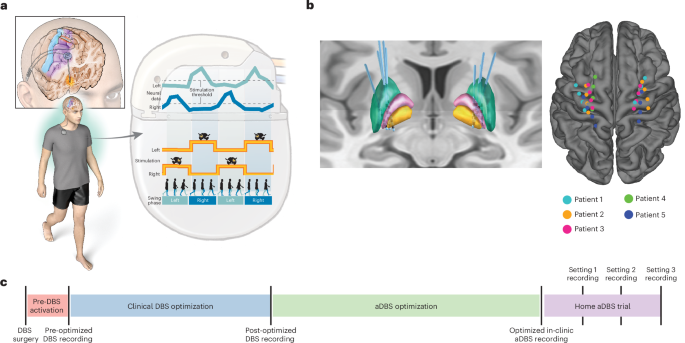
An innovative brain implant that adjusts electrical pulses in real-time to match a patient's walking steps safely reduces falls in Parkinson's disease compared to standard constant stimulation.

People with Parkinson's disease often struggle with walking and balance, which can lead to dangerous falls. While standard brain implants deliver a constant, unchanging stream of electricity to help control symptoms, this new study tested a 'smart' implant. This adaptive device automatically adjusts its electrical pulses to match the patient's actual walking steps in real-time. The researchers found that this personalized, step-by-step stimulation is completely safe and successfully reduces the number of falls compared to the old, constant method. This could eventually lead to much safer, more independent lives for patients.

What this means for you

A new smart brain implant safely reduces falls in Parkinson's disease by adjusting to your walking steps. This early-stage technology is not yet widely available; do not alter your current treatment.

Citation:

Nature Medicine - AI Section, 2026. DOI: s41591-026-04434-2 Read article →
Activity-dependent adaptive deep brain stimulation improves gait in Parkinson’s disease
Nature Medicine - AI SectionExploratory2 min read

Smart Brain Implant Automatically Adjusts to Help Parkinson's Patients Walk

Key Takeaway:

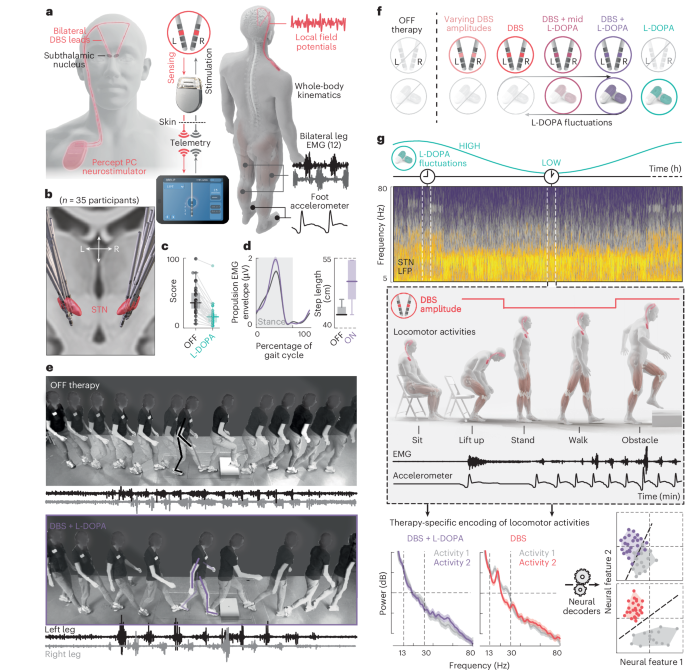
A new smart brain implant uses real-time brain signals to adjust electrical stimulation, significantly improving walking difficulties for people with Parkinson's disease.

People with Parkinson's disease often experience severe walking difficulties, known as gait deficits. Traditional brain implants deliver a constant, unchanging stream of electricity to help control symptoms. In this study, researchers developed a smart brain implant that uses advanced computer algorithms to read the brain's natural movement signals. By understanding these signals in real time, the device automatically adjusts its electrical stimulation only when the person is trying to move. This personalized, active approach was shown to significantly improve walking and mobility. While this technology is still in the early stages of testing, it could eventually lead to much more effective, responsive treatments for Parkinson's symptoms.

What this means for you

Scientists are testing a smart brain stimulation system that adapts to your movement to help you walk better. This technology is in early testing and not yet widely available.

Citation:

Nature Medicine - AI Section, 2026. DOI: s41591-026-04432-4 Read article →

Guideline Update
Long-term independent use of an intracortical brain–computer interface for speech and cursor control
Nature Medicine - AI SectionExploratory2 min read

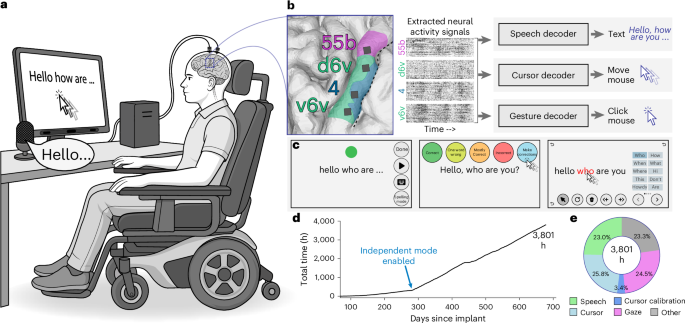
Brain Implant Helps Paralyzed Patient Speak and Use Computers Independently

Key Takeaway:

An automated brain-computer implant allowed a patient with ALS to independently restore their speech and computer control at home without technical assistance.

Scientists tested a brain-computer implant designed to help people who have lost the ability to speak or move. A person with severe speech loss due to ALS used the device at home entirely on their own, without any researchers in the room. The system successfully translated their brain signals to restore both speech-based communication and computer cursor control over a long period. This is a major step forward because it shows that these advanced mind-controlled devices can work reliably in daily life without needing constant technical support, bringing us closer to restoring independence for paralyzed patients.

What this means for you

A brain implant helped a patient with ALS communicate and use a computer at home without expert help. This early-stage technology is not yet widely available.

Citation:

Nature Medicine - AI Section, 2026. DOI: s41591-026-04414-6 Read article →

ArXiv - AI in Healthcare (cs.AI + q-bio)Exploratory3 min read

Can AI Teach Itself to Have a Conscience?

Key Takeaway:

Researchers have developed a way for artificial intelligence models to self-correct and align with human ethics using their own internal reasoning rather than relying on external judge programs.

As artificial intelligence (AI) becomes more common, scientists worry about models generating harmful or unethical answers. In this study, researchers tested a new way to give an AI model a 'conscience.' Instead of using a second computer program to grade and correct the AI, they programmed the AI to double-check its own thinking using a frozen copy of itself. When tested on a scenario where AI was tempted to write malicious hacking code, a single self-reflective question successfully steered the AI to behave ethically. This is a major step toward building safer, self-correcting AI systems, though the technology is still in its early testing phases.

What this means for you

Scientists are testing ways to give AI a 'conscience' so it can block its own harmful answers. This technology is in early development and is not yet used in actual healthcare.

Citation:

ArXiv, 2026. arXiv: 2606.19527 Read article →

Four Scenarios of AI Scribe Adoption in Healthcare
The Medical FuturistPromising2 min read

How AI Scribes Are Changing the Way Doctors Take Notes

Key Takeaway:

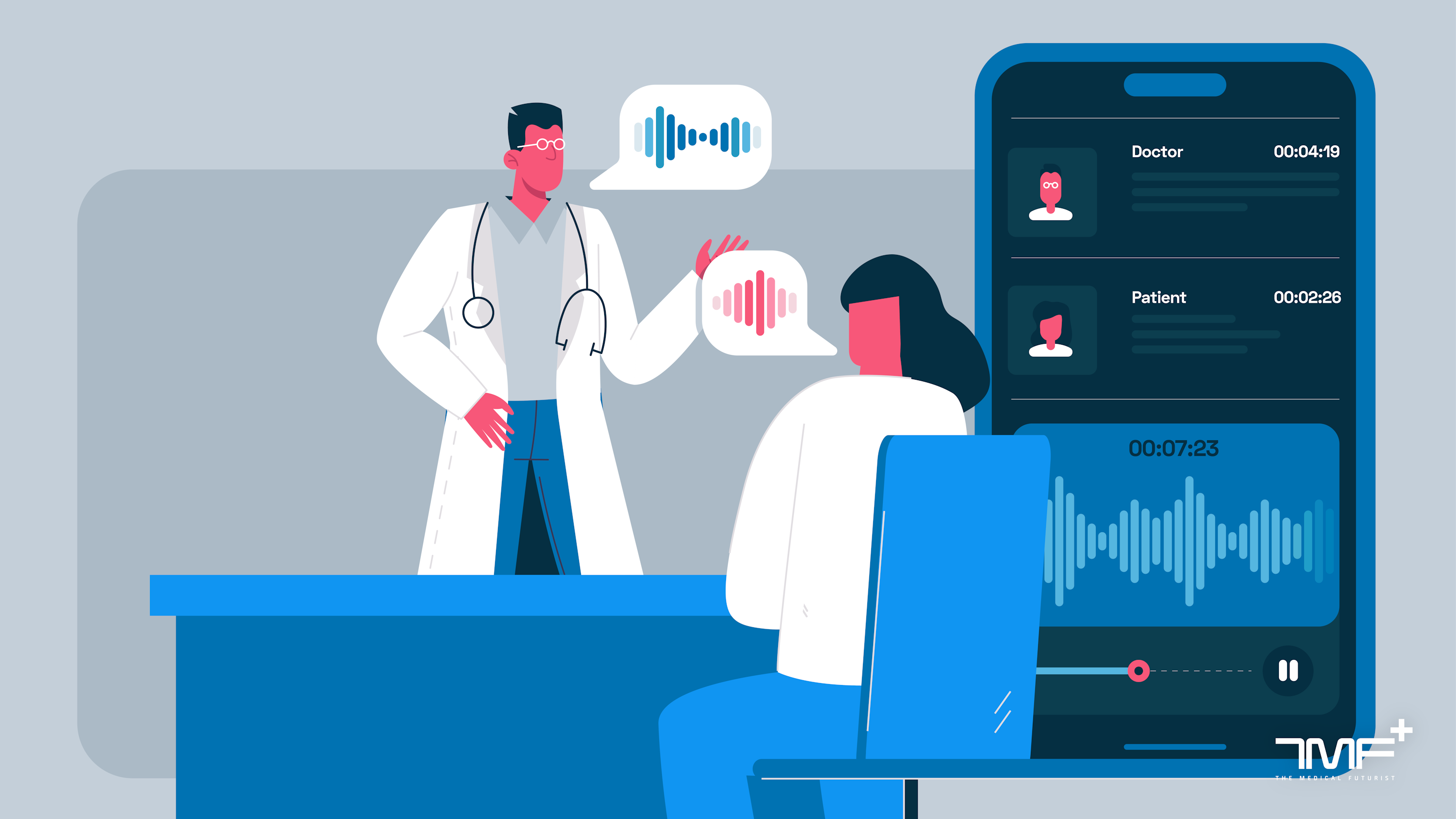
AI scribes can automatically translate patient-doctor conversations into electronic medical records, potentially reducing administrative burnout and improving face-to-face clinical interactions within the next few years.

Going to the doctor often means watching them type on a computer instead of looking at you. This article looks at 'AI scribes,' which are smart apps that listen to your conversation with your doctor and automatically write up the official medical chart. By taking over the tedious task of typing up notes, these tools aim to free up doctors so they can focus entirely on listening to and caring for their patients. While this technology is exciting and rolling out quickly, doctors must still double-check the AI's work to make sure every medical detail is completely accurate.

What this means for you

AI scribes are new tools that listen to your doctor's visit to write up medical notes automatically, letting your doctor focus on you instead of typing on a computer screen.

Citation:

The Medical Futurist, 2026. Read article →

Drug Watch
ArXiv - Quantitative BiologyPromising3 min read

New AI Tool Catches Hidden Contradictions in Radiology Reports

Key Takeaway:

RadSEM is a new AI evaluation tool that accurately catches critical medical report errors, like missed or contradicted findings, which standard text-matching software often overlooks.

When doctors use AI to help write radiology reports, even a tiny typo like writing 'no mass' instead of 'mass' can completely change a patient's diagnosis. Traditional computer programs often miss these critical errors because the overall text still looks almost identical. To solve this, researchers developed RadSEM, a smart evaluation tool that breaks reports down into individual medical findings. It carefully checks if the AI's report actually agrees with the expert's findings, successfully catching contradictions and subtle errors. In tests on over 2,400 reports, RadSEM vastly outperformed older methods, paving the way for safer, more reliable AI assistants in medical imaging.

What this means for you

Researchers created a smart tool to double-check AI-generated medical reports for critical errors. This technology is in early testing stages and does not yet affect your active medical care.

Citation:

ArXiv, 2026. arXiv: 2606.17062 Read article →

Guideline Update
Learning to lead in a hybrid human-AI enterprise
MIT Technology Review - AIExploratory2 min read

Smart AI Assistants Are About to Flood the Workplace

Key Takeaway:

As autonomous AI agents surge by 300% over the next two years, organizations must learn to manage a hybrid workforce where AI independently coordinates complex tasks.

Businesses are preparing for a massive shift as smart AI assistants, also known as AI agents, are expected to grow by 300% over the next two years. Unlike older software that needs constant human instructions, these new AI agents can plan, make decisions, and work across different computer programs all on their own to finish complicated tasks. While this technology sounds promising for cutting down on boring paperwork and scheduling, it is still very new. For regular people and patients, this means we will soon see more AI helping manage behind-the-scenes office work, but human professionals will still need to supervise these systems to ensure they make safe and accurate decisions.

What this means for you

A massive 300% increase in smart AI assistants is expected in workplaces over the next two years. These tools are still early-stage, so do not rely on them for medical advice.

Citation:

MIT Technology Review - AI, 2026. Read article →

Drug Watch
Defining Autonomy for Wellness Robots in Senior Care
IEEE Spectrum - BiomedicalExploratory2 min read

How Smart Robots Could Soon Help Care for Seniors

Key Takeaway:

A new six-level scale measures wellness robot autonomy, aiming to safely integrate socially assistive robots into senior care facilities by the early 2030s.

Senior care facilities are facing a major shortage of staff and daily activities for residents. To help, researchers are developing socially assistive wellness robots. This paper introduces a new six-level scale, modeled after self-driving car standards, to measure how independently these robots can operate across different care situations. Unlike simple toy companions or complex medical devices, these robots are designed to support overall senior well-being. Researchers have laid out a three-phase plan to safely bring these autonomous wellness robots into care facilities by the early 2030s, helping seniors stay active and engaged.

What this means for you

Researchers are designing wellness robots to help care for seniors by the early 2030s. This technology is still in development and cannot yet replace human caregivers.

Citation:

IEEE Spectrum - Biomedical, 2026. Read article →

New to reading medical AI research? Learn how to interpret these studies →