
Mednosis LogoMednosis
Jun 17, 2026

Clinical Innovation: Week of June 17, 2026

9 research items

Clinical Innovation: Week of June 17, 2026
Google News - AI in HealthcareExploratory2 min read

The Rise of Independent AI Assistants in Medicine

Key Takeaway:

Autonomous medical AI agents could soon independently manage complex clinical workflows, potentially transforming healthcare delivery within the next five to ten years.

Scientists are looking at how artificial intelligence in healthcare can evolve from a simple tool into an active, independent assistant. Currently, medical AI only answers specific questions when prompted by a doctor. In the future, autonomous AI agents could independently monitor patient data, organize clinical schedules, and suggest treatment plans by looking at a patient's entire medical history. While this could save doctors time and reduce administrative burdens, the technology is still in its very early, theoretical stages. Researchers must first solve major safety and reliability challenges before these independent AI systems can be safely used in real hospitals.

What this means for you

Researchers are designing future AI assistants that can independently help manage your healthcare. This technology is still in early development and not yet ready to guide your actual medical care.

Citation:

Google News - AI in Healthcare, 2026. Read article →
Guideline Update
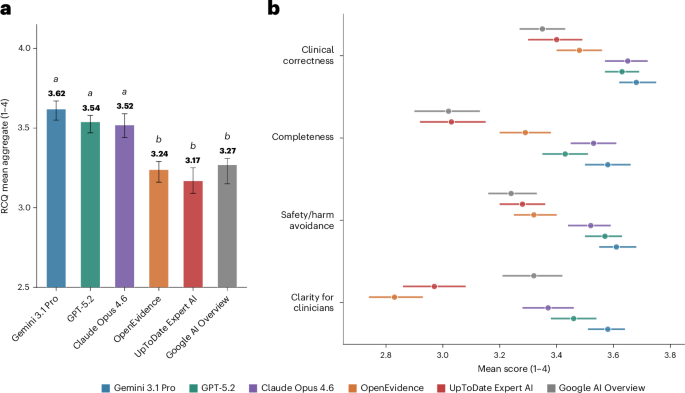
General-purpose chatbots outperform clinical AI tools on physicians’ real-world questions
Nature Medicine - AI SectionExploratory2 min read

Everyday AI Chatbots Beat Specialized Medical Tools at Answering Doctors' Questions

Key Takeaway:

General-purpose AI models currently outperform specialized medical AI tools when answering real-world clinical questions, suggesting physicians should use specialized tools with caution.

When doctors have difficult medical questions, they are starting to turn to artificial intelligence (AI) for help. A new study tested how well different AI tools answer real-world questions from doctors. Researchers compared three everyday, general-purpose AI chatbots against two specialized AI tools designed specifically for medicine. Surprisingly, the everyday AI chatbots performed much better. In fact, the specialized medical AI tools did no better than a standard Google search summary. This matters to regular people because it shows that specialized medical AI is not always superior, and doctors must remain cautious about relying on these tools for patient care.

What this means for you

A new study shows general AI chatbots answer doctors' questions better than specialized medical AI tools. Patients should know these tools are still being tested and should not replace human medical advice.

Citation:

Nature Medicine - AI Section, 2026. DOI: s41591-026-04457-9 Read article →

Guideline Update
Nature Medicine - AI SectionPromising2 min read

Could the Shingles Vaccine Be a Secret Weapon Against Dementia?

Key Takeaway:

Robust observational data suggests shingles vaccination might prevent dementia, prompting expert consensus to urgently call for large-scale clinical trials to confirm this protective effect.

Recent research shows a surprisingly strong link between getting the shingles vaccine and having a lower risk of developing dementia, which is a decline in mental ability severe enough to interfere with daily life. While the existing data from observing patient records is incredibly promising, researchers cannot yet prove that the vaccine itself causes the protection. Because of this, major international health panels and expert workshops are urgently calling for large-scale clinical trials. These trials will actively test the vaccine in groups of people to see if it truly prevents cognitive decline, potentially offering a simple, existing way to fight dementia.

What this means for you

Strong data suggests the shingles vaccine might help prevent dementia. However, patients should wait for upcoming clinical trials to confirm this benefit before changing their medical care.

Citation:

Nature Medicine - AI Section, 2026. DOI: s41591-026-04474-8 Read article →

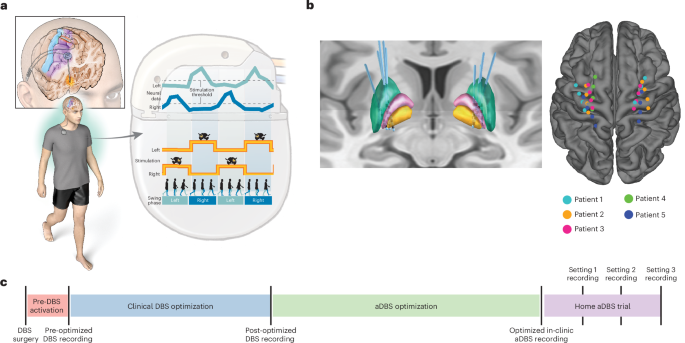
Adaptive deep brain stimulation for dynamic gait control in Parkinson’s disease: a randomized feasibility trial
Nature Medicine - AI SectionExploratory2 min read

Smart Brain Implant Automatically Adjusts to Help Parkinson's Patients Walk Safely

Key Takeaway:

An adaptive, step-synchronized brain pacemaker is safe and reduces dangerous falls in Parkinson's patients compared to older, constant-stimulation devices.

People with Parkinson's disease often struggle with walking and balance, which can lead to dangerous falls. Traditional brain pacemakers, called deep brain stimulation, send a constant electrical current to the brain, but this does not always help with walking. In this new study, researchers tested a smart, adaptive brain pacemaker that automatically adjusts its electrical pulses to match the patient's actual steps in real-time. The study found that this personalized, step-by-step stimulation is safe and successfully reduces falls compared to the older, constant-pulse method. This could eventually give patients much safer, more confident mobility.

What this means for you

A new smart brain implant adjusts stimulation in real-time to prevent falls in Parkinson's. This technology is still experimental; please do not alter your current treatment plan.

Citation:

Nature Medicine - AI Section, 2026. DOI: s41591-026-04434-2 Read article →

ArXiv - AI in Healthcare (cs.AI + q-bio)Promising2 min read

Can AI Teach Itself to Be Ethical?

Key Takeaway:

Researchers have developed a way for AI models to self-correct and align with human ethics using their own internal reasoning, which could make future healthcare AI safer within two to five years.

As artificial intelligence (AI) becomes more common, scientists worry about these systems behaving unethically or being hacked. Researchers studied whether an AI could act as its own ethical guardian. They gave an AI model a 'conscience step' to review its own thinking and compared it against a frozen copy of itself to correct bad behavior. In tests involving code hacking, they found that asking the AI just one high-level self-reflective question successfully steered it back to ethical behavior. This matters to everyday people because it shows we can build safer, more trustworthy AI systems that police themselves without needing constant human intervention.

What this means for you

Scientists have designed a way for AI to act as its own ethical guardian. This technology is still in early development and is not yet used in active patient care.

Citation:

ArXiv, 2026. arXiv: 2606.19527 Read article →

Drug Watch
ArXiv - Quantitative BiologyPromising3 min read

New AI Tool Catches Hidden Contradictions in Radiology Reports

Key Takeaway:

A new AI evaluation tool accurately detects critical errors in automated radiology reports, ensuring that minor wording changes do not mask dangerous diagnostic contradictions.

When artificial intelligence is used to write radiology reports, even a tiny error—like writing 'no mass' instead of 'mass'—can have life-threatening consequences for a patient. Traditional computer programs that grade these AI reports often miss these critical contradictions because the rest of the text looks nearly identical. To solve this, researchers created RadSEM, a new evaluation tool that breaks reports down into single, clear facts and strictly penalizes medical contradictions. Tested on over 2,400 reports, RadSEM successfully caught critical errors and correctly matched medical synonyms 99.6% of the time, paving the way for safer AI assistants in medical imaging.

What this means for you

Researchers developed a smart tool to double-check AI-generated radiology reports for critical errors. While promising for future safety, this technology is still in development and not yet used in active patient care.

Citation:

ArXiv, 2026. arXiv: 2606.17062 Read article →

Four Scenarios of AI Scribe Adoption in Healthcare
The Medical FuturistPromising2 min read

How AI Scribes Are Changing the Way Doctors Take Notes

Key Takeaway:

AI scribes can automatically convert patient-doctor conversations into electronic medical records, potentially reducing administrative burnout for clinicians starting immediately.

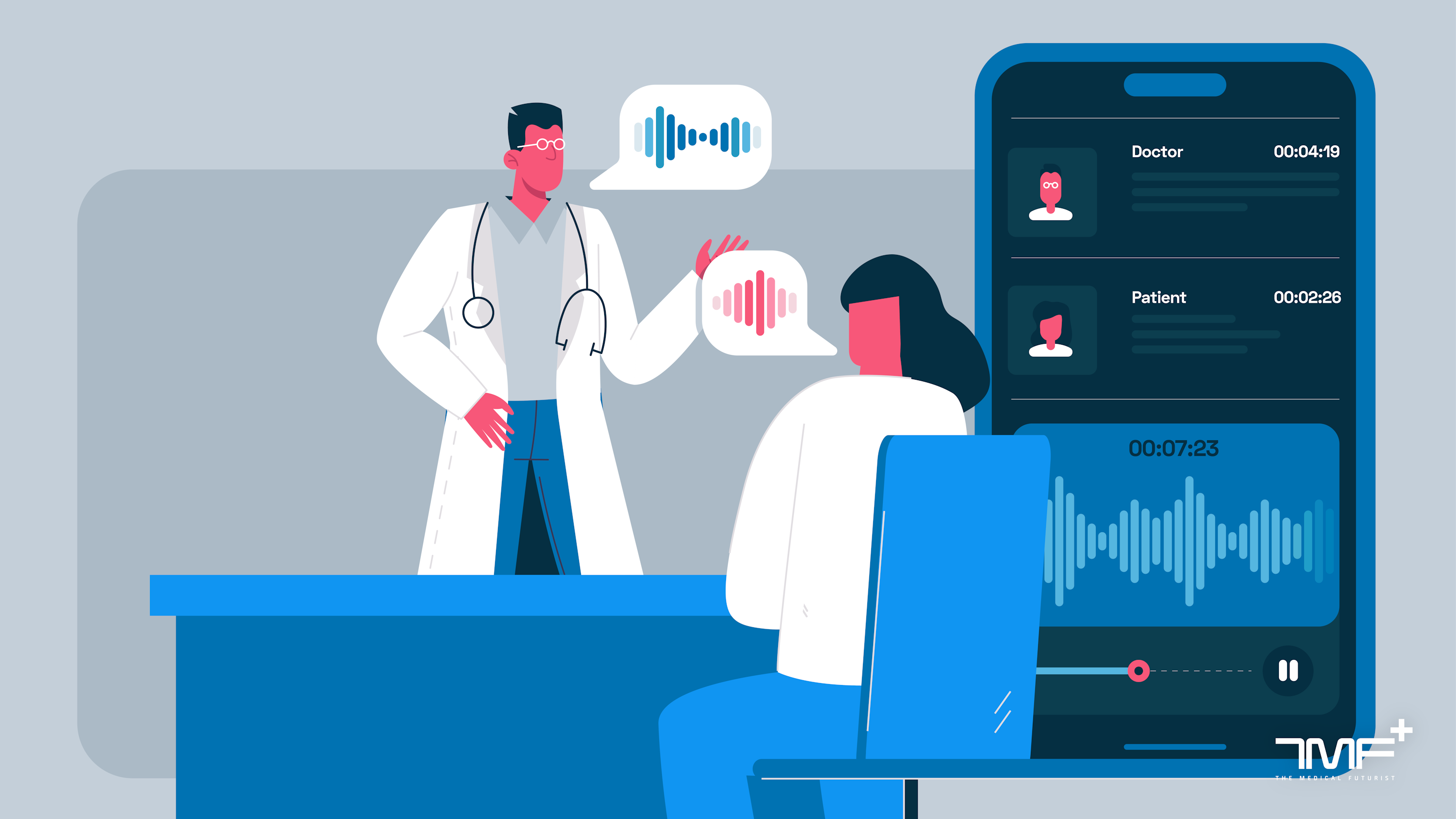
Going to the doctor often means watching them type on a computer instead of looking at you. This article looks at 'AI scribes,' which are smart apps that listen to your conversation with your doctor and automatically write up the official medical record. By taking over this tedious paperwork, the technology aims to give doctors more time to actually focus on their patients. While this technology is available now and growing quickly, doctors still need to double-check the AI's work to make sure every detail of your visit is recorded correctly.

What this means for you

New AI tools can now listen to your doctor's visit and write up the medical notes automatically, giving your doctor more face-to-face time to focus on your care.

Citation:

The Medical Futurist, 2026. Read article →

Drug Watch
Defining Autonomy for Wellness Robots in Senior Care
IEEE Spectrum - BiomedicalExploratory2 min read

How Smart Robots Could Soon Help Care for Seniors

Key Takeaway:

A new six-level scale measures wellness robot autonomy, aiming to safely integrate assistive robots into senior care facilities by the early 2030s.

As the aging population grows, senior care homes are facing severe staff shortages. Researchers have developed a new framework to define and measure the independence of 'wellness robots'—assistive machines designed to support seniors' physical and mental well-being. Unlike simple toy companions or complex medical devices, these robots are evaluated on a six-level safety and autonomy scale, similar to the levels used for self-driving cars. While these robots are not ready to replace human caregivers yet, this new measuring system helps developers safely design and test machines, paving the way for helper robots to enter senior care facilities by the early 2030s.

What this means for you

Researchers are developing a safety scale for senior care robots. These wellness assistants are still in development, with wider availability expected by the early 2030s.

Citation:

IEEE Spectrum - Biomedical, 2026. Read article →

A startup claims it broke through a bottleneck that’s holding back LLMs
MIT Technology Review - AIExploratory2 min read

Startup Claims Breakthrough to Make AI Models Much Faster

Key Takeaway:

A new mathematical approach may soon allow artificial intelligence models to process massive amounts of clinical data much faster by solving a decade-old computational bottleneck.

An artificial intelligence startup called Subquadratic claims to have solved a major mathematical problem that has slowed down large language models for nearly ten years. When AI models process information, they often hit a computational bottleneck that makes handling large amounts of data very slow and expensive. While many experts were initially skeptical of the company's bold claims because few details were shared, the startup has now started releasing evidence to back up its technology. If these claims are proven true, it could eventually lead to much faster, more powerful AI tools that can help doctors analyze complex information in seconds.

What this means for you

A startup claims to have made a breakthrough that could make future AI tools much faster. This is early technology and does not currently impact your medical care.

Citation:

MIT Technology Review - AI, 2026. Read article →

New to reading medical AI research? Learn how to interpret these studies →