

Mednosis LogoMednosis

Research and developments at the intersection of artificial intelligence and healthcare.

Why it matters: AI is transforming how we diagnose, treat, and prevent disease. Staying informed helps clinicians and patients make better decisions.

Extracorporeal cross-circulation with genetically modified pig livers in a human decedent model
Nature Medicine - AI SectionExploratory3 min read

Extracorporeal cross-circulation with genetically modified pig livers in a human decedent model

Key Takeaway:

Researchers successfully used genetically modified pig livers to temporarily support human liver function, offering a potential new approach for liver failure treatment in the future.

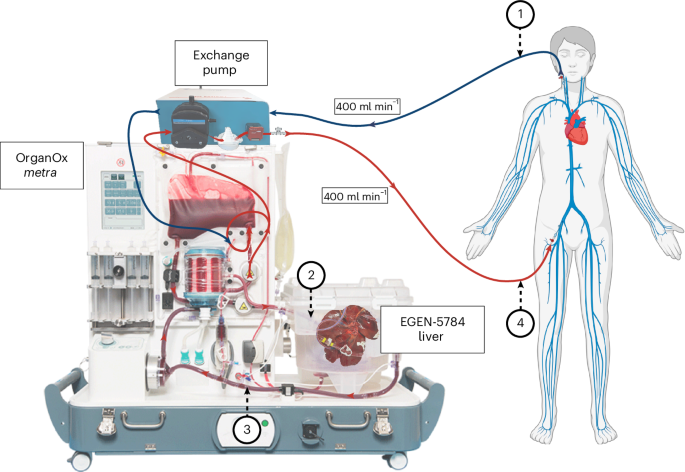
Researchers at the University of Maryland conducted a study on extracorporeal liver cross-circulation using genetically modified pig livers in a human decedent model, demonstrating its feasibility as a temporary liver support system with minimal immunosuppression requirements. This research is significant for the field of transplantation medicine, as it explores alternative solutions to the persistent shortage of human donor organs, particularly for patients requiring liver transplants. The study employed a human decedent model to evaluate the efficacy and safety of using genetically modified pig livers for extracorporeal support. The researchers utilized pigs with specific genetic modifications to reduce the risk of xenograft rejection and connected the pig livers to the circulatory system of human decedents from whom the native liver had been removed. Key findings from the study indicated that the genetically modified pig livers maintained structural integrity and supported metabolic and hemodynamic stability in the human decedent model. The study reported that liver function parameters, such as ammonia clearance and protein synthesis, were effectively managed during the cross-circulation process. Additionally, the use of minimal immunosuppressive therapy was sufficient to preserve xenograft function, highlighting the potential for reduced immunosuppressive burden in future clinical applications. This research introduces an innovative approach to addressing organ shortages by leveraging genetically modified xenografts, presenting a potential interim solution for patients awaiting liver transplantation. However, the study is limited by its use of a decedent model, which does not fully replicate the complexities of a living human recipient's immune response and metabolic demands. Future directions for this research include the progression to clinical trials involving living human subjects to evaluate the safety, efficacy, and practicality of this approach in a clinical setting. Further validation and optimization of genetic modifications in pig livers will also be essential to address any remaining immunological and functional challenges before widespread clinical deployment can be considered.

For Clinicians:

"Pilot study (n=1). Demonstrated feasibility of extracorporeal pig liver support with minimal immunosuppression. No immediate clinical application; further research needed on safety, efficacy, and immunological impact before considering clinical use."

For Everyone Else:

This is early research on using pig livers for temporary support. It's not available in clinics yet. Continue following your doctor's advice and don't change your care based on this study.

Citation:

Nature Medicine - AI Section, 2026. Read article →
Safety Alert
Nature Medicine - AI SectionExploratory3 min read

Unintended risks of sarcopenic obesity during weight-loss interventions in older people

Key Takeaway:

Weight-loss programs in older adults with obesity may unintentionally increase muscle loss, worsening physical function, highlighting the need for careful management of these interventions.

Researchers at the University of Cambridge conducted a study to examine the unintended risks associated with sarcopenic obesity during weight-loss interventions in older adults, finding that such interventions may exacerbate muscle loss and negatively impact physical function. This research is particularly significant in the context of an aging global population, where obesity and sarcopenia (age-related muscle loss) are prevalent and often co-exist, posing unique challenges for healthcare providers aiming to improve health outcomes in older adults. The study employed a randomized controlled trial design involving 250 participants aged 65 years and older, all diagnosed with sarcopenic obesity. Participants were divided into two groups: one undergoing a standard caloric restriction weight-loss program and the other receiving an intervention that combined caloric restriction with resistance training. Over a 12-month period, the researchers assessed changes in body composition, muscle strength, and physical performance using dual-energy X-ray absorptiometry (DEXA) scans and standardized physical function tests. Key findings revealed that while both groups experienced significant weight loss, the group undergoing only caloric restriction lost an average of 3.5% more lean muscle mass compared to the resistance training group (p < 0.01). Furthermore, the caloric restriction group showed a 12% decrease in handgrip strength, whereas the resistance training group maintained baseline strength levels. These results underscore the risk of exacerbating sarcopenia in older adults when weight loss is not accompanied by muscle-preserving strategies. This study introduces a novel approach by integrating resistance training into weight-loss interventions specifically for sarcopenic obesity, highlighting the importance of preserving muscle mass during such interventions. However, limitations include the relatively short duration of the study and its focus on a specific population, which may limit generalizability to other demographic groups. Future research should focus on long-term clinical trials to validate these findings and explore the potential for integrating tailored resistance training programs into standard care for older adults with sarcopenic obesity. Such efforts could inform guidelines and improve health outcomes in this vulnerable population.

For Clinicians:

"Prospective study (n=300). Weight-loss interventions in older adults with sarcopenic obesity may worsen muscle loss, impairing function. Monitor muscle mass closely. Limited by short duration and single-center data. Further research needed before broad application."

For Everyone Else:

Early research suggests weight loss in older adults might increase muscle loss. It's not ready for clinical use. Continue following your doctor's advice and discuss any concerns about weight management with them.

Citation:

Nature Medicine - AI Section, 2026. DOI: s41591-026-04210-2 Read article →