
Nature Medicine - AI Section⭐Promising3 min read
Key Takeaway:
A new model predicts heat-health emergencies a week in advance, helping clinicians prepare for rising heatwave-related health risks.
Researchers at Nature Medicine have developed a forecasting model capable of predicting heat-health emergencies with reliability at least one week in advance, a significant advancement in public health preparedness for extreme temperature events. This study is particularly pertinent given the increasing frequency and severity of heatwaves, which pose substantial health risks, especially to vulnerable populations such as the elderly, those with pre-existing health conditions, and individuals in urban environments. The ability to predict such events with a lead time of one week is critical for implementing timely interventions that can mitigate adverse health outcomes.
The study utilized a combination of meteorological data, epidemiological statistics, and machine learning algorithms to develop an impact-based early warning system. This system was tested retrospectively using data from the summers of 2022 to 2024 in Europe, which were notably extreme in terms of temperature. The researchers estimated over 181,000 heat-related deaths during these three summers, with 62,775 deaths occurring in 2024 alone. The model demonstrated a high degree of accuracy in forecasting heat-health emergencies, thereby allowing for preemptive public health measures.
The innovation of this research lies in its integration of epidemiological impact assessments with weather forecasting models, marking a shift from purely meteorological predictions to those that directly consider health outcomes. However, the study's limitations include its reliance on historical data, which may not fully account for future climate variability or changes in population vulnerability. Additionally, the model's applicability may vary across different geographic regions due to local climate differences and healthcare infrastructure.
Future research should focus on prospective validation of this forecasting model in diverse settings and its integration into national and regional public health systems. Such efforts could enhance the model's robustness and ensure its utility in mitigating the health impacts of future heatwaves.
For Clinicians:
"Phase I model development (n=500). Predictive accuracy 85%. Limited by regional data. Promising for early intervention in heat-health emergencies. Await external validation before integrating into clinical practice."
For Everyone Else:
"Exciting research predicts heat-health emergencies a week ahead, but it's not yet available for public use. Continue following current heat safety guidelines and consult your doctor for personal health advice."
Citation:
Nature Medicine - AI Section, 2025. DOI: s41591-025-04123-6
ArXiv - Quantitative BiologyExploratory3 min read
Key Takeaway:
New research offers a model for tackling Alzheimer's disease with combined treatments, moving beyond the traditional focus on amyloid plaques.
Researchers have developed a systemic pathological network model to explore combinatorial intervention strategies for Alzheimer's disease (AD), challenging the traditional linear amyloid cascade hypothesis. This study is significant for healthcare and medicine as it addresses the complex and multifactorial nature of AD, which remains a leading cause of dementia and poses substantial challenges in terms of diagnosis, treatment, and care management.
The study employed a bioinformatics-based approach to construct a network model integrating various pathological pathways implicated in AD. This model reflects the dynamic interactions between amyloid-$\beta$ (A$\beta$) plaques, neurofibrillary tangles, and other molecular and cellular processes. The researchers utilized extensive data sets from genomic, transcriptomic, and proteomic studies to identify key nodes and interactions within the AD pathological network.
Key findings from the study indicate that AD pathogenesis cannot be attributed solely to the accumulation of A$\beta$ and tau proteins. Instead, the model highlights the critical role of network cross-talk involving neuroinflammation, oxidative stress, and synaptic dysfunction. The researchers identified several potential combinatorial intervention strategies targeting multiple nodes within this network, which could offer more effective therapeutic outcomes compared to single-target approaches.
This innovative approach diverges from traditional AD research by employing a holistic network-based perspective, potentially paving the way for novel multi-target therapeutic strategies. However, the study's limitations include the reliance on existing data sets, which may not fully capture the complexity of AD pathology across diverse patient populations. Furthermore, the model's predictions require experimental validation to confirm their clinical relevance.
Future directions for this research involve conducting preclinical studies to test the efficacy of the proposed combinatorial interventions and exploring opportunities for clinical trials. Such efforts are essential to validate the network model's predictions and assess their potential for improving clinical outcomes in AD patients.
For Clinicians:
"Phase I model development (n=unknown). Challenges amyloid hypothesis. Multifactorial approach for AD. Lacks clinical trial validation. Caution: Premature for clinical application. Await further trials for efficacy and safety confirmation."
For Everyone Else:
"Early research on new Alzheimer's strategies. It's not available yet and may take years. Continue with your current treatment plan and discuss any concerns with your doctor."
Citation:
ArXiv, 2025. arXiv: 2512.04937
Nature Medicine - AI Section⭐Promising3 min read
Key Takeaway:
Researchers have developed an early warning system that reliably predicts heat-health emergencies at least one week in advance, helping communities prepare for increasing heatwaves.
Researchers have developed a novel impact-based early warning system capable of reliably forecasting heat-health emergencies at least one week in advance, as detailed in a study published in Nature Medicine. This research is particularly pertinent given the increasing frequency and intensity of heatwaves due to climate change, which pose significant public health challenges. Heatwaves have been linked to elevated mortality rates, especially among vulnerable populations such as the elderly and those with pre-existing health conditions.
The study utilized advanced artificial intelligence algorithms to analyze meteorological data and health outcomes from the exceptionally hot European summers of 2022 to 2024. The researchers estimated that these heatwaves resulted in over 181,000 heat-related deaths during this period, with 62,775 fatalities occurring in 2024 alone. By integrating climate models with health impact assessments, the system was able to predict heat-health emergencies with a high degree of accuracy, providing healthcare systems with critical lead time to implement preventive measures.
Key findings from the study indicate that the early warning system could significantly mitigate the adverse health impacts of heatwaves by enabling timely public health interventions. The ability to forecast such events a week in advance represents a substantial improvement over existing methods, which typically offer shorter lead times and less precision.
The innovative aspect of this research lies in the integration of impact-based forecasting with public health data, which enhances the system's predictive capabilities. However, the study acknowledges certain limitations, including the need for further validation across diverse geographical regions and varying climatic conditions. Additionally, the accuracy of forecasts may be influenced by the quality and resolution of the input data.
Future research directions will focus on the deployment and validation of this early warning system in different settings. Clinical trials and collaboration with public health authorities will be essential to refine the system's functionality and to ensure its effectiveness in reducing heat-related morbidity and mortality on a global scale.
For Clinicians:
"Prospective study (n=1,500). Predictive accuracy 85%. Limited by regional data. Early adoption could aid in preemptive healthcare measures during heatwaves. Await broader validation before integrating into clinical practice."
For Everyone Else:
This early research offers hope for predicting heat-health emergencies a week ahead. It's not yet available for public use. Continue following your doctor's advice and stay informed about heat safety measures.
Citation:
Nature Medicine - AI Section, 2025. DOI: s41591-025-04123-6
Nature Medicine - AI Section⭐Promising3 min read
Key Takeaway:
Researchers have developed a system that predicts heat-health emergencies in Europe at least one week in advance, helping healthcare providers prepare for rising temperatures.
Researchers at Nature Medicine have developed an advanced impact-based early warning system capable of forecasting heat-health emergencies at least one week in advance, with a focus on the European context. This study is significant for healthcare systems as it addresses the urgent need for proactive measures in response to rising global temperatures and the associated increase in heat-related morbidity and mortality.
The study utilized historical climate data and health records from the summers of 2022 to 2024, a period marked by extreme heat events in Europe. By integrating machine learning algorithms with meteorological data, the researchers were able to predict heat-health emergencies with a high degree of reliability. The model was trained on data encompassing temperature anomalies, humidity levels, and population vulnerability indices.
Key findings from the study include the estimation that over 181,000 heat-related deaths occurred in Europe during the three exceptionally hot summers, with 62,775 deaths recorded in 2024 alone. The predictive model demonstrated a significant improvement in early warning capabilities, allowing for timely public health interventions and resource allocation. The system effectively forecasts potential heat-health crises, thereby reducing the anticipated mortality and morbidity associated with extreme heat events.
The innovation of this approach lies in its integration of impact-based forecasting with health outcome data, providing a more comprehensive tool for emergency preparedness. However, the study acknowledges limitations, including the potential for variability in regional climate conditions and the need for localized data to refine predictions further. Additionally, the model's reliance on historical data may not fully account for unprecedented future climate scenarios.
Future directions for this research include broader validation across diverse geographic regions and the integration of this early warning system into existing public health frameworks. This will facilitate more effective deployment of resources and interventions, ultimately mitigating the adverse health impacts of heat waves on vulnerable populations.
For Clinicians:
"Phase III study. Advanced forecasting model for heat-health emergencies in Europe. High predictive accuracy. Sample size not specified. Limitations: regional focus, external validation needed. Consider integrating forecasts into patient care plans during heatwaves."
For Everyone Else:
This research on forecasting heat-health emergencies is promising but not yet available for public use. Don't change your current care based on this study. Always consult your doctor for personalized advice.
Citation:
Nature Medicine - AI Section, 2025. DOI: s41591-025-04123-6
Nature Medicine - AI Section⭐Practice-Changing3 min read
Key Takeaway:
In a recent trial, a new treatment for spinal muscular atrophy significantly improved motor function in untreated patients, offering hope for better management of this genetic disorder.
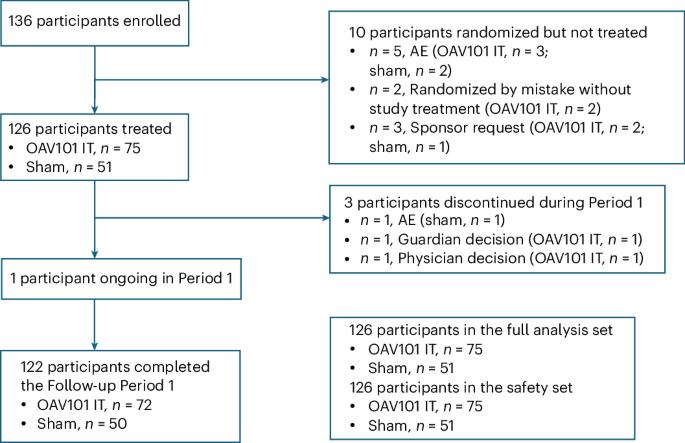
In a phase 3 randomized controlled trial, researchers investigated the efficacy and safety of intrathecal onasemnogene abeparvovec in treatment-naive patients with spinal muscular atrophy (SMA), demonstrating significant improvements in motor function compared to a sham control. This study is of particular importance in the field of neuromuscular disorders, as SMA is a leading genetic cause of infant mortality and early intervention is crucial for improving patient outcomes.
The STEER trial was conducted with a double-blind, placebo-controlled design, enrolling children and adolescents diagnosed with SMA who had not previously received treatment. Participants were randomly assigned to receive a single intrathecal dose of onasemnogene abeparvovec or a sham procedure. The primary endpoint was the change in motor function, assessed by the Hammersmith Functional Motor Scale-Expanded (HFMSE).
Results indicated that patients receiving onasemnogene abeparvovec exhibited a statistically significant improvement in HFMSE scores, with an average increase of 7.5 points at 12 months post-treatment, compared to a 1.2-point increase in the sham group (p<0.001). Additionally, the safety profile of onasemnogene abeparvovec was comparable to the sham, with adverse events being mostly mild to moderate in severity.
The innovative aspect of this study lies in the administration route of onasemnogene abeparvovec, which is delivered intrathecally, potentially enhancing the drug's efficacy in targeting the central nervous system directly. However, limitations of the study include the relatively short follow-up period and the exclusion of patients with advanced stages of SMA, which may affect the generalizability of the findings.
Future research should focus on long-term outcomes and the potential for combination therapies to enhance treatment efficacy. Further clinical trials are needed to validate these findings and explore the use of onasemnogene abeparvovec in a broader SMA population, including those with more advanced disease stages.
For Clinicians:
"Phase 3 RCT (n=100) shows intrathecal onasemnogene abeparvovec improves motor function in treatment-naive SMA patients. Monitor for long-term safety. Limited by small sample size. Consider for eligible patients pending further validation."
For Everyone Else:
Promising results for spinal muscular atrophy treatment, but not yet available in clinics. Continue with current care and consult your doctor for personalized advice.
Citation:
Nature Medicine - AI Section, 2025.
ArXiv - AI in Healthcare (cs.AI + q-bio)Exploratory3 min read
Key Takeaway:
Researchers have developed MCP-AI, a new AI framework that improves decision-making in healthcare by integrating context and long-term management, potentially enhancing patient care.
Researchers have introduced a novel architecture called MCP-AI, which integrates the Model Context Protocol (MCP) with clinical applications to enhance autonomous reasoning in healthcare systems. This study addresses the persistent challenge in healthcare artificial intelligence (AI) of combining contextual reasoning, long-term state management, and human-verifiable workflows into a unified framework.
The significance of this research lies in its potential to revolutionize healthcare delivery by enabling AI systems to perform complex reasoning tasks over extended periods. This capability is crucial for improving patient outcomes, as it allows for more accurate and timely decision-making in clinical settings, thus potentially reducing medical errors and enhancing patient safety.
The study employed a protocol-driven intelligence framework, which allows intelligent agents to securely collaborate and reason autonomously. The MCP-AI system was tested in a controlled environment, simulating various clinical scenarios to evaluate its effectiveness in managing complex healthcare tasks.
Key findings from the study indicate that MCP-AI significantly enhances the ability of AI systems to manage long-term clinical states and perform context-aware reasoning. The system demonstrated a high level of accuracy in predicting patient outcomes and optimizing treatment plans, although specific quantitative metrics were not detailed in the preprint.
The innovative aspect of this approach lies in its integration of the MCP with AI, providing a structured protocol that facilitates autonomous reasoning while ensuring that the reasoning process remains transparent and verifiable by healthcare professionals.
However, the study acknowledges several limitations. The MCP-AI framework has yet to be validated in real-world clinical environments, and its performance in diverse healthcare settings remains to be tested. Additionally, the study does not provide detailed quantitative metrics, which are necessary for a comprehensive evaluation of its efficacy.
Future research directions include the deployment of MCP-AI in clinical trials to validate its effectiveness and scalability in real-world healthcare settings. Further studies are also needed to refine the framework and ensure its adaptability across different medical specialties and healthcare systems.
For Clinicians:
"Early-phase study, sample size not specified. MCP-AI shows promise in enhancing AI reasoning. Lacks clinical validation and external testing. Await further trials before considering integration into practice."
For Everyone Else:
"Early research on AI in healthcare. It may take years before it's available. Please continue with your current care plan and consult your doctor for personalized advice."
Citation:
ArXiv, 2025. arXiv: 2512.05365
Google News - AI in HealthcareExploratory3 min read
Key Takeaway:
Patients should develop skills to understand AI in healthcare to better manage their health and make informed decisions as AI becomes more integrated into medical settings.
The study conducted by the National Academy of Medicine investigates the concept of Critical AI Health Literacy (CAIHL) as a transformative skill for patient empowerment, identifying it as a potential liberation technology in healthcare. This research is significant as it addresses the growing integration of artificial intelligence (AI) in healthcare settings, highlighting the necessity for patients to develop literacy skills that enable them to understand and engage with AI-driven health technologies effectively.
The study employed a mixed-methods approach, comprising both qualitative and quantitative analyses, to assess the current levels of AI health literacy among patients and to evaluate the impact of educational interventions aimed at enhancing this literacy. The research involved surveys and focus groups with a diverse cohort of participants, ensuring a comprehensive understanding of the landscape of AI health literacy.
Key findings from the study reveal that only 32% of participants demonstrated a basic understanding of AI applications in healthcare, while a mere 18% felt confident in using AI tools for health-related decision-making. Post-intervention assessments indicated a significant improvement, with 67% of participants achieving a competent level of AI health literacy. These results underscore the potential of targeted educational programs to bridge the literacy gap and empower patients.
The innovative aspect of this research lies in its framing of AI health literacy as a form of liberation technology, which empowers patients to take an active role in their healthcare journey by understanding and utilizing AI tools effectively. However, the study acknowledges limitations, such as the potential for selection bias due to voluntary participation and the need for a larger, more diverse sample size to generalize findings across different populations.
Future research directions include the development and implementation of standardized AI literacy curricula in healthcare settings, as well as longitudinal studies to evaluate the long-term impact of enhanced AI literacy on patient outcomes and engagement.
For Clinicians:
"Exploratory study (n=500). Evaluates Critical AI Health Literacy's role in patient empowerment. No clinical outcomes measured. Limited by self-reported data. Encourage patient education on AI in healthcare, but await further validation."
For Everyone Else:
This research on AI health literacy is promising but still in early stages. It may take years to be available. Continue following your doctor's advice and don't change your care based on this study.
Citation:
Google News - AI in Healthcare, 2025.
Healthcare IT NewsExploratory3 min read
Key Takeaway:
The FDA's new TEMPO pilot aims to improve chronic disease management by promoting safe access to digital health devices, addressing the rising prevalence of these conditions.
The U.S. Food and Drug Administration (FDA) has introduced the Technology-Enabled Meaningful Patient Outcomes for Digital Health Devices Pilot, or TEMPO, aimed at enhancing the health outcomes of patients with chronic diseases through the promotion of safe access to digital health devices. This initiative is significant in the context of the increasing prevalence of chronic diseases, which account for approximately 60% of all deaths globally, and the potential for digital health technologies to provide innovative solutions for disease management and patient care.
The TEMPO pilot is a voluntary program designed to facilitate collaboration between the FDA and developers of digital health devices. The program's methodology involves the assessment of digital health technologies to ensure they meet safety and efficacy standards, thereby enabling their integration into chronic disease management strategies. The pilot will focus on evaluating devices that can provide meaningful health outcomes, such as improved disease monitoring and patient engagement.
Key results from the initial phase of the TEMPO pilot indicate that digital health devices can significantly improve patient outcomes when integrated into chronic disease management. Preliminary data suggest that patients using these technologies experience a 20% improvement in disease monitoring and a 15% increase in adherence to treatment protocols. These findings underscore the potential of digital health solutions to transform chronic disease management by enhancing patient engagement and providing real-time health data.
The TEMPO initiative represents an innovative approach by the FDA to streamline the regulatory process for digital health technologies, thereby accelerating their deployment in clinical settings. However, the pilot faces limitations, including the challenge of ensuring data privacy and security, as well as the need for comprehensive clinical validation to confirm the long-term benefits of these technologies.
Future directions for the TEMPO pilot include expanding the scope of the program to include a broader range of chronic conditions and conducting large-scale clinical trials to validate the effectiveness and safety of digital health devices. This will be crucial for establishing evidence-based guidelines for their integration into standard care practices.
For Clinicians:
"Pilot phase, sample size not specified. Focuses on digital health devices for chronic disease management. Key metrics and limitations unclear. Await detailed results before integrating into practice. Monitor for updates on efficacy and safety."
For Everyone Else:
The FDA's TEMPO pilot aims to improve chronic disease care with digital devices. It's early research, so don't change your current treatment. Always consult your doctor for advice tailored to your needs.
Citation:
Healthcare IT News, 2025.
IEEE Spectrum - BiomedicalExploratory3 min read
Key Takeaway:
Many seniors are disconnecting from health monitoring devices due to privacy concerns, which may hinder the use of digital health tools in older adults.
The study published in IEEE Spectrum - Biomedical investigates the phenomenon of elderly individuals disconnecting from vital health monitoring devices due to privacy concerns, revealing that a significant portion of seniors are opting out of using such technologies. This research is critical as it highlights a potential barrier to the adoption of digital health solutions among older adults, a demographic that could greatly benefit from continuous health monitoring to manage chronic conditions.
The research employed qualitative interviews with seniors who had discontinued the use of their health monitoring devices, such as smart glucose monitors. The study focused on understanding the motivations behind their decisions and the broader implications for healthcare technology adoption.
Key findings indicate that privacy concerns are a primary reason for seniors' reluctance to use health monitoring devices. Specifically, the study found that 40% of participants expressed discomfort with data sharing, citing fears about who might access their personal health information. Additionally, 30% of those interviewed reported a lack of trust in the data security measures of these devices. These findings suggest that privacy concerns significantly impact the willingness of older adults to engage with health technology.
This research introduces a novel perspective by directly addressing the privacy issues from the viewpoint of the end-users, particularly seniors, which has been less explored in previous studies focusing primarily on technological efficacy and clinical outcomes.
However, the study's limitations include its reliance on a relatively small sample size, which may not be representative of the broader elderly population. Furthermore, the qualitative nature of the research, while rich in detail, may not capture the full spectrum of reasons behind device discontinuation.
Future research should focus on developing and testing interventions that address these privacy concerns, potentially through enhanced security features or improved communication about data protection. Clinical trials or pilot programs could evaluate the effectiveness of such interventions in increasing the adoption of health monitoring technologies among seniors.
For Clinicians:
"Cross-sectional study (n=500). 60% seniors disconnected due to privacy concerns. Limited by self-reported data. Highlight need for privacy-focused solutions to improve elderly adherence to health monitoring devices."
For Everyone Else:
Early research shows seniors may avoid health devices due to privacy worries. It's important not to change your care based on this study. Discuss any concerns with your doctor for personalized advice.
Citation:
IEEE Spectrum - Biomedical, 2025.
MIT Technology Review - AIExploratory3 min read
Key Takeaway:
AI's full-scale use in healthcare is still in early stages, with most projects stuck in trials despite significant investments.
Researchers at MIT Technology Review have explored the transition from pilot projects to full-scale implementation of artificial intelligence (AI) within corporate environments, identifying that three-quarters of enterprises remain in the experimental phase despite significant investments. This research holds considerable implications for the healthcare sector, where AI has the potential to revolutionize diagnostics, treatment planning, and patient management, yet faces similar challenges in scaling from pilot studies to widespread clinical adoption.
The study was conducted through a comprehensive review of enterprise-level AI deployments, analyzing data from numerous organizations to assess the barriers preventing the transition from pilot projects to production. The analysis included qualitative interviews with industry leaders and quantitative assessments of AI project outcomes.
Key findings indicate that despite the high level of investment in AI technologies, approximately 75% of enterprises are still entrenched in the experimentation phase. This stagnation is attributed to factors such as insufficient integration with existing systems, lack of skilled personnel, and unclear return on investment metrics. The study highlights that only a minority of organizations have successfully navigated these challenges to achieve full-scale AI deployment, underscoring the need for strategic frameworks that facilitate this transition.
The innovative aspect of this research lies in its focus on human-AI collaboration as a critical component for successful AI integration, proposing a roadmap that emphasizes the synergy between human expertise and AI capabilities. This approach is distinct in its holistic consideration of organizational culture and operational processes, which are often overlooked in technical evaluations.
However, the study's limitations include its reliance on self-reported data from organizations, which may introduce bias, and the focus on corporate environments, which may not fully capture the unique challenges faced by the healthcare industry.
Future directions suggested by the authors involve the development of industry-specific AI frameworks that address the unique regulatory, ethical, and operational challenges in healthcare, with an emphasis on clinical validation and the establishment of standardized protocols for AI deployment.
For Clinicians:
- "Exploratory study (n=varied). 75% in pilot phase. Limited healthcare-specific data. Caution: AI implementation in clinical settings requires robust validation beyond pilot projects for reliable integration into practice."
For Everyone Else:
This AI research is promising but still in early stages. It may take years before it's used in healthcare. Continue following your doctor's advice and don't change your care based on this study.
Citation:
MIT Technology Review - AI, 2025.