Mednosis LogoMednosis
Jun 12, 2026

Clinical Innovation: Week of June 12, 2026

8 research items

Clinical Innovation: Week of June 12, 2026
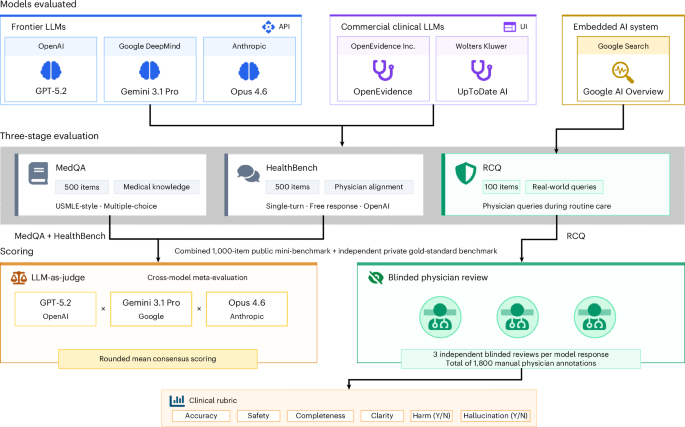
General-purpose large language models outperform specialized clinical AI tools on medical benchmarks
Nature Medicine - AI SectionPromising2 min read

General AI Beats Specialized Software at Medical Tasks

Key Takeaway:

General-purpose artificial intelligence models now outperform specialized medical AI tools in clinical knowledge and reasoning, signaling a major shift toward versatile healthcare technology.

A new study compared general-purpose artificial intelligence (AI) models—similar to the broad AI tools used by the public—against specialized AI tools built specifically for medicine. Surprisingly, the general-purpose AI performed better at answering medical questions, thinking like doctors, and handling real-world clinic inquiries. This matters to everyday people because it means the future of digital healthcare might rely on highly adaptable, all-purpose AI assistants rather than many different, narrow tools. While this is an exciting step forward, these general AI systems are still being tested and should not be used to replace real doctors or change your personal medical care.

What this means for you

New research shows general computer AI programs are surprisingly better at medical questions than specialized medical software. However, patients should not use these tools to self-diagnose or replace professional medical advice.

Citation:

Nature Medicine - AI Section, 2026. DOI: s41591-026-04431-5 Read article →
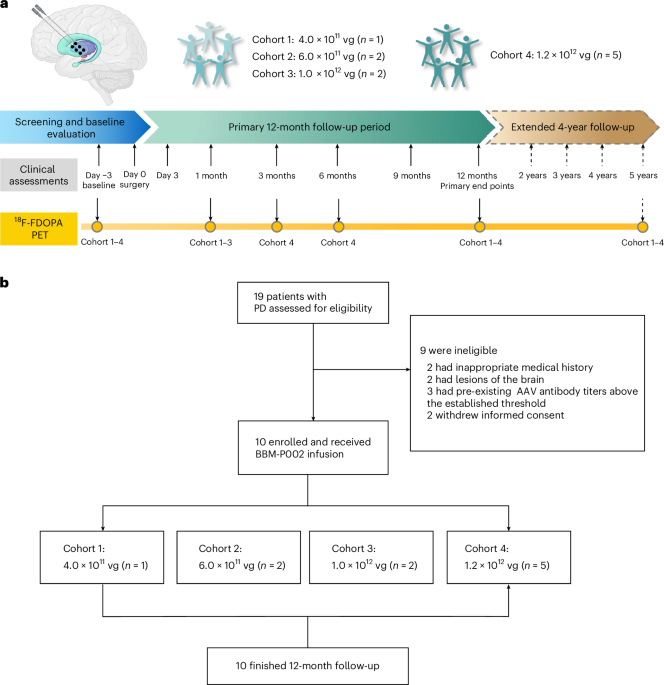
Dual-target gene therapy in Parkinson’s disease: a multicenter phase 1 trial
Nature Medicine - AI SectionExploratory3 min read

New Gene Therapy Shows Promise for Treating Parkinson's Disease

Key Takeaway:

An early-stage clinical trial shows that a new dual-target gene therapy for Parkinson's disease is safe and improves movement after twelve months of treatment.

Parkinson's disease is a brain disorder that causes shaking, stiffness, and difficulty with walking and balance because the brain stops making enough of a chemical messenger called dopamine. Researchers tested a new gene therapy called BBM-P002, which delivers two specific genes directly to the brain to help it produce dopamine again. In this early-stage study, the treatment was found to be safe and well tolerated. Even better, patients showed improvements in their movement and physical abilities after one year. While this is an exciting step forward, the therapy is still in the early testing phases and is not yet available for general medical use.

What this means for you

A new gene therapy for Parkinson's disease has passed early safety tests and improved movement in a one-year study. This treatment is still experimental and not yet available to the public.

Citation:

Nature Medicine - AI Section, 2026. DOI: s41591-026-04436-0 Read article →

Guideline Update
ArXiv - AI in Healthcare (cs.AI + q-bio)Exploratory3 min read

How Super-Smart AI Could Soon Transform Science and Medicine

Key Takeaway:

As AI potentially transitions from human-level intelligence to superintelligence over the next decade, it may drive continuous, transformative breakthroughs across global healthcare and science.

Researchers looked at how artificial intelligence might evolve after it reaches human-level smarts, a goal many tech companies hope to achieve within the next ten years. Instead of stopping there, AI could transition into 'superintelligence'—becoming far more capable than entire organizations of humans. The study outlines how this might happen, such as AI systems improving themselves or working together in large groups. Rather than one single, sudden change, we will likely see a fast-paced series of breakthroughs across science and medicine. While this technology is still in the early planning stages, preparing for these rapid changes will require global cooperation across many different fields.

What this means for you

This early research discusses how future super-smart AI might develop. It does not change your current medical care, and these technologies are still years away from reality.

Citation:

ArXiv, 2026. arXiv: 2606.12683 Read article →

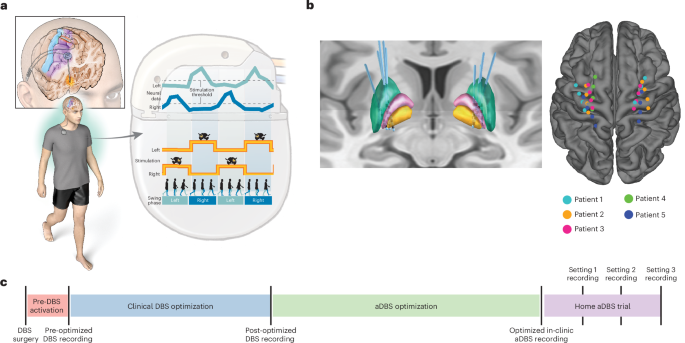
Adaptive deep brain stimulation for dynamic gait control in Parkinson’s disease: a randomized feasibility trial
Nature Medicine - AI SectionExploratory2 min read

Smart Brain Implant Safely Cuts Falls in Parkinson's Patients

Key Takeaway:

An innovative brain implant that adjusts electrical stimulation in real-time to match a patient's walking steps safely reduces falls in Parkinson's disease compared to standard continuous stimulation.

People with Parkinson's disease often struggle with walking and dangerous falls. Standard treatments use brain implants that deliver a constant, unchanging stream of electricity. In this new study, researchers tested a 'smart' brain implant that automatically adjusts its electrical stimulation to match the patient's actual walking steps in real-time. The study found that this personalized, step-by-step stimulation is safe and successfully reduced the number of falls compared to the old, continuous method. While this is an early-stage study that is not yet widely available, it is a major step toward safer, more responsive treatments that help patients stay on their feet.

What this means for you

A new smart brain implant safely reduced falls in a small study for Parkinson's disease. This technology is still in early testing and is not yet widely available for patients.

Citation:

Nature Medicine - AI Section, 2026. DOI: s41591-026-04434-2 Read article →

Drug Watch
ArXiv - Quantitative BiologyPromising3 min read

New AI Tool Catches Dangerous Errors in Radiology Reports

Key Takeaway:

RadSEM is a new AI evaluation tool that accurately catches critical medical errors in AI-generated radiology reports by breaking text down into individual, clinical findings.

When artificial intelligence is used to write radiology reports, even a tiny mistake—like leaving out the word 'no' in 'no fluid in lungs'—can lead to a dangerous misdiagnosis. Traditional computer programs often miss these errors because the rest of the text looks correct. Researchers developed a new tool called RadSEM that breaks reports down into single, simple facts and checks them for direct contradictions. Tested on over 2,400 medical reports, RadSEM successfully caught critical errors and correctly matched medical synonyms 99.6% of the time. This ensures AI tools can be graded on actual medical accuracy rather than just matching words.

What this means for you

Scientists created a smart tool to double-check AI-generated medical scans for errors. While promising, this technology is still in development and not yet used in active patient care.

Citation:

ArXiv, 2026. arXiv: 2606.17062 Read article →

Google News - AI in HealthcarePromising3 min read

Nvidia Partners With Abridge to Build New Medical AI

Key Takeaway:

Nvidia and Abridge are co-developing a specialized healthcare AI model to automate clinical documentation, aiming to reduce administrative burdens for clinicians in the near future.

Nvidia, a major technology company known for powerful computer chips, is teaming up with a healthcare startup called Abridge. Together, they are developing a new artificial intelligence model specifically designed for healthcare. The goal is to create a highly accurate AI assistant that can listen to doctor-patient conversations and automatically write up the medical notes. By automating this time-consuming paperwork, the technology aims to free up doctors so they can spend more time focusing on patient care rather than typing on computers. While the tool is still in development, it represents a major step forward in using advanced technology to tackle medical burnout.

What this means for you

Tech giant Nvidia is partnering with medical AI company Abridge to build tools that automatically write doctor notes, aiming to give doctors more face-to-face time with patients.

Citation:

Google News - AI in Healthcare, 2026. Read article →

Guideline Update
Learning to lead in a hybrid human-AI enterprise
MIT Technology Review - AIExploratory2 min read

AI Coworkers Are Coming: Agent Adoption Set to Triple

Key Takeaway:

With enterprise AI agent adoption projected to surge by 300% over the next two years, leaders must prepare to manage hybrid workforces where autonomous software coordinates complex tasks.

Technology is moving from simple computer programs that need constant human instructions to smart 'AI agents' that can plan and complete complex tasks on their own. Experts predict that businesses using these independent AI assistants will jump by 300% over the next two years. For the average person, this means the administrative side of healthcare—like scheduling appointments and organizing records—could soon be handled by digital assistants working alongside human staff. While this could make medical offices run much faster and more smoothly, human doctors and managers will still need to carefully supervise these digital assistants to ensure everything is done safely and correctly.

What this means for you

AI assistants in healthcare offices are expected to grow by 300% in the next two years. This early technology aims to help with paperwork, but doctors will still make all medical decisions.

Citation:

MIT Technology Review - AI, 2026. Read article →

Drug Watch
Defining Autonomy for Wellness Robots in Senior Care
IEEE Spectrum - BiomedicalExploratory2 min read

How Robots Could Help Solve the Senior Care Crisis

Key Takeaway:

A new six-level autonomy scale for senior wellness robots could help address care workforce shortages by standardizing their development toward safe, independent operation by the early 2030s.

The senior care industry is facing a major crisis due to a growing aging population and a shortage of caregivers. To help, researchers are looking at 'wellness robots'—devices designed to support senior health and daily activities. This paper introduces a new six-level scale, inspired by self-driving car standards, to measure how independently these robots can operate across different care situations. By defining these standards now, developers hope to safely guide the technology toward full independence. If successful, these assistive robots could be ready to support seniors in living happier, healthier lives by the early 2030s.

What this means for you

Researchers are designing a new scale to measure how safely wellness robots can assist seniors. These robots are still in development, with full use expected around the early 2030s.

Citation:

IEEE Spectrum - Biomedical, 2026. Read article →

New to reading medical AI research? Learn how to interpret these studies →