Mednosis LogoMednosis
Jul 1, 2026

Clinical Innovation: Week of July 01, 2026

10 research items

Clinical Innovation: Week of July 01, 2026
Agents AMIE and MIRA advance medical AI capabilities
Nature Medicine - AI SectionExploratory2 min read

New AI Assistants Learn to Help Doctors Make Hospital Decisions

Key Takeaway:

New agentic AI models show promise in assisting with diagnosis and hospital admissions, but they require further real-world testing before clinical deployment.

Researchers have developed two new artificial intelligence systems, named AMIE and MIRA, designed to act as smart assistants for doctors. These AI systems were tested on how well they could help with important medical tasks, such as diagnosing illnesses, choosing the right treatments, and deciding when a patient needs to be admitted to the hospital. While the AI systems showed great potential in helping with these complex decisions, the researchers emphasized that they are not yet ready for real-world use. This means patients will not see these tools in clinics just yet, as more testing is needed to ensure they are completely safe and reliable.

What this means for you

Scientists are testing new AI assistants to help doctors make treatment decisions, but these tools are still in early development and not yet ready for actual hospital use.

Citation:

Nature Medicine - AI Section, 2026. Read article →
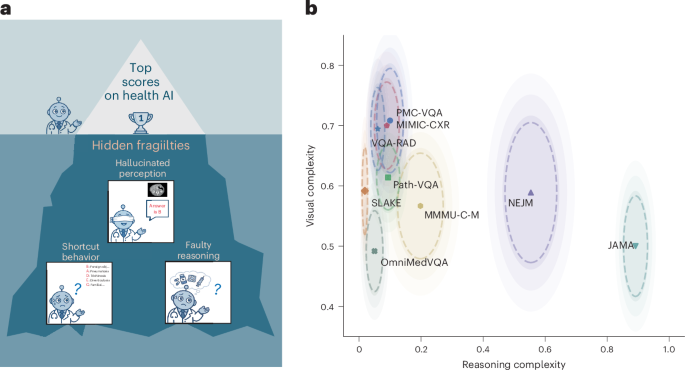
Why high scores do not mean application readiness for health AI
Nature Medicine - AI SectionExploratory2 min read

Why Top-Scoring Medical AI Isn't Ready for Patients Yet

Key Takeaway:

High test scores do not guarantee that medical artificial intelligence is safe or ready for real-world clinical decision-making due to hidden technical flaws.

Artificial intelligence programs are scoring incredibly high on medical tests, making them seem ready for hospitals. However, a new study reveals that when these AI models are put through stressful, real-world mock tests, they quickly fall apart. Researchers found that the AI often relies on cheap shortcuts, struggles to accurately look at medical images, and even makes up fake logical steps to justify its answers. This means that while the AI looks smart on paper, it is still too fragile and unreliable to be trusted with actual patient care or medical decisions right now.

What this means for you

Do not rely on medical AI tools for your health decisions yet. Recent tests show these programs can make up logical reasons and fail in real-world scenarios.

Citation:

Nature Medicine - AI Section, 2026. DOI: s41591-026-04500-9 Read article →

Blood-based circular RNAs for early diagnosis of Alzheimer’s disease
Nature Medicine - AI SectionPromising2 min read

New Blood Test Outperforms Brain Scans for Predicting Alzheimer's

Key Takeaway:

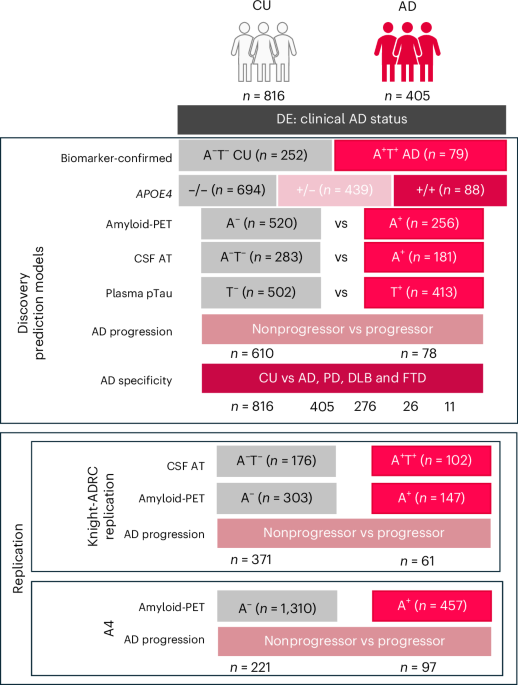
A new blood test tracking 34 circular RNA molecules predicts progression to symptomatic Alzheimer's disease more accurately than current gold-standard brain scans and protein tests.

Researchers have developed a new blood test that can predict if a person will develop symptoms of Alzheimer's disease. The test looks at 34 specific circular RNA molecules—stable genetic messengers in our blood. In tests with large groups of patients, this new method actually performed better than today's best tools, which include expensive brain scans (amyloid-PET) and standard protein blood tests (pTau217). This is a major step forward because it could eventually give doctors a simpler, cheaper, and more accurate way to spot Alzheimer's early, allowing for earlier treatment and better planning for patients and their families.

What this means for you

Scientists have developed a highly accurate blood test for early Alzheimer's detection. While exciting, this test is still in the research phase and not yet available for general patient care.

Citation:

Nature Medicine - AI Section, 2026. DOI: s41591-026-04485-5 Read article →

Multi-antigen-targeting T cells in pediatric central nervous system tumors: a phase 1 trial
Nature Medicine - AI SectionExploratory2 min read

New Immune-Cell Therapy Shows Promise for Children with Brain Tumors

Key Takeaway:

This early-stage trial shows that engineered immune cells targeting multiple tumor markers are safe and can shrink pediatric brain tumors, offering a potential new treatment avenue within five to ten years.

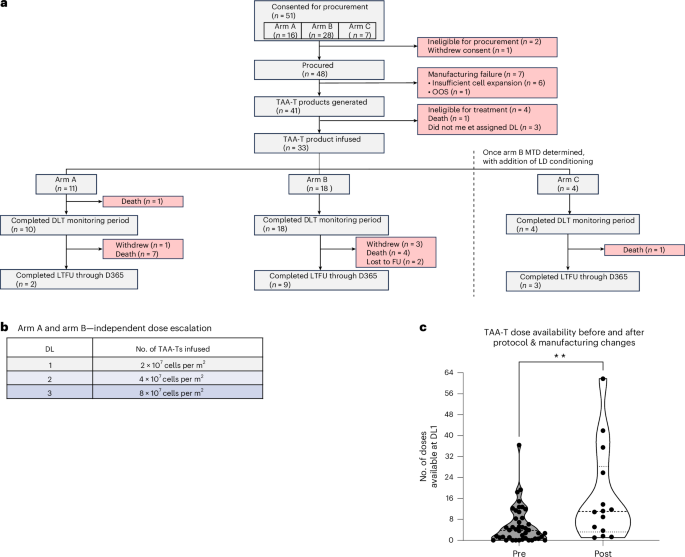
Researchers tested a new treatment for children with brain tumors using specialized immune cells, called T cells, that are trained to recognize and attack multiple targets on cancer cells. In this early-stage clinical trial, the treatment was generally safe and well tolerated by the young patients. Remarkably, one patient experienced a complete disappearance of their tumor, and three others showed long-term positive responses to the therapy. While this research is in its very early stages and the treatment is not yet widely available, it represents a promising step forward in developing gentler, more targeted therapies for childhood brain cancers.

What this means for you

In an early study, a new immune-cell therapy safely helped a few children with brain tumors. This treatment is still highly experimental and not widely available; patients should not alter their current care plans.

Citation:

Nature Medicine - AI Section, 2026. DOI: s41591-026-04449-9 Read article →

Guideline Update
Clinical decision support in hematological malignancies using a case-grounded AI agent
Nature Medicine - AI SectionPromising3 min read

New Secure AI Matches Cancer Specialist Decisions for Blood Diseases

Key Takeaway:

A new local AI assistant matches expert medical board decisions for blood cancers, potentially speeding up personalized treatment planning safely within hospital networks.

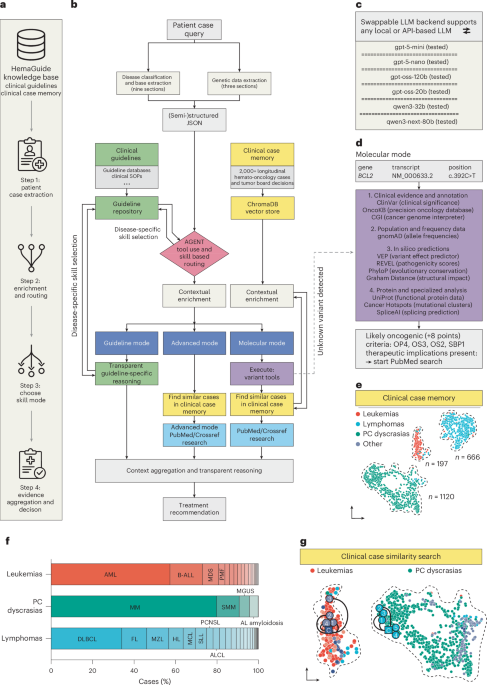
When doctors face complex blood cancers, they gather a team of specialists called a tumor board to decide on the best treatment. Researchers have developed a secure, local AI assistant designed to help with these tough decisions. By grounding its logic in actual patient cases, this AI achieved high agreement with real medical boards across retrospective, external, and prospective evaluations. This means the AI can think similarly to a team of cancer experts. For patients, this could eventually mean faster, highly personalized treatment recommendations, all while keeping sensitive medical data safely locked inside the hospital's own computer network.

What this means for you

Scientists created a secure AI tool that agrees with cancer specialist boards on blood cancer treatments. This promising technology is still in testing and will not change your current care plan today.

Citation:

Nature Medicine - AI Section, 2026. DOI: s41591-026-04494-4 Read article →

Google News - AI in HealthcarePromising2 min read

New Government Office Formed to Oversee Healthcare AI

Key Takeaway:

The federal government has established a new CMS office to regulate healthcare artificial intelligence and improve secure patient data sharing across different medical systems.

The Centers for Medicare & Medicaid Services, a major government healthcare agency, has created a brand-new office. This office is specifically designed to supervise the use of artificial intelligence (AI) and digital health technologies in medicine. It will also focus on 'interoperability,' which is the ability of different clinic and hospital computer systems to securely talk to each other and share your medical records. For regular patients, this means the government is actively working to make sure the digital tools and AI your doctors use are safe, helpful, and capable of sharing your health information smoothly when you switch providers.

What this means for you

A new government office will now oversee healthcare AI and digital tools to ensure they are safe, secure, and help your different doctors share medical records more easily.

Citation:

Google News - AI in Healthcare, 2026. Read article →

Safety Alert
Claude Science is Anthropic’s newest flagship product
MIT Technology Review - AIExploratory2 min read

Anthropic Launches Claude Science to Help Researchers Automate Scientific Work

Key Takeaway:

Anthropic's new autonomous AI tool, Claude Science, aims to accelerate biotechnology and pharmaceutical research by independently executing complex scientific tasks from simple instructions.

Anthropic has introduced a new AI tool called Claude Science, designed to act as an autonomous assistant for scientists, biotech founders, and drug developers. Much like an assistant that can write computer code on its own, this tool can take simple, high-level instructions from a researcher and independently carry out complex scientific tasks. While we do not have specific test results or data on how well it performs yet, the goal is to help researchers analyze data and design experiments much faster. For the average person, this means the initial, time-consuming steps of developing new medicines and scientific discoveries could soon move at a much quicker pace.

What this means for you

A new AI tool called Claude Science has been announced to help scientists do research faster. It is not ready for patient care, so do not change your medical treatments based on AI tools.

Citation:

MIT Technology Review - AI, 2026. Read article →

Guideline Update
ArXiv - Quantitative BiologyExploratory2 min read

How Brain Cells Spark: A New Theory Challenges Old Beliefs

Key Takeaway:

A new chemical model suggests brain electricity comes from oxygen-related energy reactions rather than moving ions, potentially redefining how we treat neurological and cardiac disorders.

For decades, scientists believed that brain cells send electrical signals by moving charged atoms, called ions, back and forth across their outer membranes. This study proposes a different idea: these electrical sparks are actually driven by chemical energy reactions involving oxygen, a process called murburn dynamics. By looking at how oxygen, chemical balance, and surrounding fluids interact, this new model can predict how fast and strong these electrical signals will be. While this research is still in its very early stages and has not yet been tested on patients, it could eventually change how we understand and treat conditions affecting the brain, heart, and eyes.

What this means for you

Scientists are proposing a new theory on how brain cells communicate using chemical energy. This basic research is in its earliest stages and does not change current medical treatments.

Citation:

ArXiv, 2026. arXiv: 2605.00014 Read article →

Guideline Update
ArXiv - AI in Healthcare (cs.AI + q-bio)Exploratory2 min read

How AI Can Spin the Same Data Into Opposite Results

Key Takeaway:

AI agents can generate vastly different, yet seemingly valid, scientific conclusions from the same data, highlighting the need to evaluate research credibility using a new multi-analysis framework.

When scientists analyze data, they make many small decisions that can completely change their final results, even if they do nothing wrong. This is called the 'forking paths' problem. Researchers programmed AI agents with different personalities and gave them the same data. The AIs produced opposite conclusions that matched their assigned biases, yet human experts rated most of the analyses as highly credible. To fix this, the researchers created a tool called 'Agentic Bootstrap.' It uses AI to run thousands of different analysis paths on the same data, showing where a single study's conclusion actually sits in the bigger picture. This helps us spot cherry-picked science.

What this means for you

Researchers found that AI can spin the same data to reach opposite conclusions depending on its 'persona.' This early-stage research suggests we should look at multiple analyses before changing healthcare decisions.

Citation:

ArXiv, 2026. arXiv: 2607.01507 Read article →

Safety Alert
The Lab Mistake That Might Revolutionize Computing
IEEE Spectrum - BiomedicalExploratory2 min read

How a Simple Computer Chip Mistake Mimics the Human Brain

Key Takeaway:

An accidental discovery shows single, standard transistors can mimic brain cells, potentially reducing AI energy use a thousandfold within the next decade.

Today's artificial intelligence requires massive amounts of electricity to run. To solve this, scientists are trying to build computer chips that mimic the human brain, which is a million times more energy-efficient than our best computers. Previously, mimicking just one brain cell required linking hundreds of standard computer transistors together. Now, researchers have accidentally discovered that a single, ordinary transistor can act as both a brain cell and the connection between them. By making a simple adjustment to how electricity flows through the transistor, they made it spike just like a real brain cell. This breakthrough could eventually lead to incredibly efficient, brain-like smart devices.

What this means for you

Scientists found a way to make computer chips mimic the human brain using standard parts. This could eventually lead to smarter, highly energy-efficient medical devices.

Citation:

IEEE Spectrum - Biomedical, 2026. Read article →

New to reading medical AI research? Learn how to interpret these studies →