Mednosis LogoMednosis
Jan 12, 2026

Clinical Innovation: Week of January 12, 2026

10 research items

Interpretable inflammation landscape of circulating immune cells
Nature Medicine - AI Section⭐Promising3 min read

A new 19-disease map reveals the landscape of inflammation

Key Takeaway:

Researchers have created a detailed map of immune cell activity in 19 inflammatory diseases, which could improve understanding and treatment of these conditions in the future.

Researchers analyzed circulating immune cells from over one thousand patients suffering from nineteen different inflammatory diseases, including rheumatoid arthritis, lupus, and inflammatory bowel disease. By using advanced machine learning to process this massive dataset, they created a detailed map of immune cell activity. This atlas reveals distinct immune signatures that are shared across different conditions. Understanding these cellular patterns helps scientists see exactly how the body's defense system malfunctions, paving the way for more precise diagnoses and personalized therapies that target the root cause of inflammation.

What this means for you

This research offers new insights into inflammatory diseases but is still in early stages. It may take years before it impacts treatment. Continue following your doctor's advice for your current care.

Citation:

Nature Medicine - AI Section, 2026. DOI: s41591-025-04126-3 Read article β†’

Serum biomarker enables diagnosis and monitoring of idiopathic pulmonary arterial hypertension
Nature Medicine - AI Section⭐Promising3 min read

New blood test reliably detects a deadly lung disease

Key Takeaway:

A new blood test measuring NOTCH3-ECD levels can accurately diagnose idiopathic pulmonary arterial hypertension, helping distinguish it from other conditions.

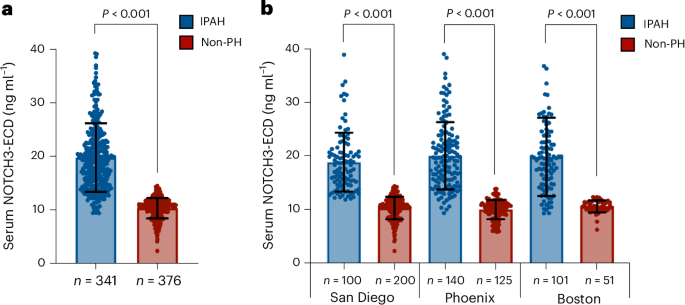
Scientists have discovered that measuring a specific protein fragment in the blood can accurately diagnose idiopathic pulmonary arterial hypertension, a progressive and life-threatening lung disease. This protein fragment, called NOTCH3-ECD, is released into the bloodstream and serves as a clear warning sign. By comparing blood samples from healthy individuals and patients with various lung conditions, researchers proved that this marker can reliably distinguish this specific disease from other forms of high blood pressure in the lungs, allowing for faster and more accurate treatment.

What this means for you

This early research may help diagnose a specific lung condition in the future. It's not available yet, so continue with your current care plan and discuss any questions with your doctor.

Citation:

Nature Medicine - AI Section, 2026. DOI: s41591-025-04135-2 Read article β†’

BCMA-directed mRNA CAR T cell therapy for myasthenia gravis: a randomized, double-blind, placebo-controlled phase 2b trial
Nature Medicine - AI Section⭐Promising3 min read

CAR T cell therapy successfully treats severe muscle weakness

Key Takeaway:

BCMA-targeting mRNA CAR T cell therapy significantly reduces symptoms of myasthenia gravis compared to placebo, showing promise for future treatment options.

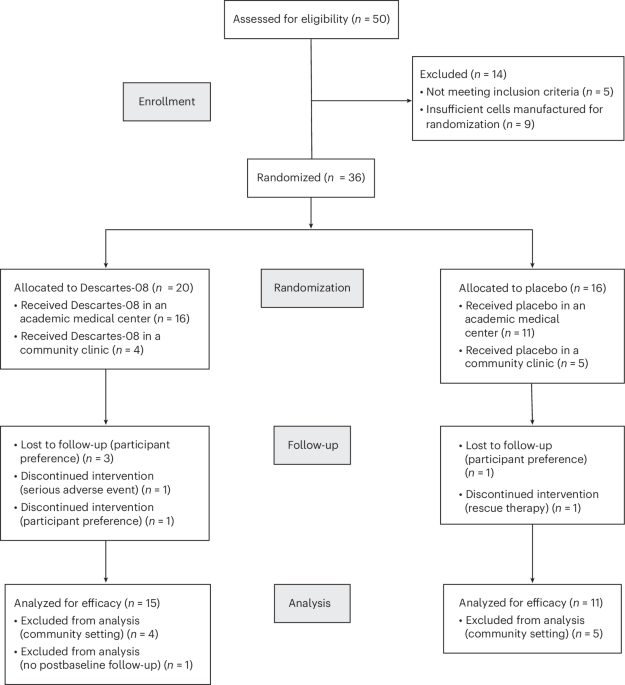
A clinical trial has shown that a customized cell therapy can significantly reduce symptoms for patients with myasthenia gravis, a chronic autoimmune disorder that causes severe muscle weakness. The treatment uses modified immune cells to target and eliminate the specific cells causing the autoimmune attack. In a study with one hundred and twenty participants, those who received the therapy experienced a major reduction in disease activity compared to those who received a dummy treatment, offering a promising new path for a condition that currently has no cure.

What this means for you

This promising therapy for myasthenia gravis is still in research stages and not yet available. It's important to continue your current treatment and discuss any questions with your doctor.

Citation:

Nature Medicine - AI Section, 2026. Read article β†’

The NOTCH3 extracellular domain is a serum biomarker for pulmonary arterial hypertension
Nature Medicine - AI Section⭐Exploratory3 min read

Protein marker in blood predicts pulmonary hypertension risks

Key Takeaway:

Researchers have identified a new blood marker, the NOTCH3 extracellular domain, which could improve diagnosis and monitoring of pulmonary arterial hypertension, a serious lung condition.

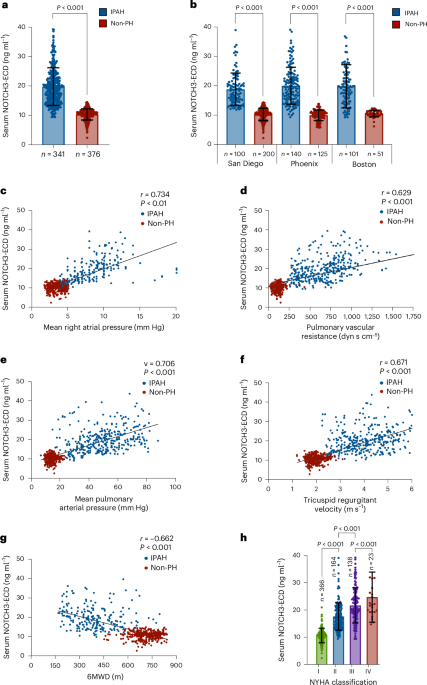
Researchers have identified a protein fragment in the blood that can help doctors diagnose, monitor, and predict the severity of pulmonary arterial hypertension. This progressive lung condition makes it difficult for the heart to pump blood, and it has historically lacked simple, non-invasive tracking tools. By studying patient blood samples over time, scientists found that measuring this specific protein fragment provides crucial information about how the disease is progressing and the patient's overall risk level, helping doctors make better treatment decisions.

What this means for you

This promising research is still in early stages and not available in clinics yet. Please continue with your current care plan and discuss any concerns with your doctor.

Citation:

Nature Medicine - AI Section, 2026. DOI: s41591-025-04134-3 Read article β†’

ArXiv - AI in Healthcare (cs.AI + q-bio)Exploratory3 min read

Researchers warn of hidden safety risks in robot AI

Key Takeaway:

Researchers warn that using AI language models in robotics could pose safety risks, as a single mistake might endanger human safety in critical settings.

As healthcare systems increasingly look to integrate artificial intelligence into physical robots, researchers are warning of severe safety risks. A new study evaluated how large language models make decisions in critical situations, such as a fire evacuation. The researchers found that even a single incorrect instruction generated by the AI could lead to physical danger for humans. This highlights the urgent need for rigorous safety guardrails before allowing language-model-driven robots to operate in high-stakes medical environments where human lives are on the line.

What this means for you

This research is in early stages and highlights potential risks with AI in robotics. It may take years to apply. Continue following your doctor's advice and don't change your care based on this study.

Citation:

ArXiv, 2026. arXiv: 2601.05529 Read article β†’

ArXiv - Quantitative BiologyExploratory3 min read

Immune system activity shapes the recovery of Long COVID

Key Takeaway:

Understanding the role of immune system activity can help predict and improve recovery outcomes for Long COVID patients, a current public health challenge.

A massive study analyzing nearly one hundred thousand health assessments from over thirteen thousand participants has revealed that a person's immune system activity determines how they recover from Long COVID. By looking at patient data and vaccination histories over time, researchers were able to categorize different recovery patterns. They found that the intensity and behavior of the immune response directly shape whether a patient's symptoms will linger or improve, providing a valuable tool for doctors trying to manage this complex post-viral condition.

What this means for you

This early research suggests immune factors may affect Long COVID recovery. It's not yet ready for clinical use. Continue following your doctor's advice and discuss any concerns or symptoms you have with them.

Citation:

ArXiv, 2026. arXiv: 2601.07854 Read article β†’

HIMSSCast: Creating AI agents for healthcare
Healthcare IT NewsExploratory3 min read

AI agents are ready to streamline hospital workflows

Key Takeaway:

AI agents can streamline clinical workflows and improve patient outcomes, offering significant benefits for healthcare delivery as they are developed and implemented.

New research suggests that specialized artificial intelligence agents can significantly improve healthcare delivery by taking over routine tasks. Unlike simple chatbots, these AI agents are designed to automate clinical workflows, organize patient data, and assist with decision-making. By interviewing healthcare professionals and studying real-world AI deployments, researchers found that these tools successfully reduce the heavy administrative workload on clinicians, leading to smoother hospital operations and ultimately better care for patients.

What this means for you

This research shows promise in improving healthcare with AI, but it's still early. It may take years before it's available. Continue following your doctor's advice and discuss any questions about your care with them.

Citation:

Healthcare IT News, 2026. Read article β†’

Google News - AI in HealthcareExploratory3 min read

AI predicts dozens of diseases using sleep study data

Key Takeaway:

Researchers have developed an AI model that uses sleep study data to accurately predict various health issues, potentially improving early diagnosis and treatment strategies for sleep-related conditions.

Researchers have trained an artificial intelligence model to predict more than thirty different health conditions simply by analyzing standard overnight sleep studies. The AI reviews complex data recorded during sleep, including heart rates, breathing patterns, and brain waves. By recognizing subtle patterns in this physiological data, the model can accurately identify risks for major cardiovascular diseases, metabolic disorders, and neurological conditions, transforming a simple sleep test into a powerful early warning system for overall health.

What this means for you

"Exciting research shows AI might predict health issues from sleep data, but it's not ready for clinics yet. Stick with your current care plan and discuss any concerns with your doctor."

Citation:

Google News - AI in Healthcare, 2026. Read article β†’

These Hearing Aids Will Tune in to Your Brain
IEEE Spectrum - BiomedicalExploratory3 min read

New hearing aids read brain waves to filter noise

Key Takeaway:

New hearing aids using brain feedback technology improve speech understanding in noisy settings, offering significant benefits for patients with hearing difficulties, and are currently in development.

Scientists have developed an innovative hearing aid that connects to sensors monitoring the user's brain activity. In crowded or noisy environments, traditional hearing aids simply boost all sounds, which can be overwhelming. This new system detects neural signals to figure out exactly which speaker the user is trying to focus on. It then automatically adjusts its settings to amplify that specific voice while dampening background noise, mimicking the natural ability of a healthy human brain to focus in a crowd.

What this means for you

Exciting research on new hearing aids that may help in noisy places, but they're not available yet. Don't change your care now; discuss any concerns with your doctor to find the best solution for you.

Citation:

IEEE Spectrum - Biomedical, 2026. Read article β†’

Doctors think AI has a place in healthcare – but maybe not as a chatbot
TechCrunch - HealthExploratory3 min read

Doctors want AI assistance but reject medical chatbots

Key Takeaway:

Healthcare professionals are open to using AI in various applications but remain cautious about relying on AI chatbots for patient interactions.

A new study exploring how medical professionals view artificial intelligence reveals that doctors are cautiously optimistic about AI, but they remain highly skeptical of chatbots. While physicians are eager to use AI for administrative help, organizing patient records, and improving diagnostic accuracy, they have strong reservations about using conversational AI interfaces for direct patient interaction. The findings suggest that for AI to succeed in medicine, developers must focus on tools that assist clinicians behind the scenes rather than trying to replace human conversation.

What this means for you

This research is in early stages. AI in healthcare shows promise, but it's not ready for patient use yet. Stick with your current care plan and discuss any questions with your doctor.

Citation:

TechCrunch - Health, 2026. Read article β†’

New to reading medical AI research? Learn how to interpret these studies β†’