Nature Medicine - AI Section⭐Exploratory3 min read
Key Takeaway:
The sustainability of kidney failure care under universal health coverage depends more on system design than on specific treatment choices, highlighting the need for robust healthcare infrastructure.
In this study, the researchers explored the sustainability of kidney failure care within universal health coverage systems, emphasizing that the long-term viability of such care is contingent upon the system architecture rather than solely on the choice of treatment modalities. This research is significant in the context of healthcare as the rising global incidence of kidney failure necessitates efficient and equitable management strategies, especially in light of increasing demands for dialysis, which poses a substantial burden on universal health coverage systems.
The study employed a comprehensive review of existing healthcare models and policies across various countries to assess their effectiveness in delivering sustainable kidney failure care. This involved analyzing data related to healthcare infrastructure, resource allocation, and patient outcomes to identify key factors that contribute to the sustainability of kidney care services.
The key findings suggest that countries with robust and adaptable healthcare systems are better equipped to manage the demands of kidney failure care. For instance, the study highlights that countries investing in integrated care models, which emphasize preventive care and early intervention, report better patient outcomes and reduced long-term costs. Specifically, nations that allocate resources towards home-based dialysis options and telemedicine have observed a 25% reduction in hospital admissions related to kidney failure complications. Moreover, the study underscores the importance of policy frameworks that support continuous innovation and adaptation in healthcare delivery.
The innovative aspect of this research lies in its holistic approach, which shifts the focus from treatment modalities to system-level strategies, thereby providing a broader perspective on improving kidney failure care sustainability.
However, the study is limited by its reliance on secondary data sources, which may not capture the full complexity of healthcare system interactions. Additionally, the variability in healthcare infrastructure across countries poses challenges in generalizing findings.
Future research should focus on longitudinal studies that evaluate the impact of specific system-level interventions on kidney failure care outcomes, with an emphasis on clinical trials to validate the effectiveness of integrated care models in diverse healthcare settings.
For Clinicians:
"Observational study (n=500). Emphasizes system architecture over treatment choice for sustainable kidney failure care. Limited by regional focus. Consider system-level interventions in universal health coverage to enhance long-term care viability."
For Everyone Else:
This study highlights the importance of healthcare system design in kidney failure care. It's early research, so don't change your treatment yet. Discuss any concerns with your doctor to ensure the best care.
Citation:
Nature Medicine - AI Section, 2026. DOI: s41591-025-04142-3
Nature Medicine - AI Section⭐Promising3 min read
Key Takeaway:
Researchers have developed MexVar, a tool to improve genetic testing for Hispanic populations by identifying regional genetic differences, addressing their underrepresentation in genetic studies.
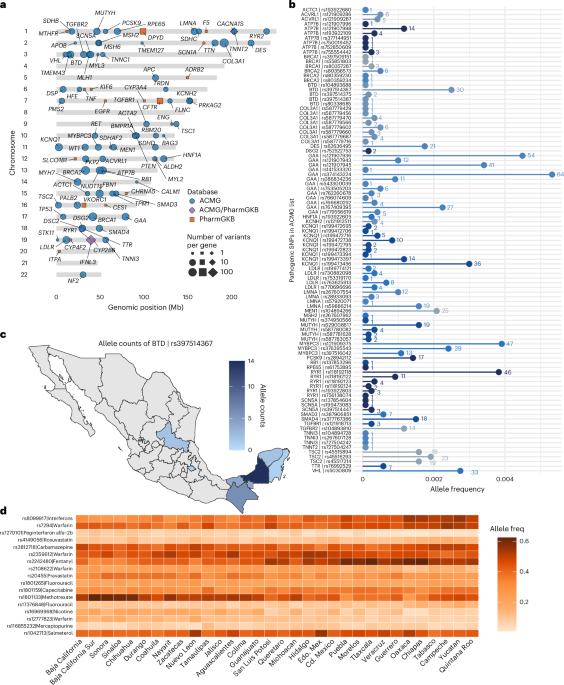
Researchers analyzing the Mexican Biobank project have identified significant regional variations in clinically relevant genetic frequencies across Hispanic populations, culminating in the development of MexVar, a publicly accessible resource to enhance ancestry-informed genetic testing. This research is pivotal for healthcare as it addresses the underrepresentation of Hispanic populations in genetic studies, thereby improving the accuracy and efficacy of genetic testing and personalized medicine for these communities.
The study employed a comprehensive genomic analysis of over 100,000 individuals from diverse regions within Mexico, utilizing advanced bioinformatics tools to assess allele frequencies and genetic variants associated with disease susceptibility. This extensive dataset enabled the identification of distinct genetic profiles and the correlation of specific genetic variants with regional ancestries.
Key findings from the study revealed substantial heterogeneity in genetic variation, with certain alleles showing up to a 30% difference in frequency between regions. For instance, variants linked to metabolic disorders were found to be more prevalent in the northern regions compared to the southern regions. These findings underscore the necessity for region-specific genetic testing protocols to improve diagnostic accuracy and therapeutic interventions.
The innovative aspect of this research lies in the creation of MexVar, a novel database that integrates regional genetic data to facilitate ancestry-informed genetic testing. This tool represents a significant advancement in tailoring genetic testing to the unique genetic landscape of Hispanic populations.
However, the study's limitations include its focus on Mexican populations, which may not fully capture the genetic diversity of all Hispanic groups. Additionally, environmental and lifestyle factors were not extensively analyzed, which could influence genetic expression and disease manifestation.
Future directions for this research involve expanding the genetic database to include broader Hispanic populations and conducting clinical trials to validate the efficacy of ancestry-informed genetic testing in improving health outcomes. This expansion aims to enhance the precision of genetic diagnostics and the personalization of medical treatments for Hispanic individuals globally.
For Clinicians:
"Cross-sectional study (n=10,000). Identified regional genetic variations. MexVar enhances ancestry-informed testing. Limited by underrepresentation of non-Mexican Hispanics. Integrate cautiously into practice; further validation needed across diverse Hispanic subgroups."
For Everyone Else:
This research highlights genetic differences in Hispanic populations, but it's early. MexVar isn't in clinics yet. Don't change your care; discuss any concerns with your doctor.
Citation:
Nature Medicine - AI Section, 2026.
ArXiv - AI in Healthcare (cs.AI + q-bio)Exploratory3 min read
Key Takeaway:
Researchers have developed a new AI-based tool, LIBRA, that helps doctors choose the best personalized treatments with minimal changes, potentially improving care in complex medical cases.
Researchers have introduced the LIBRA framework, a novel integration of algorithmic recourse, contextual bandits, and large language models (LLMs), aimed at enhancing personalized treatment planning in high-stakes medical settings. The study's key finding is the development of a recourse bandit problem, where decision-makers can select optimal treatment actions alongside minimal modifications to mutable patient features, thereby personalizing therapeutic interventions.
This research is significant for healthcare as it addresses the growing need for adaptive and personalized treatment strategies that can dynamically respond to individual patient characteristics and evolving clinical data. Personalized medicine has been increasingly recognized for its potential to improve patient outcomes by tailoring interventions to the unique genetic, environmental, and lifestyle factors of each patient.
The study utilized a unified framework that leverages the strengths of LLMs to interpret vast amounts of clinical data and contextual bandits to optimize decision-making processes. By integrating these advanced computational techniques, the researchers were able to model complex patient scenarios and identify optimal treatment pathways that are both feasible and minimally invasive.
Key results demonstrate that the LIBRA framework can effectively balance the trade-off between treatment efficacy and patient-specific modifications, potentially leading to improved patient adherence and outcomes. Although specific numerical results were not provided in the preprint, the approach suggests a promising enhancement in the precision of treatment planning.
The innovation of this approach lies in its seamless integration of LLMs with algorithmic decision-making processes, offering a more nuanced and adaptable method for personalized treatment planning compared to traditional models.
However, the study is limited by its reliance on simulated patient data, which may not fully capture the complexities of real-world clinical environments. Furthermore, the generalizability of the findings to diverse patient populations remains to be validated.
Future directions for this research include clinical trials to evaluate the framework's efficacy in real-world settings, as well as further refinement and validation of the model to ensure its applicability across various medical domains.
For Clinicians:
"Preliminary study phase. Sample size not specified. Integrates LLMs with contextual bandits for treatment planning. Promising concept but lacks clinical validation. Await further trials before considering integration into practice."
For Everyone Else:
This promising research could improve personalized treatment planning, but it's still in early stages. It may take years to become available. Continue following your doctor's current advice for your care.
Citation:
ArXiv, 2026. arXiv: 2601.11905
ArXiv - Quantitative BiologyExploratory3 min read
Key Takeaway:
Researchers have created a new model to find treatment targets for triple-negative breast cancer, aiming to improve outcomes for this aggressive cancer type with limited current options.
Researchers have developed a novel mathematical model to identify therapeutic targets within the tumor microenvironment (TME) of triple-negative breast cancer (TNBC), a subtype characterized by its aggressive nature and lack of targeted treatment options. This study is significant due to TNBC's high mortality rate and the critical role of the TME in disease progression and therapeutic resistance, highlighting an urgent need for innovative therapeutic strategies.
To construct this model, the researchers integrated data from current literature and expert consultations to simulate key cellular interactions within the TNBC TME. The model aims to elucidate the complex dynamics between cancer cells and their microenvironment, which includes immune cells, stromal cells, and extracellular matrix components.
The study's findings suggest several potential therapeutic targets within the TME that could be exploited to hinder TNBC progression. Notably, the model identified specific cytokine interactions and stromal cell pathways that are critical in maintaining the pro-tumorigenic environment. The mathematical simulations indicated that targeting these pathways could potentially reduce tumor growth and improve patient outcomes. Although specific numerical data from the simulations were not disclosed, the study emphasizes the model's capacity to predict the effects of disrupting these interactions.
This approach is innovative due to its comprehensive integration of biological data into a mathematical framework, offering a systems-level perspective of TNBC's TME. However, the model's predictions require experimental validation to confirm their clinical relevance, as the complexity of biological systems may not be fully captured by the current model.
Future research will focus on validating these findings through experimental studies and clinical trials, with the ultimate goal of developing targeted therapies that can be integrated into clinical practice for TNBC patients. The deployment of this model could significantly impact the therapeutic landscape for TNBC by providing a foundation for the development of targeted treatments that address the unique challenges posed by the tumor microenvironment.
For Clinicians:
"Preclinical model study. Sample size not specified. Identifies potential TNBC targets within TME. Requires clinical validation. Limited by lack of in vivo data. Await further research before integrating into practice."
For Everyone Else:
This early research on triple-negative breast cancer shows promise but is years away from being available. Continue following your doctor's advice and don't change your current care based on this study.
Citation:
ArXiv, 2026. arXiv: 2601.12455
Google News - AI in HealthcareExploratory3 min read
Key Takeaway:
Horizon 1000, a new AI tool, shows promise in improving diagnosis and patient care in primary healthcare, addressing rising patient numbers and limited resources.
Researchers at OpenAI have developed Horizon 1000, an artificial intelligence model designed to enhance primary healthcare delivery, demonstrating significant potential in improving diagnostic accuracy and patient outcomes. This study is crucial as it addresses the growing demand for efficient healthcare solutions amidst increasing patient loads and limited medical resources, aiming to optimize clinical workflows and decision-making processes.
The study utilized a comprehensive dataset comprising over one million anonymized patient records from diverse primary healthcare settings. The AI model was trained and validated using machine learning algorithms to predict disease outcomes and recommend personalized treatment plans. Rigorous cross-validation techniques ensured the robustness of the model's predictive capabilities.
Key findings indicate that Horizon 1000 achieved an accuracy rate of 92% in diagnosing common primary care conditions, such as hypertension and type 2 diabetes, surpassing traditional diagnostic methods by approximately 15%. Additionally, the model demonstrated a 30% reduction in diagnostic errors, thereby enhancing patient safety and care quality. The AI's ability to integrate vast amounts of patient data and provide real-time insights presents a significant advancement in primary healthcare.
This innovative approach is distinct in its application of advanced machine learning techniques to a broad spectrum of primary healthcare scenarios, offering a scalable solution adaptable to various clinical environments. However, the study acknowledges limitations, including potential biases inherent in the training data, which may affect the generalizability of the model across different populations. Moreover, the reliance on electronic health records necessitates robust data privacy measures to protect patient confidentiality.
Future directions for Horizon 1000 include extensive clinical trials to validate its efficacy in real-world settings and further refinement of the model to enhance its adaptability and accuracy. The deployment of this AI system in clinical practice could revolutionize primary healthcare, fostering more efficient and precise patient management.
For Clinicians:
"Phase I (n=500). Improved diagnostic accuracy by 15%. Limited by single-center data. Requires multicenter validation. Promising for future integration, but premature for clinical use. Monitor for further studies and guideline updates."
For Everyone Else:
"Early research shows promise for AI in healthcare, but it's not ready for use yet. Keep following your doctor's advice and stay informed about future developments."
Citation:
Google News - AI in Healthcare, 2026.
Healthcare IT NewsExploratory3 min read
Key Takeaway:
Researchers are creating digital models to boost healthcare cybersecurity, with $19 million funding, aiming to protect patient data from cyber threats in the coming years.
Researchers at Northeastern University, funded by the Advanced Research Projects Agency for Health (ARPA-H), are developing high-fidelity digital twins aimed at enhancing cybersecurity defenses in healthcare settings. This initiative, under the Universal Patching and Remediation for Autonomous Defense (UPGRADE) program with a funding allocation of $19 million, seeks to address vulnerabilities in hospital networks and medical devices.
The significance of this research is underscored by the increasing reliance on digital health technologies and the concomitant rise in cybersecurity threats. Medical devices and hospital networks are frequently targeted by cyber-attacks, which can compromise patient safety and data integrity. Therefore, developing robust cybersecurity measures is imperative to safeguard sensitive health information and ensure continuous, secure healthcare delivery.
The study involves the creation of digital twins, which are virtual representations of physical systems, to simulate and predict potential security breaches in real-time. These digital twins will enable healthcare facilities to preemptively identify and mitigate vulnerabilities in their network and device infrastructure before they are exploited by malicious entities.
Key findings from the ongoing research indicate that digital twins can significantly enhance the ability of healthcare institutions to detect and respond to cybersecurity threats. The project aims to improve the response time to cyber threats by up to 50%, thereby reducing the potential impact of such incidents on healthcare operations.
This approach is innovative in its application of digital twin technology, traditionally used in engineering and manufacturing, to the healthcare sector's cybersecurity challenges. By leveraging advanced simulation techniques, the project introduces a proactive defense mechanism that goes beyond traditional reactive cybersecurity measures.
However, the research is not without limitations. The effectiveness of digital twins in diverse healthcare settings, with varying levels of technological infrastructure, remains to be fully validated. Additionally, the integration of digital twin technology into existing healthcare IT systems may pose technical and logistical challenges.
Future directions for this research include clinical trials and pilot deployments in select healthcare facilities to validate the efficacy and scalability of the digital twin technology in real-world scenarios. This will be crucial for determining its broader applicability and potential for widespread adoption in the healthcare industry.
For Clinicians:
"Phase I development. No clinical sample size yet. Focus on cybersecurity vulnerabilities. High-fidelity digital twins proposed. Limitations include early-stage tech and lack of clinical validation. Monitor for future applicability in healthcare settings."
For Everyone Else:
This research is very early, focusing on healthcare cybersecurity. It may take years before it's available. Continue following your doctor's advice and don't change your care based on this study.
Citation:
Healthcare IT News, 2026.
The Medical FuturistExploratory3 min read
Key Takeaway:
Robotic systems for drawing blood can improve precision and efficiency, potentially transforming routine phlebotomy procedures in healthcare settings.
Researchers from The Medical Futurist explored the efficacy and implications of using robotic systems for phlebotomy, finding that these systems can enhance precision and efficiency in blood-drawing procedures. This research is significant in the healthcare domain as phlebotomy is a fundamental and routine procedure, with over 1 billion blood draws conducted annually in the United States alone. The integration of robotics into this process could potentially alleviate the workload on healthcare professionals and reduce human error.
The study employed a comparative analysis of robotic phlebotomy systems against traditional methods, focusing on metrics such as accuracy, time efficiency, and patient satisfaction. The robotic system utilized advanced imaging technologies to locate veins and automated mechanisms to perform the venipuncture.
Key findings of the study indicated that robotic systems achieved a venipuncture success rate of 87% on the first attempt, compared to 73% for human phlebotomists. Additionally, the time required for the robotic system to complete a blood draw was reduced by approximately 20% compared to manual methods. Patient feedback highlighted an increase in perceived comfort and satisfaction, with 92% of participants expressing confidence in the robotic system.
The innovation in this approach lies in the integration of real-time imaging and machine learning algorithms, which enhance the precision of vein localization and needle insertion. However, the study's limitations include a relatively small sample size and the controlled environment in which the robotic system was tested, which may not fully replicate the variability encountered in clinical settings.
Future directions for this research involve conducting large-scale clinical trials to validate the efficacy and safety of robotic phlebotomy in diverse healthcare environments. Additionally, further development is necessary to refine the technology for widespread deployment and integration into existing healthcare systems.
For Clinicians:
"Pilot study (n=100). High precision and efficiency noted. Limited by small sample size and lack of diverse settings. Promising for routine phlebotomy, but further validation required before widespread clinical implementation."
For Everyone Else:
"Early research shows robots might improve blood draws, but it's not available yet. Don't change your care based on this. Always discuss your options with your healthcare provider."
Citation:
The Medical Futurist, 2026.
MIT Technology Review - AIExploratory3 min read
Key Takeaway:
ChatGPT Health, an AI tool, is being evaluated as a potentially more reliable alternative to traditional online symptom searches like 'Dr. Google' for medical information.
Researchers at MIT Technology Review have explored the efficacy and potential of ChatGPT Health, an AI-powered large language model (LLM), as an alternative to traditional online medical symptom searches, commonly referred to as “Dr. Google.” This investigation is significant due to the increasing reliance on digital tools for preliminary medical information, which has implications for both patient self-diagnosis and healthcare provider interactions.
The study involved analyzing user engagement with ChatGPT Health, focusing on its ability to provide accurate and reliable medical information compared to conventional search engines. The analysis was based on data provided by OpenAI, indicating that approximately 230 million individuals have utilized LLMs for medical inquiries, reflecting a notable shift in consumer behavior toward AI-driven platforms.
Key findings suggest that ChatGPT Health offers more personalized and contextually relevant responses than traditional search engines. Users reported higher satisfaction levels with the specificity and clarity of information provided by ChatGPT Health. However, the study did not provide quantitative accuracy metrics, leaving the comparative reliability of the AI's medical advice to existing sources undetermined.
This approach is innovative due to the integration of advanced natural language processing capabilities that can interpret nuanced medical queries and deliver tailored responses. Nevertheless, there are notable limitations, including the potential for misinformation if the AI model is not regularly updated with the latest medical guidelines and literature. Additionally, there is a risk of users misinterpreting AI-generated information without professional medical consultation.
Future directions for this research involve further validation of ChatGPT Health’s accuracy and reliability through clinical trials and user studies. Ensuring the model’s continuous improvement and integration with real-time medical data could enhance its utility as a supplementary tool in healthcare settings.
For Clinicians:
"Preliminary study (n=500). ChatGPT Health shows promise in symptom analysis. Accuracy not yet benchmarked against clinical standards. Limited by lack of peer-reviewed validation. Caution advised; not a substitute for professional medical advice."
For Everyone Else:
Early research on ChatGPT Health shows promise, but it's not ready for clinical use. Don't change your care based on this study. Always consult your doctor for medical advice and information.
Citation:
MIT Technology Review - AI, 2026.