

Mednosis LogoMednosis
Mar 2, 2026

Clinical Innovation: Week of March 02, 2026

10 research items

Clinical Innovation: Week of March 02, 2026
Guideline Update
LLMs show bias in opioid prescribing
Nature Medicine - AI SectionExploratory3 min read

AI models show bias in prescribing opioids

Key Takeaway:

Large language models used in healthcare may unfairly recommend opioids more often to marginalized groups, highlighting a need for careful oversight in clinical decision tools.

Researchers analyzed how large language models handle pain management. By feeding the AI programs simulated patient scenarios with different demographic profiles, they discovered a troubling pattern. The models recommended opioid prescriptions at higher rates for patients from marginalized backgrounds. Because these AI systems are increasingly used by doctors to help make treatment decisions, this bias could lead to unequal care and worsen existing disparities in medicine. The findings highlight an urgent need for strict oversight before letting AI guide prescription practices.

What this means for you

This early research shows AI may unfairly suggest opioids for some groups. It's not used in clinics yet. Keep following your doctor's advice and discuss any concerns with them.

Citation:

Nature Medicine - AI Section, 2026. Read article →
Guideline Update
Ipilimumab and nivolumab followed by chemoradiotherapy as bladder-sparing treatment in muscle-invasive bladder cancer: a phase 2 trial
Nature Medicine - AI SectionPromising3 min read

Immunotherapy combo helps preserve bladder function

Key Takeaway:

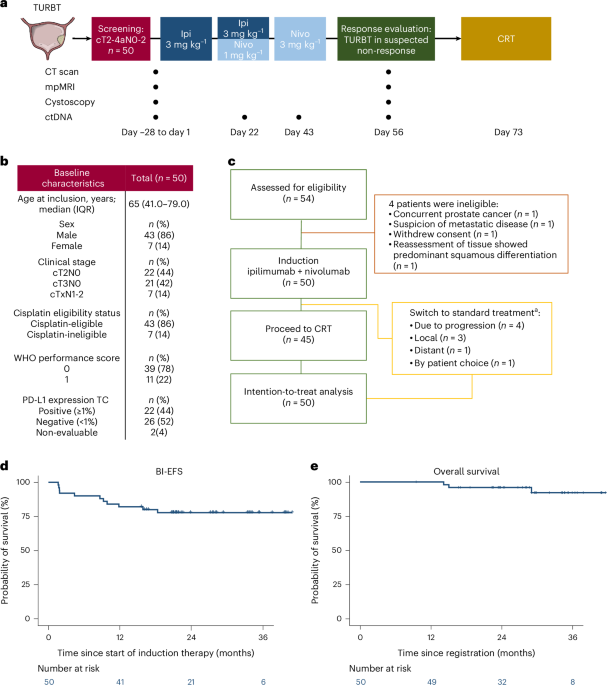
A phase 2 trial shows that combining ipilimumab and nivolumab with chemoradiotherapy may effectively preserve bladder function in patients with stage II/III muscle-invasive bladder cancer.

A clinical trial evaluated a new treatment strategy for patients with advanced bladder cancer. Instead of undergoing a radical surgery to remove the bladder, patients received a combination of two immunotherapy drugs followed by standard chemotherapy and radiation. The results were highly encouraging, showing that this combination therapy successfully kept patients cancer-free while preserving their natural bladder. This represents a major step forward in offering effective, less disruptive treatment options for individuals facing aggressive bladder cancer.

What this means for you

This promising bladder cancer treatment is still in early research stages and not yet available. Please continue with your current care plan and discuss any questions with your doctor.

Citation:

Nature Medicine - AI Section, 2026. DOI: s41591-026-04271-3 Read article →

Safety Alert
Preventive vaccines for hereditary cancer syndromes
Nature Medicine - AI SectionExploratory3 min read

New preventive vaccine targets hereditary cancer

Key Takeaway:

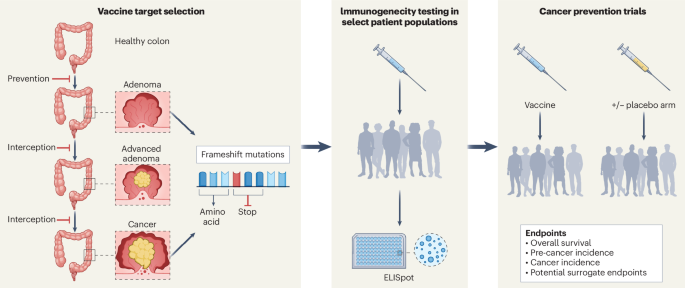
Researchers have developed a promising preventive vaccine for Lynch syndrome, a hereditary cancer, showing safety and immune response in early trials, potentially transforming future cancer prevention.

Scientists have developed an off-the-shelf vaccine designed to prevent cancer in people with Lynch syndrome, a genetic condition that sharply increases the risk of developing various tumors. In an early-stage clinical trial, the vaccine proved to be safe and successfully triggered a strong immune response in participants. By training the immune system to recognize and attack early cancer-associated proteins, this vaccine could fundamentally change how we manage hereditary cancer risks, moving from early detection to active prevention.

What this means for you

Exciting early research on a vaccine for hereditary cancer, but it's not available yet. It may take years before it's ready. Continue with your current care plan and consult your doctor for advice.

Citation:

Nature Medicine - AI Section, 2026. DOI: s41591-026-04248-2 Read article →

Safety Alert
In vivo base editing gene therapy for heterozygous familial hypercholesterolemia: a phase 1 trial
Nature Medicine - AI SectionExploratory3 min read

Gene editing therapy successfully lowers cholesterol

Key Takeaway:

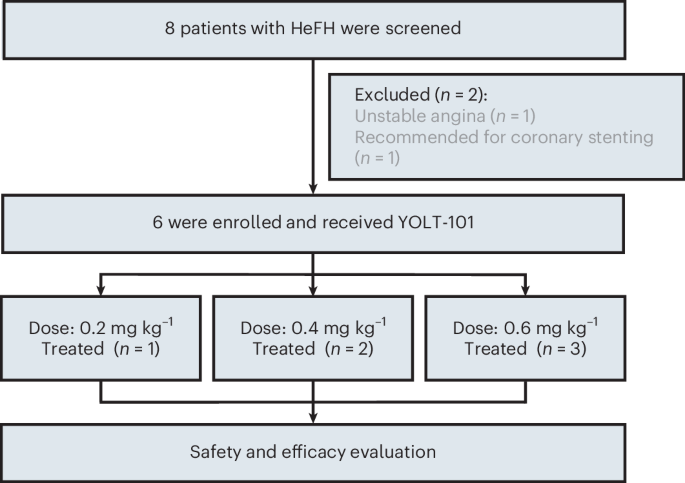
In a phase 1 trial, a new gene therapy significantly lowered bad cholesterol levels in patients with familial hypercholesterolemia without major side effects.

A phase 1 clinical trial tested a gene-editing therapy delivered via tiny fat bubbles to target a specific gene in the liver. The study involved six patients with a genetic condition that causes dangerously high cholesterol levels and early heart disease. The treatment successfully disabled the target gene, resulting in a significant reduction of bad cholesterol levels without causing any major side effects. This represents a major milestone in using gene editing directly inside the human body to cure chronic genetic conditions.

What this means for you

Early research shows potential for lowering cholesterol in genetic conditions. It's not available yet, so continue your current treatment and consult your doctor for advice tailored to your needs.

Citation:

Nature Medicine - AI Section, 2026. DOI: s41591-026-04254-4 Read article →

Safety Alert
ArXiv - Quantitative BiologyExploratory3 min read

New superbug gene accelerates antibiotic resistance

Key Takeaway:

Researchers have identified a new genetic element in Klebsiella pneumoniae that contributes to antibiotic resistance, highlighting the urgent need for strategies to combat these resistant strains.

Researchers have mapped a newly discovered genetic element in the bacteria species Klebsiella pneumoniae, which is a common cause of hospital infections. This genetic element carries a specific gene that makes the bacteria resistant to powerful, last-resort antibiotics. By analyzing the genetic structure, scientists now better understand how this resistance easily spreads between different bacteria. The discovery underscores the growing global threat of superbugs and the urgent need to develop new strategies to combat antibiotic-resistant infections.

What this means for you

This early research on antibiotic resistance in Klebsiella pneumoniae highlights potential future concerns. It's not yet applicable in clinical settings. Please continue following your doctor's advice and current treatment plan.

Citation:

ArXiv, 2026. arXiv: 2603.01849 Read article →

With quantum transformation looming, no time to waste in maturing cryptography management
Healthcare IT NewsExploratory3 min read

Quantum computers threaten medical data security

Key Takeaway:

Quantum computers could soon break current data security systems, urging healthcare providers to update cryptographic methods to protect patient information.

A new study warns that rapid advancements in quantum computing pose an immediate threat to modern data security. Standard encryption methods currently used to protect sensitive medical records could be cracked in seconds by future quantum computers. Researchers are urging healthcare organizations to upgrade their digital security systems immediately. Transitioning to quantum-resistant encryption is essential to ensure that private patient data remains secure as computing technology advances.

What this means for you

This research is in early stages. Quantum computing may affect data security in healthcare, but changes are years away. Continue following your doctor's current recommendations and don't alter your care based on this study.

Citation:

Healthcare IT News, 2026. Read article →

Google News - AI in HealthcareExploratory3 min read

Researchers identify blind spots in triage AI

Key Takeaway:

Mount Sinai researchers found that current AI systems used in medical triage have diagnostic blind spots, highlighting the need for careful integration into emergency care.

A study conducted at Mount Sinai investigated the performance of artificial intelligence systems used to prioritize patients in emergency departments. By comparing AI decisions with those of experienced medical professionals, researchers found specific clinical areas where the AI consistently failed or misdiagnosed patients. While the AI was generally accurate, these blind spots present a safety risk in high-stakes emergency settings, demonstrating that AI tools must be integrated carefully and always supervised by human doctors.

What this means for you

This research highlights AI's current limitations in medical triage. It's early, so don't change your care yet. Always consult your doctor for advice tailored to your health needs.

Citation:

Google News - AI in Healthcare, 2026. Read article →

Safety Alert
ArXiv - AI in Healthcare (cs.AI + q-bio)Exploratory3 min read

New framework secures AI drug discovery

Key Takeaway:

Researchers are developing a new AI framework, Mozi, to improve the reliability and safety of using AI in drug discovery, addressing current limitations in this high-stakes field.

Scientists have introduced a new framework called Mozi, designed to govern and control artificial intelligence agents used in pharmaceutical research. Drug discovery is a complex and expensive process, and while AI can help, standard models can be unpredictable. Mozi adds safety guardrails and structure to these AI systems, ensuring their virtual experiments are reliable, safe, and easy to replicate. This framework could help researchers identify promising new drug candidates much faster and with fewer errors.

What this means for you

"Early research on AI for drug discovery. Not yet ready for clinical use. It may take years to develop. Continue following your current treatment plan and consult your doctor for any concerns."

Citation:

ArXiv, 2026. arXiv: 2603.03655 Read article →

Guideline Update
Your Watch Will One Day Track Blood Pressure
IEEE Spectrum - BiomedicalExploratory3 min read

Smartwatches may soon track blood pressure

Key Takeaway:

Researchers are developing smartwatch technology that could estimate blood pressure non-invasively, offering continuous monitoring for early detection of health issues in the near future.

Engineers have developed a new method to measure blood pressure using radio signals reflected off the wrist. This technology detects how changes in blood volume alter the radio waves, allowing for accurate readings without the need for a traditional squeezing arm cuff. Researchers are currently working to shrink the electronic components so they can fit inside standard smartwatches, which could soon allow billions of people worldwide to monitor their blood pressure continuously and non-invasively.

What this means for you

This exciting research could lead to smartwatches measuring blood pressure, but it's still in early stages. It may take years to be available. Continue following your doctor's advice for blood pressure management.

Citation:

IEEE Spectrum - Biomedical, 2026. Read article →

Guideline Update
Using ChatGPT Offline: How Small Language Models Can Aid Healthcare Professionals
The Medical FuturistExploratory3 min read

Offline AI tools assist remote doctors

Key Takeaway:

Small language models like ChatGPT can efficiently assist healthcare professionals on standard mobile devices without internet, enhancing accessibility in offline settings.

A new study shows that smaller, optimized artificial intelligence models can run efficiently on standard mobile devices without an internet connection. Researchers tested these offline models on typical medical questions and found they provided fast, accurate, and helpful information. This capability is a game-changer for healthcare workers operating in remote areas, rural clinics, or disaster zones where internet connectivity is unreliable or nonexistent, ensuring they still have access to real-time clinical support.

What this means for you

Early research shows promise for offline AI tools aiding doctors. Not yet available in clinics. Don't change your care based on this study. Always consult your doctor for medical advice.

Citation:

The Medical Futurist, 2026. Read article →

New to reading medical AI research? Learn how to interpret these studies →