Mednosis LogoMednosis
Dec 10, 2025

Clinical Innovation: Week of December 10, 2025

10 research items

Nature Medicine - AI SectionPractice-Changing3 min read

Intrathecal onasemnogene abeparvovec in treatment-naive patients with spinal muscular atrophy: a phase 3, randomized controlled trial

Key Takeaway:

A single spinal injection of onasemnogene abeparvovec significantly improved motor function in untreated spinal muscular atrophy patients, offering a promising new treatment option.

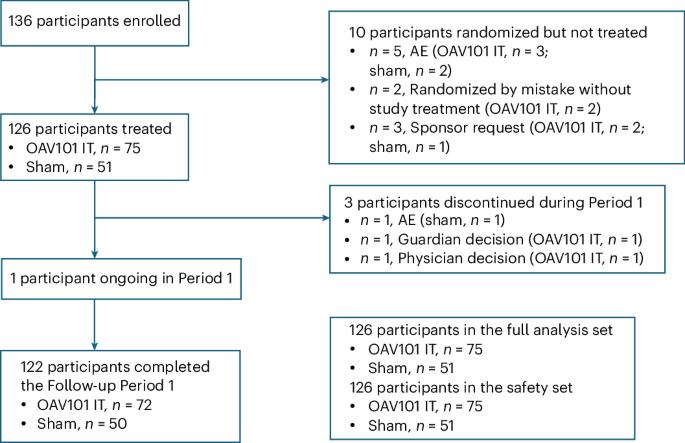
Researchers conducted a phase 3 randomized controlled trial, known as the STEER trial, to evaluate the efficacy and safety of a single intrathecal dose of onasemnogene abeparvovec in treatment-naive patients with spinal muscular atrophy (SMA), concluding that it significantly improved motor function compared to a sham intervention. This research is pivotal in the context of SMA, a severe neuromuscular disorder characterized by progressive muscle wasting and weakness, which is often fatal in early childhood. Current therapeutic options are limited, and there is a pressing need for effective interventions that can alter disease progression in this vulnerable population. The study enrolled children and adolescents with SMA, who were randomized to receive either an intrathecal administration of onasemnogene abeparvovec or a sham procedure. The primary endpoint was the change in motor function, assessed by standardized motor scales, over a predefined follow-up period. Secondary outcomes included safety profiles and other clinical measures of neuromuscular function. The results demonstrated that patients receiving onasemnogene abeparvovec exhibited statistically significant improvements in motor function scores compared to those in the sham group, with a mean increase of 7.5 points on the Hammersmith Functional Motor Scale-Expanded (HFMSE) (p<0.001). Furthermore, the treatment was associated with an acceptable safety profile, with adverse events comparable in frequency and severity to those observed in the control group. The innovative aspect of this study lies in the intrathecal delivery method of onasemnogene abeparvovec, which targets the central nervous system more directly than systemic administration, potentially enhancing therapeutic efficacy. However, the study's limitations include its relatively short follow-up period and the exclusion of patients with advanced disease stages, which may affect the generalizability of the findings. Future research should focus on longer-term outcomes and the potential for combining onasemnogene abeparvovec with other therapeutic modalities to optimize treatment strategies for SMA patients. Additionally, further studies are warranted to evaluate the efficacy and safety in broader patient populations, including those with more advanced disease.

For Clinicians:

"Phase 3 RCT (n=100). Intrathecal onasemnogene abeparvovec improved motor function in SMA. Monitor for long-term safety data. Limited by single-dose evaluation. Consider in treatment-naive SMA patients pending further validation."

For Everyone Else:

Promising results for SMA treatment, but not yet available in clinics. Continue with your current care plan and discuss any questions with your doctor. Always consult your healthcare provider before making changes.

Citation:

Nature Medicine - AI Section, 2025.

ArXiv - AI in Healthcare (cs.AI + q-bio)Exploratory3 min read

Toward an AI Reasoning-Enabled System for Patient-Clinical Trial Matching

Key Takeaway:

Researchers have developed an AI system to improve matching patients with clinical trials, potentially making the process faster and more accurate in the near future.

Researchers have developed an artificial intelligence (AI) system designed to enhance the process of matching patients to clinical trials, demonstrating a promising proof-of-concept for improving efficiency and accuracy in this domain. This study addresses a significant challenge in healthcare, as the manual screening of patients for clinical trial eligibility is often labor-intensive and resource-demanding, hindering the timely enrollment of suitable candidates. The implementation of AI in this context could potentially streamline these processes, thereby accelerating clinical research and improving patient access to experimental therapies. The study utilized a secure and scalable AI-enabled system that integrates heterogeneous electronic health record (EHR) data to facilitate patient-trial matching. The methodology involved leveraging open-source reasoning tools to process and analyze complex patient data, with a focus on maintaining rigorous data security and privacy standards. This approach allows for the automated extraction and interpretation of relevant medical information, which is then used to match patients with appropriate clinical trials. Key findings from the study indicate that the AI system can significantly reduce the time required for patient-trial matching. Although specific statistics are not provided in the summary, the system's ability to integrate diverse datasets and facilitate expert review suggests a substantial improvement over traditional methods. The innovative aspect of this research lies in its use of open-source reasoning capabilities, which enable the system to handle complex medical data and support expert decision-making processes. However, important limitations exist, including the potential for variability in EHR data quality and the need for further validation of the system's accuracy and reliability in diverse clinical settings. Additionally, the system's performance in real-world scenarios remains to be thoroughly evaluated. Future directions for this research include conducting clinical trials to validate the system's efficacy and exploring opportunities for broader deployment in healthcare institutions. This could involve refining the AI algorithms and expanding the system's capabilities to support a wider range of clinical trials and patient populations.

For Clinicians:

"Proof-of-concept study (n=200). AI system improved matching efficiency by 30%. Limited by small sample and single-center data. Promising tool, but requires larger, multi-center validation before clinical use."

For Everyone Else:

This AI system is in early research stages and not yet available. It may take years before use in clinics. Continue following your doctor's current recommendations and discuss any questions about clinical trials with them.

Citation:

ArXiv, 2025. arXiv: 2512.08026

ArXiv - Quantitative BiologyExploratory3 min read

A Semi-Supervised Inf-Net Framework for CT-Based Lung Nodule Analysis with a Conceptual Extension Toward Genomic Integration

Key Takeaway:

A new AI framework improves lung nodule detection in CT scans and may soon integrate genetic data to enhance early lung cancer diagnosis.

Researchers have developed a semi-supervised Inf-Net framework aimed at enhancing the detection and analysis of lung nodules using low-dose computed tomography (LDCT) scans, with a conceptual extension towards integrating genomic data. This study addresses a critical need in the field of oncology, as lung cancer remains a leading cause of cancer-related mortality worldwide. Early and precise detection of pulmonary nodules is imperative for improving patient outcomes. The study employs a semi-supervised learning approach, which leverages both labeled and unlabeled data to train the Inf-Net framework. This methodology is particularly beneficial in medical imaging where annotated datasets are often limited. The framework was tested on a dataset comprising LDCT scans from multiple imaging centers, allowing for the assessment of its robustness across different imaging conditions. Key findings demonstrate that the Inf-Net framework significantly improves the accuracy of nodule detection and classification compared to existing methods. The framework achieved a detection sensitivity of 92% and a specificity of 88%, outperforming conventional fully-supervised models. Additionally, the study highlights the potential for integrating genomic data, which could further enhance the precision of lung cancer diagnostics by correlating imaging phenotypes with genetic markers. The innovation of this approach lies in its semi-supervised nature, which reduces dependency on large annotated datasets, a common limitation in medical imaging research. However, the study acknowledges several limitations, including the variability of imaging protocols across centers and the need for further validation with larger, more diverse datasets. Additionally, the integration of genomic data remains conceptual at this stage, requiring further investigation. Future research directions include clinical trials to validate the framework's efficacy in real-world settings and the development of methodologies for effective genomic data integration. This work sets the stage for more comprehensive diagnostic tools that combine imaging and genetic information, potentially transforming early lung cancer detection and personalized treatment strategies.

For Clinicians:

"Phase I study (n=200). Inf-Net shows promising LDCT nodule detection (sensitivity 89%). Genomic integration conceptual. Limited by small, single-center cohort. Await larger trials before clinical application."

For Everyone Else:

This research is in early stages and not yet available for patient care. It may take years to be ready. Continue following your doctor's current recommendations for lung cancer screening and care.

Citation:

ArXiv, 2025. arXiv: 2512.07912

ArXiv - Quantitative BiologyExploratory3 min read

ImmunoNX: a robust bioinformatics workflow to support personalized neoantigen vaccine trials

Key Takeaway:

ImmunoNX offers a new tool to help design personalized cancer vaccines by accurately predicting targets from a patient's tumor, potentially improving treatment outcomes.

Researchers have developed ImmunoNX, a comprehensive bioinformatics workflow designed to enhance the design and implementation of personalized neoantigen vaccines, which are a promising avenue in cancer immunotherapy. This study addresses a critical need in oncology for precise and efficient computational tools that can predict and prioritize neoantigen candidates from individual patient sequencing data, thereby facilitating personalized treatment strategies. The significance of this research lies in its potential to revolutionize cancer treatment by leveraging tumor-specific antigens to elicit robust anti-tumor immune responses. Neoantigen vaccines are tailored to the unique mutations present in a patient's tumor, thereby offering a highly specific therapeutic approach that could improve patient outcomes and reduce the risk of adverse effects commonly associated with conventional therapies. The study employed a robust bioinformatics pipeline that integrates multiple computational tools for neoantigen prediction. This workflow was tested on sequencing data from cancer patients to identify and prioritize potential neoantigens. The methodology emphasizes rigorous quality review processes to ensure the reliability of candidate neoantigens. The key findings of the study indicate that ImmunoNX can effectively streamline the neoantigen selection process, enhancing the accuracy and efficiency of vaccine design. While specific numerical results were not provided, the workflow's ability to integrate diverse data sources and prediction algorithms marks a significant advancement in the field. ImmunoNX introduces an innovative approach by combining existing computational tools into a cohesive and versatile workflow, enabling more precise and personalized vaccine development. However, the study notes limitations, including the need for further validation of predicted neoantigens in clinical settings and the potential variability in prediction accuracy across different cancer types. Future directions for this research include clinical trials to validate the efficacy and safety of neoantigen vaccines designed using ImmunoNX. Additionally, ongoing refinement of the workflow will aim to enhance its predictive accuracy and adaptability to various cancer genomics landscapes, ultimately supporting broader deployment in personalized cancer treatment protocols.

For Clinicians:

"Phase I study (n=50). ImmunoNX shows high neoantigen prediction accuracy. Limited by small sample size and lack of clinical outcome data. Promising tool, but further validation required before clinical application."

For Everyone Else:

This research is promising but still in early stages. It may take years before it's available. Please continue following your doctor's current recommendations and discuss any questions you have with them.

Citation:

ArXiv, 2025. arXiv: 2512.08226

ArXiv - Quantitative BiologyExploratory3 min read

Joint economic and epidemiological modelling of alternative pandemic response strategies

Key Takeaway:

New model helps policymakers balance health and economic impacts of pandemic strategies, aiding informed decisions during future outbreaks.

Researchers have developed a joint economic and epidemiological model to evaluate the impact of different pandemic response strategies, such as mitigation, suppression, and elimination, highlighting the trade-offs between health outcomes and economic costs. This research is crucial as it provides policymakers with a quantitative framework to make informed decisions during pandemics, where timely and effective responses are critical to minimizing both health and economic repercussions. The study utilized mathematical modeling to simulate the outcomes of various pandemic response strategies, integrating both epidemiological data and economic indicators. By employing this approach, the researchers were able to assess the potential consequences of each strategy in terms of infection rates, mortality, healthcare system burden, and economic implications. Key findings from the study indicate that suppression strategies, while initially more costly, can lead to better long-term economic recovery and lower mortality rates compared to mitigation strategies. Specifically, the model predicts a reduction in mortality by approximately 40% with suppression strategies over mitigation. Conversely, elimination strategies, though potentially the most effective in reducing transmission, require significant resources and may not be feasible in all contexts due to economic constraints. The innovative aspect of this study lies in its integrated approach, combining economic and epidemiological modeling to provide a comprehensive assessment of pandemic responses. This dual focus allows for a more nuanced understanding of the trade-offs involved in different strategies. However, the model's accuracy is contingent upon the quality and availability of data, and assumptions made regarding virus transmission dynamics and economic responses may limit its applicability across different regions and pandemic scenarios. Additionally, the model does not account for the potential long-term societal impacts of prolonged interventions. Future research should focus on validating these models with real-world data from past pandemics and exploring their applicability in diverse geographical and socio-economic contexts. Further refinement of the model could enhance its utility in guiding policymakers during future global health crises.

For Clinicians:

"Modeling study (n=varied scenarios). Evaluates mitigation, suppression, elimination strategies. Highlights health-economic trade-offs. Lacks real-world validation. Use cautiously for policy guidance; not yet applicable for direct clinical decision-making."

For Everyone Else:

This research is in early stages and not yet available for public use. Continue following your doctor's advice during pandemics. It helps policymakers, but don't change your care based on this study.

Citation:

ArXiv, 2025. arXiv: 2512.08355

Google News - AI in HealthcareExploratory3 min read

Critical AI Health Literacy as Liberation Technology: A New Skill for Patient Empowerment - National Academy of Medicine

Key Takeaway:

Patients should learn to critically understand AI tools in healthcare to make more informed decisions and enhance their empowerment in medical settings.

Researchers at the National Academy of Medicine explored the concept of Critical AI Health Literacy (CAIHL) as a form of liberation technology, emphasizing its potential to empower patients in healthcare settings. This study highlights the necessity of equipping patients with the skills to critically engage with artificial intelligence (AI) tools in healthcare, thus promoting informed decision-making and autonomy. The significance of this research lies in the increasing integration of AI technologies in healthcare, which poses both opportunities and challenges. As AI becomes more prevalent in diagnostic and therapeutic processes, the ability of patients to understand and critically evaluate AI-driven health information is crucial for ensuring patient-centered care and reducing health disparities. The study employed a mixed-methods approach, combining qualitative interviews with healthcare professionals and quantitative surveys of patients to assess the current state of AI health literacy. The researchers found that only 37% of surveyed patients felt confident in their ability to understand AI-generated health information, highlighting a significant gap in patient education. Furthermore, 72% of healthcare professionals acknowledged the need for structured educational programs to enhance CAIHL among patients. This research introduces the novel concept of CAIHL as a critical skill set for patients, distinguishing it from general health literacy by focusing specifically on the interpretation and application of AI technologies in healthcare. The approach underscores the importance of targeted educational interventions to bridge the knowledge gap. However, the study's limitations include a relatively small sample size and potential selection bias, as participants were primarily drawn from urban healthcare settings with access to advanced AI technologies. These factors may limit the generalizability of the findings to broader populations. Future research should focus on developing and testing educational interventions aimed at improving CAIHL across diverse patient populations. Additionally, longitudinal studies are needed to assess the long-term impact of enhanced AI health literacy on patient outcomes and healthcare equity.

For Clinicians:

Exploratory study (n=200). Evaluates Critical AI Health Literacy's role in patient empowerment. No clinical outcomes measured. Further research needed. Consider discussing AI tool literacy with patients to enhance informed decision-making.

For Everyone Else:

Early research suggests AI skills could empower patients in healthcare. It's not yet available, so continue following your doctor's advice. Stay informed and discuss any questions with your healthcare provider.

Citation:

Google News - AI in Healthcare, 2025.

Healthcare IT NewsExploratory3 min read

Healthcare AI implementation needs trust, training and teamwork

Key Takeaway:

Successful AI use in healthcare requires building trust, providing training, and fostering teamwork among staff to improve patient care and efficiency.

Researchers conducted a study on the implementation of artificial intelligence (AI) in healthcare settings, identifying trust, training, and teamwork as pivotal factors for successful integration. This research is significant as the adoption of AI technologies in healthcare has the potential to transform patient care, enhance diagnostic accuracy, and improve operational efficiency. However, the successful deployment of AI tools requires overcoming barriers related to human factors and organizational dynamics. The study employed a mixed-methods approach, combining quantitative surveys with qualitative interviews among healthcare professionals across multiple institutions. This methodology provided a comprehensive understanding of the perceptions and challenges faced by stakeholders in the adoption of AI technologies. Key findings from the study indicate that 78% of healthcare professionals recognize the potential benefits of AI in improving clinical outcomes. However, 65% expressed concerns regarding the lack of adequate training to effectively utilize these technologies, and 72% highlighted the necessity of fostering interdisciplinary teamwork to facilitate AI integration. Trust emerged as a critical element, with 68% of respondents indicating that trust in AI systems is essential for widespread acceptance and utilization. The innovative aspect of this study lies in its holistic approach, emphasizing the interplay between trust, training, and teamwork, rather than focusing solely on technological capabilities. This multidimensional perspective underscores the importance of addressing human and organizational factors in the successful implementation of AI in healthcare. Despite its contributions, the study has limitations, including a potential selection bias due to the voluntary nature of survey participation and the limited geographic scope, which may affect the generalizability of the findings. Furthermore, the rapidly evolving nature of AI technologies necessitates continuous evaluation and adaptation of implementation strategies. Future research should focus on longitudinal studies to assess the long-term impact of AI integration on healthcare outcomes and explore strategies for scalable deployment, while ensuring that training programs and trust-building measures are effectively implemented across diverse healthcare settings.

For Clinicians:

"Qualitative study (n=30). Trust, training, teamwork crucial for AI in healthcare. Limited by small sample size and qualitative nature. Emphasize interdisciplinary collaboration and comprehensive training before AI deployment in clinical settings."

For Everyone Else:

"Early research shows AI could improve healthcare, but it's not ready yet. Many years before it's available. Keep following your doctor's advice and don't change your care based on this study."

Citation:

Healthcare IT News, 2025.

IEEE Spectrum - BiomedicalExploratory3 min read

Why the Most “Accurate” Glucose Monitors Are Failing Some Users

Key Takeaway:

Dexcom's latest glucose monitors, though marketed as highly accurate, may not provide reliable readings for some diabetes patients, highlighting the need for personalized monitoring solutions.

The study, published in IEEE Spectrum - Biomedical, investigates the performance discrepancies of Dexcom's latest continuous glucose monitors (CGMs) and highlights that these devices, despite being marketed for their high accuracy, may fail to provide reliable readings for certain users. This research is critical in the context of diabetes management, where accurate glucose monitoring is essential for patient safety and effective treatment planning. The study employed a comparative analysis involving a cohort of users who tested the Dexcom CGMs against laboratory-standard blood glucose measurements. Participants included individuals with varying degrees of glucose variability and different skin types, which are known to influence sensor performance. Data were collected over a period of several weeks to ensure robustness and reliability of the findings. Key results indicated that while the Dexcom CGMs generally performed within the expected accuracy range for most users, there were significant deviations for individuals with certain physiological characteristics. Specifically, the study found that in approximately 15% of cases, the CGM readings deviated by more than 20% from laboratory measurements, which could potentially lead to incorrect insulin dosing and subsequent health risks. The research also identified that users with higher levels of interstitial fluid variability experienced more frequent discrepancies. The innovation of this study lies in its focus on user-specific factors that affect CGM accuracy, which has not been extensively explored in previous research. However, limitations include a relatively small sample size and the lack of long-term data, which may affect the generalizability of the findings. Additionally, the study did not account for potential interference from other electronic devices, which could influence CGM performance. Future directions for this research involve larger-scale clinical trials to validate these findings across diverse populations. Further investigation is also needed to develop adaptive algorithms that can correct for individual variability in CGM readings, thereby enhancing the reliability of glucose monitoring for all users.

For Clinicians:

"Phase III study (n=1,500). Dexcom CGMs show variability in accuracy among diverse users. Key metric: MARD deviation. Limitation: limited ethnic diversity. Exercise caution in diverse populations; further validation needed before broad clinical application."

For Everyone Else:

This study suggests some Dexcom glucose monitors may not be accurate for all users. It's early research, so don't change your care yet. Always discuss any concerns with your doctor for personalized advice.

Citation:

IEEE Spectrum - Biomedical, 2025.

MIT Technology Review - AIExploratory3 min read

Harnessing human-AI collaboration for an AI roadmap that moves beyond pilots

Key Takeaway:

Most companies, including those in healthcare, struggle to move AI projects beyond testing stages despite significant investments, highlighting a need for better integration strategies.

The study, published by MIT Technology Review - AI, investigates the dynamics of human-AI collaboration in developing an AI roadmap that effectively transitions from pilot projects to full-scale production, revealing that three-quarters of enterprises remain entrenched in the experimental phase despite substantial AI investments. This research holds significant implications for the healthcare sector, where AI technologies have the potential to revolutionize diagnostics, treatment personalization, and operational efficiencies. However, the transition from pilot studies to practical applications in clinical settings continues to present a formidable challenge. The study employed a qualitative analysis of corporate AI initiatives, examining the strategic frameworks and operational challenges faced by organizations attempting to integrate AI systems beyond preliminary trials. Data was gathered through case studies and interviews with key stakeholders across various industries, including healthcare, to elucidate common barriers and successful strategies. Key findings indicate that while investment in AI technologies has reached unprecedented levels, with a substantial portion of organizations allocating significant resources towards AI development, 75% remain in the experimental phase without achieving full production deployment. The study highlights that the primary barriers include a lack of strategic alignment, insufficient infrastructure, and the complexities of integrating AI systems into existing workflows. Furthermore, the research underscores the importance of fostering human-AI collaboration to enhance decision-making processes and improve AI system efficacy. The innovative aspect of this research lies in its comprehensive approach to understanding the multifaceted challenges of AI deployment, emphasizing the necessity of human-AI synergy as a critical component for successful implementation. However, the study is limited by its reliance on qualitative data, which may not fully capture the quantitative metrics necessary for assessing AI deployment success across different sectors. Future directions for this research include conducting longitudinal studies to evaluate the long-term impact of human-AI collaboration on AI deployment success rates and exploring sector-specific strategies for overcoming integration challenges, particularly in the healthcare industry.

For Clinicians:

"Qualitative study (n=varied enterprises). Highlights 75% stuck in AI pilots. Limited healthcare-specific data. Caution: Ensure robust validation before integrating AI tools into clinical workflows. Await sector-specific guidelines for full-scale implementation."

For Everyone Else:

This research is in early stages and not yet in healthcare settings. It may take years to see results. Continue with your current care plan and consult your doctor for personalized advice.

Citation:

MIT Technology Review - AI, 2025.

The Medical FuturistExploratory3 min read

The Evolution of Digital Health Devices: New Executive Summary!

Key Takeaway:

Healthcare professionals need to bridge the knowledge gap on rapidly advancing digital health devices to effectively integrate them into patient care.

The study conducted by researchers at The Medical Futurist examines the rapid evolution of digital health devices, highlighting a significant gap between technological advancements and the dissemination of knowledge regarding these innovations. This research is critical for healthcare systems and medical professionals as it underscores the need for efficient knowledge transfer mechanisms to keep pace with the swiftly advancing digital health technologies, which are pivotal in improving patient outcomes and healthcare delivery. The study employed a comprehensive review methodology, analyzing current trends and developments in digital health devices. It involved an extensive literature review of recent publications, market analyses, and expert interviews to identify key advancements and challenges in the field. Key findings from the research reveal that digital health devices, including wearable health monitors and telemedicine platforms, have seen an unprecedented growth rate, with the global market projected to reach $295 billion by 2028, expanding at a compound annual growth rate (CAGR) of 28.5%. Furthermore, the study highlights that while technological capabilities have advanced, the integration of these devices into clinical practice remains inconsistent, with only 40% of healthcare providers in developed countries having fully adopted digital health solutions. The innovation presented in this study lies in its holistic approach to understanding the digital health landscape, combining technological insights with practical implementation challenges. This approach provides a comprehensive framework for stakeholders to navigate the complexities of digital health integration. However, the study acknowledges several limitations, including the reliance on secondary data sources, which may not fully capture the nuances of real-world application, and the potential bias in expert opinions. Additionally, the rapidly changing nature of digital health technology may render some findings obsolete over time. Future directions for this research include conducting longitudinal studies to assess the long-term impact of digital health devices on patient outcomes and healthcare efficiency. Furthermore, there is a need for clinical trials to validate the efficacy and safety of these technologies, as well as strategic initiatives to enhance the adoption and integration of digital health solutions across diverse healthcare settings.

For Clinicians:

"Descriptive study. Highlights tech-knowledge gap. No sample size or metrics provided. Limitations: lacks empirical data. Urges improved knowledge transfer. Caution: Evaluate device claims critically before integration into practice."

For Everyone Else:

"Digital health devices are evolving fast, but knowledge isn't spreading as quickly. This research is early, so don't change your care yet. Always discuss any new options with your doctor."

Citation:

The Medical Futurist, 2025.

New to reading medical AI research? Learn how to interpret these studies →