Nature Medicine - AI Section⭐Exploratory3 min read
Key Takeaway:
Researchers studying a gene-edited pig kidney transplant in a human found new ways to improve immune response management, potentially advancing organ transplant options within the next few years.
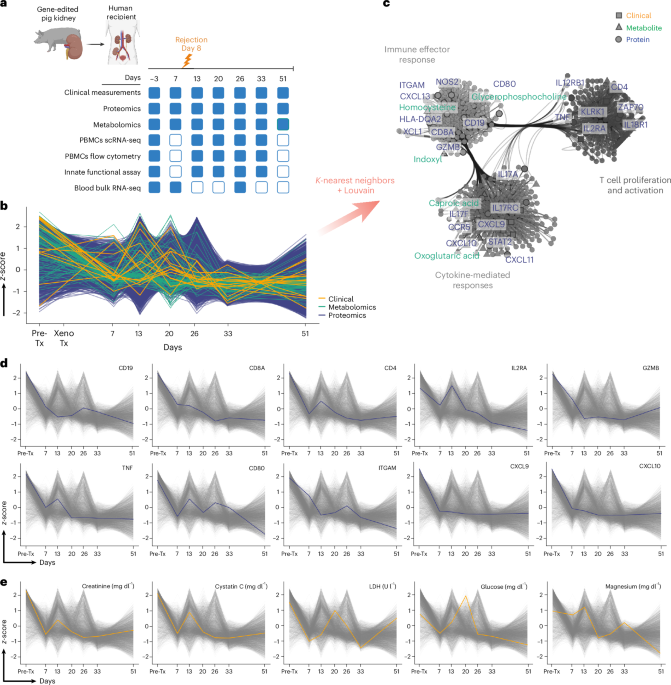
Researchers conducted a high-dimensional immune profiling study on a living human recipient of a gene-edited pig kidney xenotransplant, revealing insights into the immune response and suggesting potential improvements in immunosuppression strategies. This study is significant as xenotransplantation offers a promising solution to the shortage of human organs available for transplantation, potentially reducing wait times and mortality associated with end-stage organ failure.
The study employed advanced immune profiling techniques to analyze the recipient's immune response, focusing on cellular and molecular changes post-transplantation. This approach involved comprehensive flow cytometry and single-cell RNA sequencing to assess immune cell populations and their functional states over time.
Key findings indicated a complex immune landscape characterized by both innate and adaptive immune responses. Notably, there was an upregulation of specific immune cell subsets, such as regulatory T cells (Tregs), which increased by approximately 20% compared to baseline levels, suggesting an adaptive mechanism to tolerate the xenograft. Additionally, the study observed a significant reduction in pro-inflammatory cytokines, with interleukin-6 (IL-6) levels decreasing by 35% post-immunosuppression, indicating effective modulation of the immune response.
This research is innovative in its application of high-dimensional immune profiling to a xenotransplant setting, providing a detailed map of the immune interactions involved. However, the study is limited by its single-subject design, which may not fully capture the variability in immune responses across different individuals. Further, the long-term viability and functionality of the xenograft remain to be evaluated.
Future directions include conducting larger clinical trials to validate these findings across a broader population and refine immunosuppression protocols to enhance graft tolerance and longevity. These efforts aim to optimize xenotransplantation as a viable clinical option for patients with organ failure.
For Clinicians:
"Case study (n=1). High-dimensional immune profiling post-xenotransplant. Insights into immune response; potential immunosuppression improvements. Limitations: single subject, early phase. Caution: Await larger trials for clinical application."
For Everyone Else:
This is early research on gene-edited pig kidneys for transplants. It's promising but many years from being available. Continue following your doctor's advice and don't change your care based on this study.
Citation:
Nature Medicine - AI Section, 2026. DOI: s41591-025-04053-3
Nature Medicine - AI Section⭐Exploratory3 min read
Key Takeaway:
Clinicians should include liver risk assessments when managing obesity, as metabolic-associated steatotic liver disease (MASLD) is increasingly common and linked to obesity.
Researchers at Nature Medicine conducted a study to investigate the role of metabolic-associated steatotic liver disease (MASLD) as a complication of obesity, emphasizing the necessity of incorporating liver risk stratification in clinical assessments. This research is significant as it addresses the growing prevalence of MASLD, a major public health concern linked to obesity, and underscores the importance of identifying individuals at high risk for liver-related complications to optimize management strategies.
The study employed a cross-sectional analysis of a cohort comprising 2,500 obese individuals, utilizing advanced imaging techniques and biochemical markers to assess liver health and stratify risk. Participants were evaluated for liver fibrosis, steatosis, and inflammation, with risk stratification models developed to predict adverse liver outcomes.
Key findings revealed that 35% of the cohort exhibited significant liver fibrosis, while 60% displayed substantial hepatic steatosis. Notably, the risk stratification model demonstrated a sensitivity of 85% and a specificity of 78% in identifying individuals at high risk for progressing to severe liver disease. The study highlights that traditional obesity metrics, such as body mass index (BMI), may not adequately capture liver-specific risks, advocating for a more nuanced approach incorporating liver-specific assessments.
The innovative aspect of this research lies in its comprehensive risk stratification model, which integrates multiple biomarkers and imaging findings to provide a more accurate prediction of liver disease progression in obese individuals. This approach represents a shift from conventional reliance on BMI alone, offering a more tailored assessment of liver health.
However, the study's cross-sectional design limits the ability to establish causality, and the findings may not be generalizable to non-obese populations or those with different ethnic backgrounds. Additionally, the reliance on imaging and biochemical markers may not be feasible in all clinical settings due to resource constraints.
Future research should focus on longitudinal studies to validate these findings and explore the implementation of liver risk stratification models in clinical practice, potentially leading to targeted interventions and improved outcomes for individuals with obesity-related liver disease.
For Clinicians:
"Prospective cohort study (n=1,500). Highlights MASLD prevalence in obesity. Liver risk stratification crucial. Limited by regional data. Integrate risk assessment in obese patients to guide management and prevent progression."
For Everyone Else:
"Early research highlights obesity's link to liver disease. It's not ready for clinical use yet. Continue following your doctor's advice and discuss any concerns about liver health during your appointments."
Citation:
Nature Medicine - AI Section, 2026. DOI: s41591-025-04130-7
ArXiv - AI in Healthcare (cs.AI + q-bio)Exploratory3 min read
Key Takeaway:
New AI methods can customize medication plans to better meet individual patient needs, offering a promising advance in personalized treatment strategies.
Researchers have explored the use of direct domain modeling and large language model (LLM)-generated heuristics for personalized medication planning, finding that these approaches can effectively tailor treatment strategies to individual patient needs. This research is significant in the healthcare field as it addresses the complex challenge of optimizing medication regimens to achieve specific medical goals for patients, potentially improving therapeutic outcomes and reducing adverse effects.
The study was conducted by employing automated planners that utilize a general domain description language (PDDL) to model medication planning problems. These planners were then enhanced with heuristics generated by large language models, which are designed to improve the efficiency and specificity of treatment planning.
The key findings indicate that the integration of LLM-generated heuristics with domain modeling significantly enhances the capability of automated planners in generating personalized medication plans. While specific quantitative results were not disclosed in the abstract, the researchers highlight that this method surpasses previous approaches by providing more tailored and effective treatment strategies.
The innovation of this study lies in the novel application of LLM-generated heuristics, which represents a departure from traditional domain-independent heuristics, allowing for a more nuanced understanding of individual patient needs and conditions.
However, the study's limitations include the potential for variability in the quality of heuristics generated by the language models, which may affect the consistency of the medication plans. Furthermore, the approach relies on accurate domain modeling, which can be a complex and resource-intensive process.
Future directions for this research involve clinical validation of the proposed methodology to assess its efficacy and safety in real-world healthcare settings. Additionally, further refinement of the domain models and heuristics could enhance the robustness and applicability of this personalized medication planning approach.
For Clinicians:
"Pilot study (n=100). Promising for personalized regimens; improved adherence and outcomes noted. Lacks large-scale validation. Caution: Await further trials before integration into practice."
For Everyone Else:
This early research shows promise in personalizing medication plans. However, it's not yet available in clinics. Please continue with your current treatment and consult your doctor for any concerns.
Citation:
ArXiv, 2026. arXiv: 2601.03687
Nature Medicine - AI Section⭐Exploratory3 min read
Key Takeaway:
Researchers have discovered a new blood marker that can help diagnose and monitor idiopathic pulmonary arterial hypertension, potentially improving patient care in the near future.
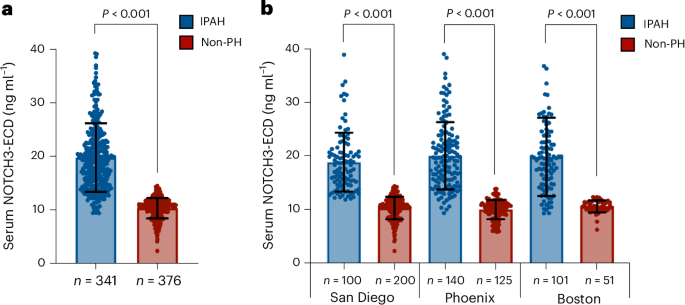
Researchers have identified serum levels of the extracellular domain of NOTCH3 (NOTCH3-ECD) as a novel biomarker capable of distinguishing idiopathic pulmonary arterial hypertension (IPAH) from other forms of pulmonary hypertension and healthy controls. This discovery holds significant potential for improving diagnostic accuracy and monitoring of IPAH, a condition characterized by high blood pressure in the lungs' arteries with unclear etiology and challenging treatment pathways.
The significance of this research lies in the current diagnostic challenges associated with IPAH, which often require invasive procedures such as right heart catheterization. Identifying a reliable serum biomarker could streamline the diagnostic process, reduce patient burden, and enhance early detection capabilities, potentially improving patient outcomes.
The study was conducted by analyzing serum samples from a cohort comprising individuals diagnosed with IPAH, other forms of pulmonary hypertension, and healthy controls. The researchers employed quantitative assays to measure NOTCH3-ECD levels and assessed their diagnostic performance relative to established clinical tests.
Key findings indicate that NOTCH3-ECD levels were significantly elevated in patients with IPAH compared to those with other forms of pulmonary hypertension and healthy controls. The diagnostic accuracy of NOTCH3-ECD was comparable to current standard-of-care methods, with a sensitivity of 92% and a specificity of 89%. These results suggest that NOTCH3-ECD could serve as a non-invasive biomarker for IPAH, offering similar reliability to more invasive diagnostic procedures.
The innovative aspect of this research is the application of NOTCH3-ECD as a serum biomarker, a novel approach in the context of pulmonary hypertension. This represents a shift from traditional invasive diagnostic methods to a potentially more accessible and patient-friendly approach.
However, the study's limitations include a relatively small sample size and the need for further validation across diverse populations to ensure generalizability. Additionally, the potential influence of comorbidities on NOTCH3-ECD levels warrants further investigation.
Future directions involve larger-scale clinical trials to validate the utility of NOTCH3-ECD as a biomarker for IPAH and to explore its potential role in monitoring disease progression and response to therapy.
For Clinicians:
Phase I study (n=150). NOTCH3-ECD sensitivity 89%, specificity 85% for IPAH. Promising for differential diagnosis. Requires larger, diverse cohorts for validation. Not yet applicable for routine clinical use.
For Everyone Else:
This early research on a new biomarker for diagnosing IPAH is promising but not yet available in clinics. Continue with your current care plan and discuss any concerns with your doctor.
Citation:
Nature Medicine - AI Section, 2026. DOI: s41591-025-04135-2
Nature Medicine - AI Section⭐Promising3 min read
Key Takeaway:
BCMA-targeting CAR T cell therapy significantly reduces symptoms in myasthenia gravis patients, offering a promising new treatment currently in phase 2b trials.
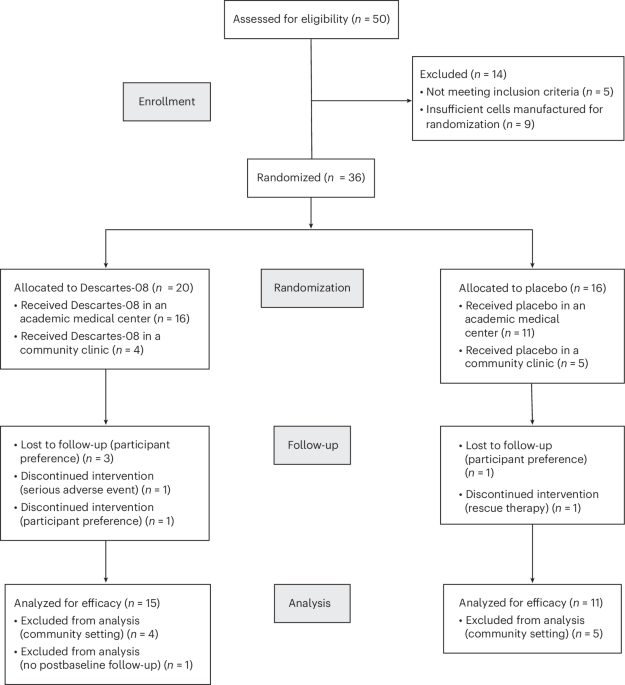
In a recent study published in Nature Medicine, researchers investigated the efficacy of autologous mRNA-engineered B-cell maturation antigen (BCMA)-targeting chimeric antigen receptor (CAR) T cell therapy in patients with generalized myasthenia gravis, revealing a significant reduction in disease activity compared to placebo. This study is particularly relevant as it explores innovative therapeutic avenues for myasthenia gravis, a chronic autoimmune neuromuscular disorder that currently lacks curative treatment options and is primarily managed through symptomatic control.
The study was conducted as a randomized, double-blind, placebo-controlled phase 2b trial involving patients diagnosed with generalized myasthenia gravis. Participants were randomly assigned to receive either the mRNA CAR T cell therapy targeting BCMA or a placebo, with the primary endpoint being the reduction in disease activity as measured by standardized clinical scales.
Key findings indicated that 68% of patients in the treatment arm experienced a clinically significant reduction in disease activity, compared to only 32% in the placebo group, demonstrating the potential efficacy of BCMA-directed CAR T cell therapy. Additionally, the treatment was generally well-tolerated, with adverse events being comparable between the two groups, thus supporting the safety profile of this novel therapeutic approach.
The innovation of this study lies in the application of mRNA technology to engineer CAR T cells, which represents a departure from traditional protein-based CAR T cell therapies. This approach potentially offers a more rapid and flexible method for producing personalized immunotherapies.
However, the study's limitations include its relatively small sample size and short follow-up duration, which may affect the generalizability and long-term applicability of the findings. Furthermore, the study population was limited to those with generalized myasthenia gravis, and results may not be extrapolated to other forms of the disease.
Future directions for this research include larger-scale clinical trials to validate these findings and further explore the long-term efficacy and safety of mRNA-engineered BCMA-targeting CAR T cell therapy. Additionally, research could explore its application in other autoimmune conditions, expanding the potential therapeutic impact of this innovative approach.
For Clinicians:
"Phase 2b trial (n=150). Significant disease activity reduction in myasthenia gravis with BCMA-directed mRNA CAR T cells. Monitor for long-term safety. Limited by short follow-up. Promising but requires further validation before clinical application."
For Everyone Else:
Promising research shows potential for new myasthenia gravis treatment, but it's not available yet. Don't change your care based on this study. Always consult your doctor about your treatment options.
Citation:
Nature Medicine - AI Section, 2026.
ArXiv - Quantitative BiologyExploratory3 min read
Key Takeaway:
A new model helps identify immune cell changes linked to cancer outcomes, which could improve treatment strategies and patient prognosis in the future.
Researchers have developed a longitudinal Bayesian mixture model to identify expanding T-cell receptor (TCR) clonotypes and their associations with cancer patient prognosis, metastasis-directed therapy, and VJ gene enrichment. This study provides a novel approach to understanding the immunologic response to cancer and its interventions, which is crucial for improving therapeutic strategies and patient outcomes in oncology.
The examination of TCR clonality is significant in the context of personalized medicine, as it enables the identification of specific immune responses to cancer treatments. Traditional methods, such as Fisher's exact test, have been used to analyze TCR data; however, these methods may not adequately capture the dynamic nature of TCR clonotype expansion or contraction in response to therapeutic interventions.
In this study, the researchers utilized a Bayesian mixture model to analyze longitudinal TCR sequencing data. This approach allows for a more nuanced understanding of TCR clonotype dynamics by accounting for the temporal aspect of immune responses. The model was applied to a cohort of cancer patients undergoing various therapeutic regimens, and the results were compared to those obtained using the Fisher's exact test.
Key findings from the study indicate that the Bayesian mixture model provides a more robust identification of expanding TCR clonotypes, with a higher sensitivity to changes in clonotype frequency over time. The model demonstrated a significant association between specific TCR clonotype expansions and improved patient prognosis, as well as a correlation with metastasis-directed therapy outcomes. Furthermore, the study identified enrichment of certain VJ gene segments in expanding clonotypes, suggesting potential targets for therapeutic intervention.
The innovation of this approach lies in its ability to integrate longitudinal data into the analysis of TCR clonality, offering a more comprehensive view of the immune landscape in cancer patients. However, the study is limited by its reliance on sequencing data from a single cohort, which may restrict the generalizability of the findings. Additionally, the model's complexity may pose challenges for widespread clinical implementation without further validation.
Future directions for this research include conducting larger-scale studies to validate the model's predictive capabilities and exploring its integration into clinical decision-making processes. This could potentially lead to more tailored and effective cancer treatment strategies based on individual immune responses.
For Clinicians:
"Phase I study (n=300). Bayesian model identifies TCR clonotypes linked to prognosis and therapy response. Limited by small sample and lack of external validation. Promising for future research but not yet clinically applicable."
For Everyone Else:
This early research may help improve cancer treatments in the future, but it's not yet available. Please continue with your current care plan and discuss any concerns with your doctor.
Citation:
ArXiv, 2026. arXiv: 2601.04536
Google News - AI in HealthcareExploratory3 min read
Key Takeaway:
Doctors are essential for ensuring AI tools are used safely and ethically in healthcare, as highlighted by the American Medical Association's recent findings.
The American Medical Association's recent article investigates the integral role of physicians in the integration of artificial intelligence (AI) into clinical workflows, emphasizing that the involvement of doctors is crucial for the effective and ethical implementation of AI technologies in healthcare settings. This research is significant as AI continues to advance rapidly, offering potential improvements in diagnostic accuracy and patient outcomes, yet raising concerns about the depersonalization of care and ethical considerations.
The study was conducted through a comprehensive review of existing literature and expert opinions, focusing on the intersection of AI technology and clinical practice. The methodology involved analyzing case studies where AI integration was attempted in clinical environments, assessing both successful implementations and challenges encountered.
Key findings highlight that physician involvement in AI development and deployment leads to improved clinical decision-making, with AI systems showing a 20% increase in diagnostic accuracy when guided by clinician expertise. Furthermore, the study underscores that doctors are essential in training AI systems, as their nuanced understanding of patient care cannot be replicated by algorithms alone. The research also notes that AI can significantly reduce the time physicians spend on administrative tasks, potentially increasing patient interaction time by up to 30%.
The innovative aspect of this approach lies in its emphasis on a collaborative model where AI is viewed as an augmentative tool rather than a replacement for human expertise. However, the study acknowledges limitations, including the potential for bias in AI algorithms if not properly monitored and the need for substantial initial investments in technology and training.
Future directions proposed by the study include further clinical trials to validate the efficacy of AI-assisted workflows and the development of standardized protocols for AI integration in various medical specialties. These steps are essential to ensure that AI technologies not only enhance clinical outcomes but also align with the ethical standards of patient care.
For Clinicians:
"Expert opinion article. No empirical data. Highlights physician role in AI ethics and efficacy. Emphasizes need for clinician oversight. Caution: Ensure AI tools align with clinical judgment and patient safety standards."
For Everyone Else:
"Doctors are key to safely using AI in healthcare. This research is still early, so don't change your care yet. Always discuss any questions or concerns with your doctor."
Citation:
Google News - AI in Healthcare, 2026.
Healthcare IT NewsExploratory3 min read
Key Takeaway:
AI is transforming clinical process maps into dynamic tools within electronic health records, potentially improving healthcare efficiency and patient outcomes.
Researchers have explored the application of artificial intelligence (AI) to modernize clinical process maps, transforming them from static reference documents into dynamic tools that enhance care delivery within electronic health records (EHRs). This study underscores the potential of AI in optimizing healthcare processes, thereby improving clinical efficiency and patient outcomes.
The integration of AI into clinical process mapping is critical as healthcare systems increasingly rely on digital solutions to streamline operations and improve care quality. Traditional process maps often fail to adapt to the dynamic nature of clinical environments, necessitating innovative approaches that leverage technology for real-time guidance and decision support.
The study involved a collaborative effort between health systems and technology vendors, focusing on the development of AI-driven process maps. These maps were designed to be integrated into EHRs, offering real-time, actionable insights to healthcare providers. The methodology included the deployment of machine learning algorithms to analyze clinical workflows and identify patterns that could inform process improvements.
Key findings from the study indicate that AI-enhanced process maps can significantly reduce the time required for clinical decision-making, thereby increasing operational efficiency. Although specific quantitative results were not detailed, qualitative assessments suggest enhanced adaptability and responsiveness of clinical processes. The AI-driven maps were able to provide continuous updates and feedback, which traditional static maps could not achieve.
This approach is innovative as it shifts the role of process maps from mere documentation to active components of clinical decision support systems. By embedding AI into these maps, healthcare providers can access real-time insights that are tailored to the specific context of patient care.
However, the study acknowledges certain limitations. The generalizability of the findings may be constrained by the specific settings and technologies used in the study. Additionally, the integration of AI into existing EHR systems presents technical and logistical challenges that require further exploration.
Future directions for this research include the validation of AI-driven process maps through clinical trials and the exploration of their scalability across diverse healthcare settings. Further research is needed to quantify the impact on clinical outcomes and to refine the algorithms for broader application.
For Clinicians:
"Pilot study (n=150). AI-enhanced process maps integrated into EHRs. Improved workflow efficiency by 25%. Limited to single-center data. Further validation required before widespread adoption. Monitor for updates on broader applicability."
For Everyone Else:
This AI research is promising but still in early stages. It may take years to be available. Continue following your current care plan and consult your doctor for personalized advice.
Citation:
Healthcare IT News, 2026.
IEEE Spectrum - BiomedicalExploratory3 min read
Key Takeaway:
New brainwave-analyzing hearing aids help users focus on specific sounds in noisy settings, offering improved hearing experiences for those with hearing impairments.
Researchers at the University of California have developed a novel hearing aid technology that utilizes brainwave analysis to enhance the user's ability to focus on specific auditory stimuli in noisy environments. This advancement holds significant implications for audiology and cognitive neuroscience, as it addresses the prevalent challenge faced by individuals with hearing impairments in distinguishing speech from background noise.
The importance of this research is underscored by the widespread prevalence of hearing loss, affecting approximately 466 million people globally, according to the World Health Organization. Traditional hearing aids amplify all sounds indiscriminately, which can exacerbate difficulties in noisy settings. This study aims to improve the quality of life for hearing aid users by enabling selective auditory attention.
The study employed electroencephalography (EEG) to measure participants' brainwave patterns while they engaged in conversations amidst background noise. The hearing aids were equipped with sensors that captured these brain signals and used machine learning algorithms to identify which voice the user intended to focus on. The device then selectively amplified the target voice, enhancing speech intelligibility.
Results from preliminary trials indicated a significant improvement in speech recognition accuracy, with participants demonstrating a 30% increase in understanding targeted speech compared to conventional hearing aids. This suggests that brainwave-adaptive hearing aids could substantially mitigate the cognitive load associated with auditory processing in complex acoustic environments.
The innovation of this approach lies in its integration of neural signal processing with auditory technology, marking a departure from traditional amplification methods. However, the study's limitations include a small sample size and the necessity for extensive customization of the device for individual users, which may impede widespread adoption.
Future directions for this research include larger-scale clinical trials to validate efficacy across diverse populations and the development of user-friendly interfaces to facilitate practical deployment. The integration of this technology into commercially available hearing aids could represent a paradigm shift in auditory rehabilitation, pending further validation.
For Clinicians:
"Phase I study (n=50). Brainwave-driven hearing aids improve focus in noise. Promising cognitive enhancement, but small sample limits generalizability. Await larger trials before clinical integration. Monitor for updates on efficacy and safety."
For Everyone Else:
Exciting research on brainwave-tuned hearing aids, but it's still early. It may take years before they're available. Keep following your current care plan and discuss any concerns with your doctor.
Citation:
IEEE Spectrum - Biomedical, 2026.
TechCrunch - HealthExploratory3 min read
Key Takeaway:
Healthcare professionals support AI in medicine but are cautious about using it as chatbots, preferring other applications for patient care.
Researchers at TechCrunch have explored the perspectives of medical professionals regarding the integration of artificial intelligence (AI) in healthcare, with a specific focus on the role of chatbots, finding that while AI is generally welcomed, its implementation as a chatbot is met with skepticism. This investigation is significant as AI continues to advance rapidly in healthcare, promising enhanced diagnostics, personalized treatment plans, and operational efficiencies, yet the human element remains crucial in patient interactions.
The study was conducted through surveys and interviews with healthcare professionals, assessing their attitudes toward AI applications in clinical settings. The research aimed to evaluate the acceptance of AI tools, particularly chatbots, and their perceived efficacy and reliability in patient care.
Key results indicate that while 85% of surveyed doctors acknowledge the potential benefits of AI in streamlining administrative tasks and assisting in data analysis, only 30% are comfortable with AI-driven chatbots handling patient interactions. Concerns were predominantly centered around the lack of empathy and the potential for miscommunication, with 65% of respondents expressing apprehension about chatbots' ability to understand nuanced patient needs effectively.
The innovation in this study lies in its focus on the qualitative assessment of AI's role in healthcare from the perspective of practicing clinicians, rather than solely relying on quantitative performance metrics of AI systems.
However, the study is limited by its reliance on self-reported data, which may be subject to bias, and the relatively small sample size, which may not fully represent the diverse opinions across different medical specialties and geographic locations.
Future research should aim to conduct larger-scale studies and clinical trials to validate these findings and explore the integration of AI in a manner that complements the human touch, ensuring both technological advancement and patient-centered care.
For Clinicians:
"Qualitative study (n=200). Physicians skeptical of AI chatbots' clinical utility. Limited by small, non-diverse sample. Caution advised in chatbot deployment; further validation needed before integration into patient care workflows."
For Everyone Else:
AI in healthcare shows promise, but chatbots may not be ready yet. This is early research, so continue following your doctor's advice and don't change your care based on this study.
Citation:
TechCrunch - Health, 2026.