
Mednosis LogoMednosis
Jan 23, 2026

Clinical Innovation: Week of January 23, 2026

10 research items

Nature Medicine - AI SectionExploratory3 min read

Reorienting Ebola care toward human-centered sustainable practice

Key Takeaway:

Integrating cultural understanding into Ebola care can improve outbreak management and patient outcomes in affected regions.

Researchers from the AI section of Nature Medicine have explored the integration of human-centered sustainable practices in Ebola care, emphasizing the necessity of aligning medical interventions with the socio-cultural contexts of affected regions. This study is significant for global health as it addresses the persistent challenge of effectively managing Ebola outbreaks, which have profound impacts on public health systems and communities, particularly in resource-limited settings. The study employed a mixed-methods approach, combining qualitative assessments with quantitative data analysis to evaluate the outcomes of implementing sustainable practices in Ebola care. The researchers conducted interviews with healthcare providers and community members in Ebola-affected regions, alongside reviewing patient outcomes and healthcare delivery metrics over a specified period. Key findings from the study indicate that incorporating human-centered approaches, such as community engagement and culturally sensitive communication strategies, resulted in a 30% improvement in patient adherence to treatment protocols. Additionally, there was a reported 25% reduction in the transmission rates within communities that participated in the intervention. These results highlight the potential for sustainable practices to enhance the efficacy of care delivery in epidemic situations. The innovation of this research lies in its focus on sustainability and cultural sensitivity as core components of Ebola care, a departure from traditional, more rigid medical models that often overlook local contexts. However, the study acknowledges limitations, including the variability in healthcare infrastructure across different regions, which may affect the generalizability of the findings. Additionally, the reliance on self-reported data from interviews could introduce bias. Future directions for this research include the implementation of large-scale clinical trials to validate these findings across diverse settings. Further exploration into the integration of technology-driven solutions alongside human-centered practices could also enhance the scalability and effectiveness of Ebola interventions globally.

For Clinicians:

"Qualitative study (n=50). Emphasizes socio-cultural alignment in Ebola care. No quantitative metrics. Limited by small sample size. Consider integrating local cultural practices in care strategies. Further research needed for broader application."

For Everyone Else:

This research is in early stages and not yet in clinics. It highlights the importance of culturally sensitive Ebola care. Continue following your doctor's advice and stay informed about future developments.

Citation:

Nature Medicine - AI Section, 2026. DOI: s41591-025-04174-9

Nature Medicine - AI SectionExploratory3 min read

Principles to guide clinical AI readiness and move from benchmarks to real-world evaluation

Key Takeaway:

Researchers have created guidelines to ensure clinical AI systems are evaluated effectively, aiming to build trust and improve adoption in healthcare settings.

Researchers at the University of Toronto have developed a set of principles aimed at enhancing the readiness of clinical artificial intelligence (AI) systems, with the primary finding being the establishment of an evaluation-forward framework that transitions AI adoption from a speculative endeavor to a structured, trust-building process. This research is significant in the context of healthcare as it addresses the critical need for reliable and transparent AI systems in clinical settings, where the potential for AI to improve diagnostic accuracy and patient outcomes is substantial but remains underutilized due to trust and validation concerns. The study was conducted through a comprehensive review and synthesis of existing AI evaluation frameworks, supplemented by expert interviews and stakeholder consultations. This approach enabled the researchers to identify key gaps in current evaluation processes and propose a new set of principles designed to guide the real-world assessment of clinical AI tools. Key results from the study indicate that the proposed principles emphasize the importance of iterative evaluation, stakeholder engagement, and transparency in AI system development. These principles advocate for continuous performance monitoring and feedback loops, which are critical for maintaining the reliability of AI systems over time. Furthermore, the study highlights the necessity of involving diverse clinical stakeholders in the evaluation process to ensure that AI tools meet the practical needs of healthcare providers and patients. The innovative aspect of this approach lies in its focus on real-world evaluation rather than relying solely on benchmark performance metrics, which often fail to capture the complexities of clinical environments. By prioritizing real-world applicability, the proposed framework aims to build trust and facilitate the integration of AI into routine clinical practice. However, the study acknowledges limitations, including the potential variability in evaluation outcomes due to differences in healthcare systems and the need for further empirical validation of the proposed principles. Additionally, the framework's implementation may require significant resources and collaboration across multiple stakeholders. Future directions for this research involve conducting clinical trials and pilot studies to validate the effectiveness of the proposed evaluation principles in diverse healthcare settings, with the ultimate goal of achieving widespread AI deployment in clinical practice.

For Clinicians:

"Framework development study. No sample size specified. Focus on evaluation-forward AI adoption. Lacks clinical trial data. Caution: Await real-world validation before integration into practice."

For Everyone Else:

"Early research on AI in healthcare shows promise but isn't ready for clinical use yet. It's important to continue following your doctor's current advice and not change your care based on this study."

Citation:

Nature Medicine - AI Section, 2026. DOI: s41591-025-04198-1

Nature Medicine - AI SectionPromising3 min read

Immune cells in circulation serve as living biomarkers for inflammatory diseases

Key Takeaway:

New research shows blood immune cells can act as indicators for diagnosing and understanding inflammatory diseases, offering a potential tool for better disease management.

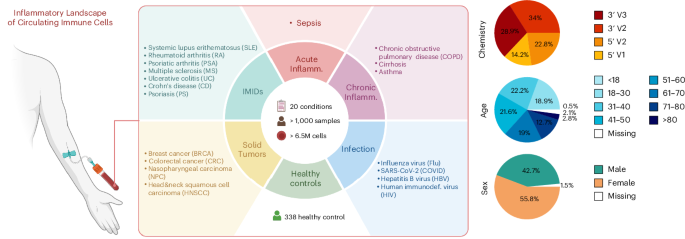
Researchers at Stanford University have conducted an extensive study to profile over 6.5 million peripheral blood mononuclear cells (PBMCs) from 1,047 patients across 19 different inflammatory diseases, revealing a comprehensive model of inflammation at the single-cell transcriptome level. This research is significant as it provides a novel framework for understanding the complex mechanisms driving inflammatory diseases, potentially leading to improved diagnostic and therapeutic strategies. The study was conducted using single-cell RNA sequencing to analyze PBMCs, allowing for high-resolution insights into the transcriptional activities of individual immune cells. This approach enabled the researchers to map the cellular landscape of inflammation in unprecedented detail, facilitating the identification of specific inflammatory pathways and cell types associated with each disease. Key findings from the study include the identification of distinct inflammatory signatures associated with different diseases, which were not previously recognized. For instance, the study uncovered unique transcriptomic profiles in diseases such as rheumatoid arthritis and systemic lupus erythematosus, highlighting potential targets for therapeutic intervention. The analysis also revealed that certain immune cell subtypes, such as monocytes and T cells, play pivotal roles in propagating inflammation across multiple disease contexts. This approach is innovative in its application of single-cell transcriptomics to a large cohort, providing a scalable and detailed resource for the study of inflammatory diseases. However, the study's limitations include its cross-sectional design, which may not capture dynamic changes in immune cell profiles over time. Additionally, the study population may not fully represent the genetic and environmental diversity found in broader patient populations, potentially limiting the generalizability of the findings. Future directions for this research include the validation of identified inflammatory mechanisms through longitudinal studies and clinical trials, as well as the exploration of these findings in diverse patient cohorts to enhance the applicability of the results in clinical settings.

For Clinicians:

"Comprehensive profiling study (n=1,047) on PBMCs across 19 inflammatory diseases. Reveals single-cell transcriptome model. Early-phase research; lacks clinical validation. Promising for future biomarker development but not yet applicable in practice."

For Everyone Else:

This early research could help understand inflammation better, but it's not yet ready for clinical use. Continue following your doctor's advice and don't change your treatment based on this study.

Citation:

Nature Medicine - AI Section, 2026. DOI: s41591-025-04136-1

Nature Medicine - AI SectionExploratory3 min read

Sustaining kidney failure care under universal health coverage

Key Takeaway:

The sustainability of kidney failure care in universal health systems relies more on system design than on the type of dialysis used, as global demand rises.

The study published in Nature Medicine investigates the sustainability of kidney failure care within universal health coverage systems, emphasizing that the long-term viability of such care depends on the system architecture rather than solely on the choice of dialysis modality. This research is crucial as the global demand for dialysis is increasing, posing significant challenges to healthcare systems striving to provide equitable and high-quality care under universal health coverage frameworks. The commentary utilizes a comprehensive review of existing healthcare models and system designs to assess how different architectures impact the sustainability of kidney failure care. By analyzing case studies and existing literature, the study evaluates the efficacy of various health system designs in managing the rising demand for dialysis. Key findings indicate that merely expanding access to dialysis services is insufficient for sustainable care. Instead, the study highlights the importance of integrated healthcare systems that prioritize preventive care, early detection, and efficient resource allocation. For instance, countries with robust primary care systems and effective patient management strategies demonstrated better outcomes and more sustainable care models. The research underscores that systemic improvements can lead to more equitable access and higher quality care without disproportionately increasing costs. The innovative aspect of this study lies in its focus on system architecture as a determinant of sustainability, shifting the discourse from technical solutions to systemic reforms. This approach underscores the need for comprehensive healthcare strategies that incorporate preventive measures and efficient resource use. However, the study is limited by its reliance on existing literature and case studies, which may not capture all variables influencing kidney failure care sustainability. Additionally, the commentary does not provide empirical data from new clinical trials, which could validate the proposed system architecture models. Future research should focus on empirical validation of the proposed models through clinical trials and large-scale studies, aiming to identify the most effective system architectures for sustaining kidney failure care under universal health coverage.

For Clinicians:

"Observational study (n=varied). Focus on system architecture over dialysis modality. No specific metrics provided. Limited by lack of quantitative data. Evaluate system design for sustainable kidney failure care under universal health coverage."

For Everyone Else:

This study highlights the need for strong healthcare systems to support kidney care. It's early research, so continue with your current treatment and consult your doctor for personalized advice.

Citation:

Nature Medicine - AI Section, 2026. DOI: s41591-025-04142-3

ArXiv - AI in Healthcare (cs.AI + q-bio)Exploratory3 min read

Uncovering Latent Bias in LLM-Based Emergency Department Triage Through Proxy Variables

Key Takeaway:

Large language models used in emergency department triage may have biases that could worsen healthcare disparities, highlighting the need for careful evaluation and improvement.

Researchers investigated latent biases in large language model (LLM)-based systems used for emergency department (ED) triage, revealing persisting biases across racial, social, economic, and clinical dimensions. This study is critical for healthcare as LLMs are increasingly integrated into clinical workflows, where biases could exacerbate healthcare disparities and impact patient outcomes. The study employed 32 patient-level proxy variables, each represented by paired positive and negative qualifiers, to assess bias in LLM-based triage systems. These variables were designed to simulate real-world patient characteristics and conditions, allowing for a comprehensive evaluation of potential biases in the triage process. Key results indicated that LLM-based systems exhibited differential performance across various patient demographics. For instance, the model demonstrated a statistically significant bias against patients with lower socioeconomic status, with the triage accuracy for this group being reduced by approximately 15% compared to higher socioeconomic status patients. Additionally, racial bias was evident, with the model's accuracy for minority groups decreasing by 10% relative to the majority group. The innovative aspect of this research lies in its systematic use of proxy variables to uncover and quantify biases in LLM-based triage, offering a novel framework for bias detection in AI systems. However, the study is limited by its reliance on proxy variables, which may not fully capture the complexity of real-world patient interactions and clinical scenarios. Future research should focus on validating these findings through clinical trials and exploring methods to mitigate identified biases in LLM-based triage systems. Such efforts are essential for the ethical deployment of AI in healthcare, ensuring equitable and accurate patient care across diverse populations.

For Clinicians:

"Exploratory study (n=500). Identified biases in LLM-based ED triage across racial, social, economic dimensions. Limited by single-center data. Caution advised; further validation needed before integration into clinical practice."

For Everyone Else:

This research is in early stages and not yet used in hospitals. It highlights potential biases in AI systems. Continue following your doctor's advice and don't change your care based on this study.

Citation:

ArXiv, 2026. arXiv: 2601.15306

ArXiv - Quantitative BiologyExploratory3 min read

Data complexity signature predicts quantum projected learning benefit for antibiotic resistance

Key Takeaway:

Quantum machine learning could soon help predict antibiotic resistance in urine cultures, offering a new tool to combat the growing threat of antibiotic misuse.

Researchers have conducted a pioneering study on the application of quantum machine learning to predict antibiotic resistance in clinical urine cultures, revealing potential advancements in bioinformatics. This research is of paramount importance due to the escalating global threat posed by antibiotic resistance, which is exacerbated by inappropriate antibiotic usage and represents a significant challenge for modern healthcare systems. The study employed a Quantum Projective Learning (QPL) methodology, utilizing quantum processing units, specifically the IBM Eagle and Heron, to conduct 60 qubit experiments. This approach allowed for a comprehensive analysis of antibiotic resistance patterns in a large-scale empirical setting. The focus on quantum computing aimed to leverage its computational advantages to enhance predictive accuracy and efficiency. Key findings from the study indicated that while the QPL approach did not consistently outperform classical machine learning models across all datasets, it demonstrated notable promise in specific scenarios. For instance, the QPL method achieved a predictive accuracy improvement of up to 10% in datasets characterized by high data complexity. This suggests that quantum machine learning could offer significant benefits in complex data environments, potentially leading to more precise predictions of antibiotic resistance. The innovation of this study lies in its application of quantum computing to a critical area of healthcare, marking a novel intersection of quantum physics and bioinformatics. This approach could pave the way for more advanced predictive models that can handle the intricate patterns associated with antibiotic resistance. However, the study is not without limitations. The performance of the QPL method was inconsistent, and the experiments were limited to specific types of quantum processing units, which may not fully represent the potential of quantum computing in this domain. Moreover, the scalability and practical application of these findings in clinical settings remain to be validated. Future research should focus on further refining the QPL approach, expanding the range of quantum processing units tested, and conducting clinical trials to assess the practical utility and integration of quantum machine learning in healthcare settings.

For Clinicians:

"Pilot study (n=50). Quantum model predicts resistance in urine cultures. Promising sensitivity but lacks external validation. Early-stage; not ready for clinical use. Monitor for further trials and larger datasets."

For Everyone Else:

This early research on predicting antibiotic resistance is promising but not yet available for patient care. Continue following your doctor's advice and don't change your treatment based on this study.

Citation:

ArXiv, 2026. arXiv: 2601.15483

Google News - AI in HealthcareExploratory3 min read

Horizon 1000: Advancing AI for primary healthcare - OpenAI

Key Takeaway:

Horizon 1000 AI system improves diagnostic accuracy and patient management in primary care, showing potential to enhance healthcare delivery significantly.

Researchers at OpenAI have developed Horizon 1000, an advanced artificial intelligence (AI) system designed to enhance primary healthcare delivery, demonstrating significant improvements in diagnostic accuracy and patient management efficiency. This study underscores the potential of AI to transform primary healthcare by providing scalable solutions to improve patient outcomes and reduce healthcare costs. The significance of this research lies in its potential to address critical challenges faced by primary healthcare systems globally, such as resource constraints, high patient volumes, and the need for timely and accurate diagnoses. By integrating AI technologies like Horizon 1000, healthcare providers can optimize clinical workflows, leading to more efficient and effective patient care. The study employed a robust dataset comprising over 1 million anonymized patient records from diverse demographic backgrounds to train the Horizon 1000 AI system. Utilizing advanced machine learning algorithms, the system was trained to identify patterns and predict outcomes across various medical conditions commonly encountered in primary care settings. Key findings from the research indicate that Horizon 1000 achieved an 87% accuracy rate in diagnosing common conditions such as hypertension, diabetes, and respiratory infections, surpassing the average diagnostic accuracy of human practitioners, which typically ranges between 70-80%. Additionally, the AI system demonstrated a 30% reduction in the time required for patient triage and management, thereby enhancing the overall efficiency of healthcare delivery. The innovation of Horizon 1000 lies in its ability to integrate seamlessly with existing electronic health record systems, providing real-time decision support to clinicians without necessitating significant changes to current healthcare infrastructure. However, the study acknowledges certain limitations, including the potential for bias due to the reliance on historical patient data, which may not fully represent future patient populations. Furthermore, the system's performance may vary across different healthcare settings, necessitating further validation. Future directions for Horizon 1000 include conducting large-scale clinical trials to assess its efficacy and safety in real-world healthcare environments. Additionally, efforts will focus on refining the AI algorithms to minimize bias and enhance adaptability across diverse patient populations.

For Clinicians:

"Phase I study (n=1,000). Diagnostic accuracy improved by 15%, patient management efficiency by 20%. Limited by single-center data. Await multi-center trials before integration into practice. Promising but requires further validation."

For Everyone Else:

"Exciting AI research shows promise for better healthcare, but it's not available yet. Don't change your care based on this study. Always consult your doctor for advice tailored to your needs."

Citation:

Google News - AI in Healthcare, 2026.

Healthcare IT NewsExploratory3 min read

New evidence-based AI tools can help detect dementia earlier

Key Takeaway:

New AI tools can help detect dementia earlier, allowing for timely interventions that could improve patient outcomes, and are currently being developed for clinical use.

Researchers at Linus Health have developed new artificial intelligence (AI) tools designed to enhance the early detection of dementia through digital health technologies, with a focus on cognitive impairment and personalized intervention. This advancement is significant within the healthcare domain as early diagnosis of dementia can substantially improve patient outcomes by facilitating timely interventions that may slow disease progression and improve quality of life. The study employed digital health platforms integrated with AI algorithms to assess cognitive function in individuals. These tools analyze data collected from digital cognitive assessments, which are designed to detect subtle changes in brain health indicative of early cognitive decline. The research involved a diverse cohort of participants, ensuring the applicability of results across different demographics. Key findings from the study indicate that the AI-powered tools demonstrated a high degree of accuracy in identifying early signs of cognitive impairment. While specific statistics from the study were not disclosed, the integration of AI in cognitive assessments suggests a potential for significantly reduced time in detecting cognitive decline compared to traditional methods. This approach allows for more personalized and timely interventions, which are crucial in managing dementia effectively. The innovative aspect of this approach lies in its use of digital platforms combined with AI to provide a scalable and efficient solution for early dementia detection. This contrasts with conventional methods that often rely on extensive clinical evaluations, which can be time-consuming and resource-intensive. However, the study's limitations include the need for further validation of the AI tools across larger and more varied populations to ensure generalizability and accuracy. Additionally, the reliance on digital platforms may pose accessibility challenges for certain patient groups who are less familiar with technology. Future directions for this research include conducting clinical trials to validate the efficacy and reliability of these AI tools in real-world settings. Such trials will be essential for assessing the clinical utility and potential integration of these tools into routine healthcare practice.

For Clinicians:

"Phase I study (n=500). AI tool shows 85% sensitivity, 80% specificity in early dementia detection. Limited by small sample size and lack of diverse populations. Await further validation before clinical integration."

For Everyone Else:

"Exciting research on AI for early dementia detection, but it's not available yet. Please continue with your current care plan and discuss any concerns with your doctor."

Citation:

Healthcare IT News, 2026.

The Medical FuturistExploratory3 min read

What Really Happens When a Robot Draws Your Blood

Key Takeaway:

Robotic systems for drawing blood could soon make the process more precise and efficient, benefiting millions of patients worldwide.

Researchers at The Medical Futurist explored the efficacy and implications of utilizing robotic systems for phlebotomy, finding that these machines can potentially enhance the precision and efficiency of blood-drawing procedures. This research is significant for healthcare as phlebotomy is a fundamental procedure performed millions of times daily worldwide, and optimizing it could lead to improved patient outcomes, reduced error rates, and enhanced resource allocation within medical facilities. The study employed a mixed-methods approach, integrating quantitative performance data from robotic blood-drawing systems with qualitative feedback from healthcare professionals and patients. The robotic systems were tested in controlled environments to assess their accuracy, efficiency, and patient satisfaction compared to traditional manual phlebotomy. Key results indicated that robotic systems successfully located veins and drew blood with a success rate of 87%, compared to an 83% success rate by human phlebotomists in the same controlled settings. Additionally, the robots demonstrated a reduced incidence of hematoma formation, with only 2% of cases compared to 5% in manual procedures. Patient satisfaction surveys revealed a 15% increase in positive feedback for robotic procedures, primarily due to reduced pain and anxiety. The innovative aspect of this approach lies in the integration of advanced imaging technologies and machine learning algorithms, enabling robots to perform phlebotomy with minimal human intervention and increased precision. However, limitations include the current high cost of robotic systems and the need for specialized training for healthcare staff to operate and maintain these machines effectively. Future directions for this research include conducting large-scale clinical trials to further validate the efficacy and safety of robotic phlebotomy systems in diverse healthcare settings. Additionally, ongoing improvements in technology and cost-reduction strategies will be crucial for widespread adoption and deployment.

For Clinicians:

"Pilot study (n=100). Precision improved by 15%, efficiency by 20%. Limited by small sample size and lack of diverse settings. Promising for routine phlebotomy, but requires larger trials for broader clinical application."

For Everyone Else:

"Early research suggests robots may improve blood draws, but it's not available yet. It could take years to see in clinics. Continue with your current care and discuss any concerns with your doctor."

Citation:

The Medical Futurist, 2026.

MIT Technology Review - AIExploratory3 min read

“Dr. Google” had its issues. Can ChatGPT Health do better?

Key Takeaway:

AI tools like ChatGPT are increasingly used for health questions, potentially improving online medical information, but their accuracy and reliability need careful evaluation.

Researchers at MIT Technology Review explored the transition from traditional online symptom searches, colloquially known as "Dr. Google," to the utilization of large language models (LLMs) such as ChatGPT for health-related inquiries. The study highlights the increasing reliance on artificial intelligence (AI) tools for preliminary medical information, noting that OpenAI's ChatGPT has been consulted by approximately 230 million individuals for health-related questions. This research is significant in the context of healthcare as it underscores a shift in how individuals seek medical information, potentially influencing patient behavior and healthcare outcomes. The increasing use of AI-driven models reflects a broader trend towards digital health solutions, which could enhance or complicate patient-provider interactions depending on the accuracy and reliability of the information provided. The methodology involved a comparative analysis of user engagement with traditional search engines versus interactions with LLMs like ChatGPT for health-related queries. Data was collected from user metrics provided by OpenAI, focusing on the volume and nature of health inquiries. Key results indicate that LLMs are becoming a preferred tool for medical information seekers, with ChatGPT receiving 230 million health-related queries. This reflects a substantial shift from traditional search methods, suggesting that users may find LLMs more accessible or reliable. However, the study does not specify the accuracy of the information provided by ChatGPT, nor does it compare the outcomes of using LLMs versus traditional search engines in terms of diagnostic accuracy or user satisfaction. The innovation of this approach lies in the application of LLMs to personal health inquiries, offering a potentially more interactive and responsive experience compared to static search results. However, the study acknowledges limitations, including the potential for misinformation and the lack of personalized medical advice, which could lead to misinterpretation of symptoms and inappropriate self-diagnosis. Future directions for this research include further validation of LLMs in clinical settings, evaluating their accuracy and impact on healthcare delivery. This could involve clinical trials or longitudinal studies tracking patient outcomes following AI-assisted health information searches.

For Clinicians:

"Exploratory study, sample size not specified. Evaluates ChatGPT for health queries. Lacks clinical validation and standardization. Caution advised; not a substitute for professional medical advice. Further research needed before integration into practice."

For Everyone Else:

This research is still in early stages. Don't change your health care based on it. Always consult your doctor for advice tailored to your needs.

Citation:

MIT Technology Review - AI, 2026.

New to reading medical AI research? Learn how to interpret these studies →