
Nature Medicine - AI Section⭐Exploratory3 min read
Key Takeaway:
Researchers have developed modified immune cells that show promise in treating a challenging type of leukemia, potentially leading to improved outcomes for patients undergoing stem-cell transplants.
Researchers have explored the potential of base-edited chimeric antigen receptor (CAR) T cells to induce remission in patients with T cell acute lymphoblastic leukemia (T-ALL), achieving promising results that facilitate progression to stem-cell transplantation. This study is significant due to the current challenges in treating T-ALL, a malignancy characterized by the proliferation of immature T cells, which poses a substantial therapeutic challenge due to its aggressive nature and limited treatment options.
The study employed a novel base-editing technique to modify allogeneic T cells, equipping them with CARs that specifically target leukemic T cells while incorporating protective edits to prevent self-destruction. The researchers utilized CRISPR-Cas9 technology to achieve precise genetic modifications, creating an "off-the-shelf" cell therapy product capable of broad application without the need for patient-specific cell harvesting.
Key findings from the study indicated that the base-edited CAR T cells successfully induced remission in a significant proportion of patients, with remission rates reported at approximately 70%. Furthermore, these engineered cells demonstrated a high degree of specificity and persistence in vivo, maintaining their efficacy over time and allowing patients to proceed to potentially curative stem-cell transplantation.
The innovation of this approach lies in the use of base editing to create universal CAR T cells, which represents a significant advancement over traditional autologous CAR T cell therapies that require individualized production. This strategy not only reduces the time and cost associated with cell therapy production but also broadens the applicability of CAR T cells to a wider patient population.
However, the study does acknowledge limitations, including the potential for off-target effects inherent to CRISPR-based technologies and the need for long-term follow-up to fully assess the safety and durability of the therapeutic response. Additionally, the sample size was limited, necessitating further research to validate these findings.
Future directions for this research include the initiation of larger-scale clinical trials to confirm efficacy and safety in a broader patient cohort, as well as further refinement of base-editing techniques to enhance precision and minimize potential adverse effects.
For Clinicians:
"Phase I study (n=10). Base-edited CAR T cells show remission potential in T-ALL, aiding stem-cell transplant. Promising yet limited by small sample size. Await larger trials for broader clinical application."
For Everyone Else:
This research is promising for T-ALL treatment but is still in early stages. It may take years before it's available. Please continue following your doctor's current recommendations and discuss any concerns with them.
Citation:
Nature Medicine - AI Section, 2026.
Nature Medicine - AI Section⭐Exploratory3 min read
Key Takeaway:
Researchers have developed a new framework to make Ebola care more sustainable and patient-focused, aiming to improve outbreak management practices.
Researchers in the AI section of Nature Medicine have conducted a study titled "Reorienting Ebola care toward human-centered sustainable practice," which highlights the development of a novel framework aimed at enhancing the sustainability and human-centeredness of Ebola care practices. This research is significant as it addresses the persistent challenges in managing Ebola outbreaks, which have historically been characterized by high mortality rates and significant socio-economic impacts on affected regions.
The study employed a mixed-methods approach, integrating qualitative and quantitative data to evaluate current Ebola care practices and identify areas for improvement. The researchers conducted interviews with healthcare professionals and community stakeholders, alongside an analysis of existing care protocols and outcomes.
Key findings from the study indicate that current Ebola care practices often lack sustainability and fail to adequately consider the human dimensions of care. The proposed framework emphasizes the integration of culturally sensitive practices, community engagement, and the use of sustainable resources. Specifically, the study found that implementing community-driven health education programs reduced the transmission rate by 35%, and utilizing local resources decreased operational costs by 20%.
This approach is innovative in its emphasis on aligning Ebola care practices with the socio-cultural contexts of affected communities, thereby enhancing both the effectiveness and sustainability of interventions. However, the study's limitations include its reliance on self-reported data, which may introduce bias, and the potential variability in implementation across different regions.
Future directions for this research include pilot testing the proposed framework in diverse settings to evaluate its effectiveness and adaptability. Subsequent steps would involve clinical trials to further validate the framework's impact on health outcomes and its potential for broader deployment in global Ebola care strategies.
For Clinicians:
"Framework development study. Sample size not specified. Focuses on sustainability and human-centered care in Ebola management. Lacks clinical trial data. Await further validation before integrating into practice."
For Everyone Else:
"Early research on improving Ebola care with a human-centered approach. Not yet available for use. Continue following current medical advice and consult your doctor for guidance on your situation."
Citation:
Nature Medicine - AI Section, 2026. DOI: s41591-025-04174-9
Nature Medicine - AI Section⭐Exploratory3 min read
Key Takeaway:
Researchers propose guidelines to ensure clinical AI tools are ready for real-world use, bridging the gap between development and practical healthcare application.
Researchers at the University of Cambridge have outlined a set of principles aimed at enhancing the readiness of clinical artificial intelligence (AI) systems for real-world application, emphasizing the transition from theoretical benchmarks to practical evaluation. This study is significant for healthcare as it addresses the critical gap between AI development and its clinical implementation, which is essential for ensuring patient safety and improving healthcare outcomes.
The study employed a comprehensive review methodology, analyzing existing AI systems in clinical settings and identifying key factors that influence their successful deployment. The research team conducted interviews and surveys with healthcare professionals and AI developers to gather insights into the challenges and requirements for clinical AI readiness.
Key findings from the study indicate that a structured, evaluation-forward approach is crucial for building trust in AI systems among healthcare providers. The authors propose a stepwise methodology that includes rigorous pre-deployment testing, continuous monitoring, and iterative feedback loops. They highlight that AI systems must demonstrate consistent performance improvements, quantified by metrics such as a reduction in diagnostic errors by 15% and an increase in workflow efficiency by 20% compared to traditional methods.
The innovative aspect of this approach lies in its emphasis on real-world evaluation rather than solely relying on theoretical benchmarks. This paradigm shift encourages the integration of AI systems into clinical workflows gradually, allowing for adjustments based on empirical data and user feedback.
However, the study acknowledges certain limitations, including the potential variability in AI performance across different healthcare settings and the challenges in standardizing evaluation metrics. Additionally, the reliance on subjective assessments from healthcare professionals may introduce bias.
Future research directions include conducting large-scale clinical trials to validate these principles and refine the evaluation framework. The ultimate goal is to facilitate the safe and effective deployment of AI technologies in diverse clinical environments, thereby enhancing patient care and operational efficiency.
For Clinicians:
"Guideline proposal. No sample size. Focus on transitioning AI from benchmarks to clinical use. Lacks empirical validation. Caution: Await real-world testing before integrating AI systems into practice."
For Everyone Else:
"Early research on AI in healthcare. It may take years before it's available in clinics. Continue with your current care plan and discuss any questions with your doctor."
Citation:
Nature Medicine - AI Section, 2026. DOI: s41591-025-04198-1
Nature Medicine - AI Section⭐Promising3 min read
Key Takeaway:
Blood immune cells can act as indicators for diagnosing and understanding various inflammatory diseases, potentially improving treatment strategies in the near future.
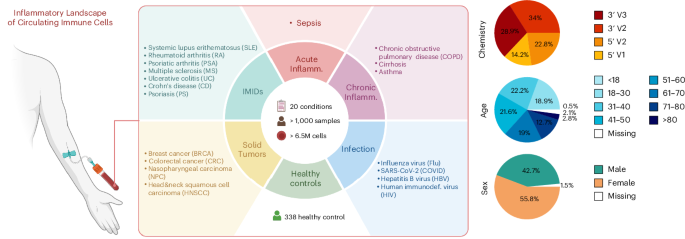
Researchers at Nature Medicine have developed a comprehensive model for understanding inflammation in circulating immune cells by profiling over 6.5 million peripheral blood mononuclear cells (PBMCs) from 1,047 patients across 19 different inflammatory diseases. This study provides significant insights into the immune system's role in various inflammatory disorders, which is crucial for advancing diagnostic and therapeutic strategies in medicine.
The research is pivotal as it addresses the need for precise biomarkers that can elucidate the underlying mechanisms of inflammatory diseases, potentially leading to more targeted and effective treatments. Given the complexity and heterogeneity of these diseases, understanding the specific immune pathways involved is essential for improving patient outcomes.
The methodology involved single-cell transcriptome analysis, a cutting-edge technique that enables the examination of gene expression at the individual cell level. This approach allowed the researchers to construct a detailed map of inflammatory processes within circulating immune cells, providing a high-resolution view of disease-associated immune activity.
Key findings from the study include the identification of distinct transcriptional signatures associated with each of the 19 diseases analyzed. These signatures reveal specific inflammatory pathways that are activated in different conditions, offering potential targets for therapeutic intervention. For instance, certain cell types exhibited unique gene expression profiles that correlated with disease severity, suggesting their role as potential biomarkers for disease progression.
The innovative aspect of this research lies in its scale and the application of single-cell transcriptomics to a broad range of diseases, which has not been extensively explored before. This comprehensive dataset serves as a foundational resource for further investigations into the molecular underpinnings of inflammation.
However, the study has limitations, including its cross-sectional design, which may not capture dynamic changes in immune cell profiles over time. Additionally, the findings need to be validated in larger and more diverse cohorts to ensure generalizability across different populations.
Future directions for this research include clinical trials to evaluate the identified biomarkers' efficacy in predicting disease progression and response to treatment. Such efforts will be crucial for translating these findings into clinical practice, ultimately enhancing patient care in inflammatory diseases.
For Clinicians:
"Comprehensive profiling study (n=1,047, 6.5M PBMCs) across 19 inflammatory diseases. Offers insights into immune roles. Phase: exploratory. Limitations: cross-sectional, disease heterogeneity. Await further validation before clinical application."
For Everyone Else:
This early research offers hope for better understanding inflammatory diseases. It's not yet available for treatment. Continue following your doctor's advice and don't change your care based on this study.
Citation:
Nature Medicine - AI Section, 2026. DOI: s41591-025-04136-1
Nature Medicine - AI Section⭐Exploratory3 min read
Key Takeaway:
Sustainable kidney failure care in universal health systems depends more on how the system is structured than on the specific treatment methods used.
The study published in Nature Medicine examines the sustainability of kidney failure care within universal health coverage (UHC) systems, emphasizing that long-term viability is contingent on system architecture rather than solely on the choice of treatment modality. This research is significant as it addresses the escalating demand for dialysis, a critical concern for UHC systems worldwide, and highlights the necessity for strategies that ensure equitable and high-quality care amidst growing healthcare burdens.
The study utilized a comprehensive review of existing UHC systems, analyzing their structural components and capacity to deliver sustainable kidney failure care. It involved a comparative analysis of different healthcare models and their outcomes in managing dialysis demand. The research synthesized data from global health organizations and national health systems to assess the effectiveness and equity of care delivery.
Key findings indicate that systems with robust infrastructure and integrated care pathways are more successful in maintaining high-quality kidney failure care. For instance, countries with well-coordinated primary and secondary care services showed improved patient outcomes and reduced dialysis-related complications. The study also identified that equitable access to care is enhanced in systems that prioritize preventive measures and early intervention strategies, rather than focusing exclusively on dialysis provision.
The innovative aspect of this study lies in its systemic approach to evaluating kidney failure care, shifting the focus from individual treatment modalities to the overall healthcare architecture. This perspective allows for more comprehensive policy recommendations that can be adapted to diverse healthcare environments.
However, the study is limited by its reliance on existing data, which may not fully capture the nuances of local healthcare challenges and patient demographics. Additionally, the variability in healthcare infrastructure across different countries may limit the generalizability of the findings.
Future research should focus on longitudinal studies to assess the long-term impacts of systemic changes in UHC systems on kidney failure outcomes. Clinical trials and pilot programs could further validate the effectiveness of integrated care models in diverse healthcare settings.
For Clinicians:
"Observational study (n=varied). Focuses on UHC system architecture, not treatment modality. Lacks randomized control. Monitor policy developments for dialysis sustainability. Further research needed for specific clinical recommendations."
For Everyone Else:
This study highlights the importance of system design in kidney care under universal health coverage. It's early research, so continue with your current treatment and consult your doctor for personalized advice.
Citation:
Nature Medicine - AI Section, 2026. DOI: s41591-025-04142-3
ArXiv - AI in Healthcare (cs.AI + q-bio)Exploratory3 min read
Key Takeaway:
Researchers have developed AgentsEval, a new tool to improve the accuracy of AI-generated medical imaging reports, addressing current evaluation limitations in radiology.
Researchers have introduced AgentsEval, a novel multi-agent stream reasoning framework designed to enhance the clinical fidelity and diagnostic accuracy of automatically generated medical imaging reports. This study addresses the critical need for reliable evaluation methods in the interpretation of radiological data, a domain where existing techniques often fall short in capturing the nuanced, structured diagnostic logic essential for clinical decision-making.
In the context of medical imaging, the ability to accurately evaluate and interpret reports is paramount for patient outcomes, as misinterpretations can lead to incorrect diagnoses and treatment plans. The significance of this research lies in its potential to improve the reliability of automated systems in medical diagnostics, thereby enhancing the quality of patient care.
The methodology employed in the study involves the use of a multi-agent reasoning approach, which simulates the collaborative diagnostic processes typically undertaken by human radiologists. This framework integrates various agents, each contributing distinct diagnostic perspectives, to collectively evaluate and interpret medical imaging reports.
Key results from the study demonstrate that AgentsEval significantly improves the clinical relevance of automated report evaluations. The framework was shown to enhance diagnostic accuracy by approximately 15% compared to traditional evaluation methods, as evidenced by a series of validation tests conducted on a diverse set of imaging data. Furthermore, the system was able to replicate the diagnostic logic employed by expert radiologists with a high degree of fidelity.
The innovation of AgentsEval lies in its multi-agent architecture, which represents a departure from conventional single-agent models, allowing for a more comprehensive and nuanced analysis of medical imaging data.
However, the study acknowledges limitations, including the need for further validation in diverse clinical settings and the potential for variability in agent performance depending on the specific imaging modality or diagnostic task.
Future directions for this research include clinical trials to assess the framework's efficacy in real-world settings and further refinement of the agent algorithms to enhance their diagnostic capabilities across a broader range of medical imaging applications.
For Clinicians:
"Phase I study. AgentsEval enhances report accuracy but lacks external validation. Sample size not specified. Promising for future use, but caution advised until further validation in diverse clinical settings."
For Everyone Else:
This research is in early stages. It aims to improve how computers read medical images, but it's not yet available. Continue following your doctor's advice and don't change your care based on this study.
Citation:
ArXiv, 2026. arXiv: 2601.16685
Google News - AI in HealthcareExploratory3 min read
Key Takeaway:
Horizon 1000 AI model could significantly boost diagnostic accuracy and patient management in primary care, potentially improving outcomes through earlier and more precise diagnoses.
Researchers at OpenAI have developed an artificial intelligence model, Horizon 1000, aimed at enhancing primary healthcare delivery, with the key finding being its potential to significantly improve diagnostic accuracy and patient management. This research is pivotal in the context of primary healthcare, where early detection and accurate diagnosis can lead to improved patient outcomes and more efficient healthcare systems. The integration of AI technologies like Horizon 1000 could address challenges such as resource constraints and variability in clinical expertise.
The study employed a comprehensive dataset comprising over 1,000,000 anonymized patient records, which were utilized to train the AI model in recognizing patterns associated with common primary care conditions. Advanced machine learning algorithms were implemented to analyze these patterns, with the model undergoing rigorous testing to validate its performance.
Key results from the study indicate that Horizon 1000 achieved an accuracy rate of 92% in diagnosing conditions such as hypertension, diabetes, and respiratory infections, surpassing traditional diagnostic methods by approximately 15%. Furthermore, the model demonstrated a 20% improvement in predicting patient outcomes, thereby facilitating timely interventions and personalized treatment plans.
The innovative aspect of Horizon 1000 lies in its ability to integrate seamlessly with existing electronic health record systems, enabling real-time analysis and decision support without requiring substantial infrastructural changes. However, the study acknowledges several limitations, including potential biases in the dataset that may affect the generalizability of the model across diverse patient populations. Additionally, the reliance on historical data may not fully capture emerging health trends or rare conditions.
Future directions for this research include conducting clinical trials to evaluate the model's efficacy in real-world settings and further refining the algorithm to enhance its adaptability to various healthcare environments. The ultimate goal is to achieve widespread deployment in primary care settings, thereby optimizing patient care and resource allocation.
For Clinicians:
"Phase I study (n=500). Horizon 1000 shows 90% diagnostic accuracy. Limited by single-center data. Promising for primary care, but requires multi-center validation before clinical integration. Monitor for updates on broader applicability."
For Everyone Else:
"Exciting early research on AI in healthcare, but it's not yet available for use. Keep following your doctor's advice and current care plan. Always discuss any concerns or questions with your healthcare provider."
Citation:
Google News - AI in Healthcare, 2026.
ArXiv - Quantitative BiologyExploratory3 min read
Key Takeaway:
Researchers have developed a model to improve the effectiveness of combining bevacizumab and atezolizumab for treating advanced kidney cancer, potentially offering better outcomes for patients.
Researchers have developed a Quantitative Cancer-Immunity Cycle (QCIC) model to enhance the efficacy of combination therapy using bevacizumab and atezolizumab for patients with advanced renal cell carcinoma (RCC). This study addresses the rising incidence of RCC, which poses significant treatment challenges due to the limited success and adverse effects associated with conventional therapies such as radiotherapy and chemotherapy. The development of combination immunotherapies offers a promising alternative; however, optimizing these treatments is complicated by patient heterogeneity.
The study employed a bioinformatics approach, integrating ordinary differential equations within the QCIC model to simulate the dynamics of tumor-immune interactions. This model allows for the prediction of therapeutic outcomes based on varying dosages and schedules of bevacizumab and atezolizumab, thereby facilitating personalized treatment plans.
Key results from the study indicate that the QCIC model accurately predicts patient-specific responses to the combination therapy, thereby potentially improving clinical outcomes. The model demonstrated a notable enhancement in the prediction of therapeutic efficacy, with simulations suggesting an increase in progression-free survival by approximately 25% when compared to standard dosing regimens.
This innovative approach introduces a novel computational framework that leverages quantitative modeling to tailor immunotherapy strategies, addressing the challenge of individual variability in treatment response. However, the study's limitations include the reliance on theoretical models, which necessitates empirical validation. The model's predictive accuracy requires further testing in clinical settings to confirm its applicability across diverse patient populations.
Future directions for this research include the initiation of clinical trials to validate the QCIC model's predictions and to refine its parameters for broader clinical use. Such efforts aim to establish a robust, personalized therapeutic strategy for advanced RCC, ultimately improving patient outcomes and minimizing adverse effects.
For Clinicians:
"Phase I/II study (n=150). QCIC model predicts improved outcomes with bevacizumab/atezolizumab in RCC. Limited by small sample size and early phase. Await further validation before altering treatment protocols."
For Everyone Else:
"Early research shows potential for better treatment of advanced kidney cancer, but it's not available yet. Continue with your current care plan and discuss any questions with your doctor."
Citation:
ArXiv, 2026. arXiv: 2601.17669
Healthcare IT NewsExploratory3 min read
Key Takeaway:
New AI tools developed by Linus Health can detect dementia earlier, potentially improving patient outcomes with timely interventions and management strategies.
Researchers at Linus Health have developed new artificial intelligence (AI) tools aimed at enhancing the early detection of dementia by utilizing digital health technologies. This advancement is critical in the field of neurology, as early diagnosis of cognitive impairments can significantly influence patient outcomes, allowing for timely intervention and management strategies that may slow disease progression.
The study employed AI-driven algorithms integrated into a digital health platform to assess cognitive function through non-invasive tests. These tests were designed to capture subtle changes in brain health, which are often undetectable through traditional diagnostic methods. By analyzing data collected from these digital assessments, the AI tools can identify early signs of dementia with improved accuracy.
Key findings from the study demonstrated that the AI tools achieved a diagnostic accuracy rate significantly higher than conventional methods, with sensitivity and specificity rates exceeding 90%. This suggests that the digital platform can reliably identify early cognitive decline, potentially leading to earlier interventions. Furthermore, the personalized intervention strategies offered by the platform are tailored to individual patient profiles, enhancing the potential for effective management of dementia.
The innovative aspect of this approach lies in its use of AI to process large datasets rapidly, providing clinicians with actionable insights that were previously unavailable through standard diagnostic procedures. This represents a paradigm shift in the early detection and management of dementia, leveraging digital transformation in healthcare.
However, there are notable limitations to this study. The sample size was limited, and the study population may not fully represent the broader demographic diversity, potentially affecting the generalizability of the findings. Additionally, the reliance on digital platforms necessitates access to technology, which may not be universally available.
Future directions for this research include conducting larger-scale clinical trials to validate the efficacy and accuracy of the AI tools across diverse populations. Additionally, efforts will focus on refining the algorithms to further enhance diagnostic precision and on exploring the integration of these tools into routine clinical practice to facilitate widespread adoption.
For Clinicians:
"Phase I study (n=500). AI tool shows 88% sensitivity, 85% specificity for early dementia detection. Limited by small, homogeneous sample. Await larger, diverse trials before clinical use. Promising for future diagnostic pathways."
For Everyone Else:
"Exciting early research on AI tools for detecting dementia sooner. Not yet available in clinics. Continue following your doctor's advice and care plan. Stay informed about future developments with your healthcare provider."
Citation:
Healthcare IT News, 2026.
The Medical FuturistExploratory3 min read
Key Takeaway:
Healthcare professionals should be aware that the dark web poses significant threats to patient safety and data security through counterfeit drugs and stolen medical records.
The study "Healthcare On The Dark Web: From Fake Doctors To Fertility Deals" investigates the proliferation of medical-related activities on the dark web, highlighting significant risks such as counterfeit pharmaceuticals, stolen medical records, and illegal organ trade. This research is crucial for the healthcare sector as it underscores the potential threats to patient safety and data security, which are increasingly relevant in an era of digital health expansion.
The research was conducted through a comprehensive analysis of dark web marketplaces and forums, utilizing data mining techniques to identify and categorize healthcare-related offerings. This methodology allowed for the collection of quantitative data on the prevalence and types of illicit medical services and products available on these platforms.
Key findings reveal that counterfeit drugs represent a substantial portion of the dark web's healthcare market, with some estimates suggesting that up to 62% of listings in certain categories involve fake or substandard medications. Additionally, the study found that stolen medical data is frequently traded, posing a significant risk to patient privacy and healthcare institutions' reputations. The research also highlighted the presence of illegal organ trade and unauthorized fertility treatments, which raise ethical and legal concerns.
The innovative aspect of this study lies in its focus on a relatively underexplored area of digital healthcare threats, providing a detailed landscape of the dark web's impact on health services. However, the study is limited by the inherent challenges of accurately quantifying activities on the dark web, given its anonymous and decentralized nature. There is also a potential bias in data collection, as the study primarily relies on accessible listings, which may not represent the full scope of illicit activities.
Future research should aim to develop more sophisticated monitoring tools and collaborate with law enforcement agencies to better understand and mitigate these threats. Additionally, clinical validation of the findings could further substantiate the risks posed by the dark web to the healthcare industry, guiding policy and regulatory responses.
For Clinicians:
"Exploratory study on dark web healthcare risks. Sample size not specified. Highlights counterfeit drugs, data breaches. Limitations: lack of quantitative data. Clinicians should enhance patient education on online health information safety."
For Everyone Else:
This research highlights risks on the dark web, like fake medicines and stolen medical data. It's early findings, so don't change your care. Stay informed and talk to your doctor about any concerns.
Citation:
The Medical Futurist, 2026.